5 Proven Strength Training Cycles for Long-Term Progress at Home and in the Gym
5 proven strength training cycles — linear, 5/3/1, block, DUP, and conjugate-lite — with exact sets, reps, and percentages for lasting gains.
The five most reliable strength training cycles are linear periodization for beginners, 5/3/1 wave loading for stalled intermediates, block periodization for advanced or competitive lifters, daily undulating periodization (DUP) for home gyms with limited equipment, and conjugate-lite training for long-term lifters managing joint wear. Each rotates volume and intensity on a defined schedule instead of repeating the same sets and reps indefinitely, which is what actually drives progress past the first year.
The Three-Year-Old Bench Photo Doesn't Lie
A client named Marcus came into Trinity Training Facility with a phone full of gym selfies. Same bench, same 185-pound bar loaded up, spanning three years of timestamps. He'd trained four days a week the entire time — treadmill, machines, a rotating cast of workouts he'd screenshotted from social media — and his top set hadn't moved since year one. That's not a motivation problem. That's a programming problem.
Marcus had never run anything you could call strength training cycles. He had a routine, not a plan. Every session looked roughly the same, which meant his body had nothing new to adapt to and no reason to get stronger. The fix wasn't harder workouts or more sweat. It was structure: a defined block of weeks where sets, reps, and load changed on purpose, in a direction that built toward something.
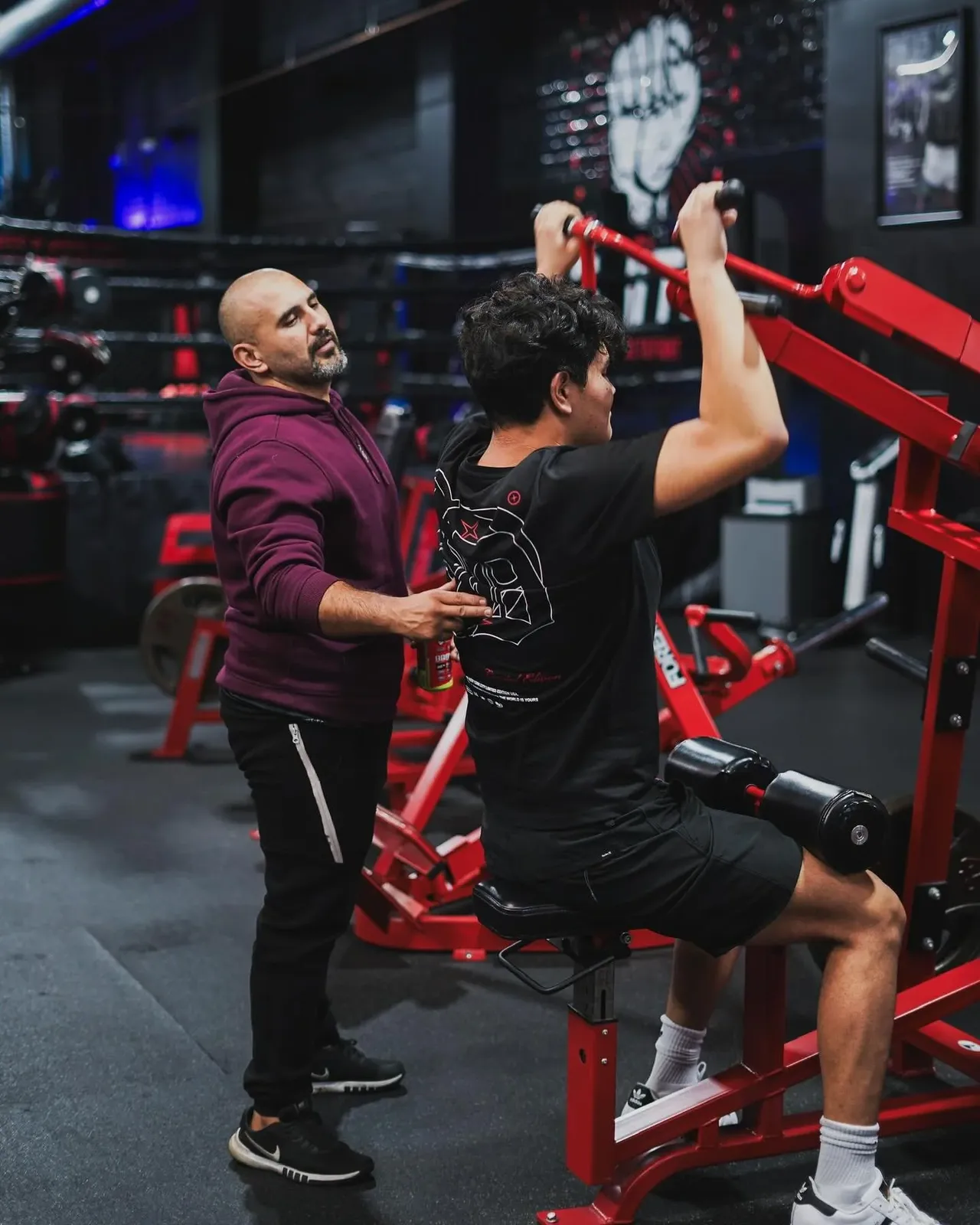
This article breaks down five strength training cycles we run with clients in Long Beach, whether they're training inside our facility or finishing sessions at home with a rack of adjustable dumbbells. Each one has a specific use case, specific numbers, and a specific type of lifter it's built for. Pick the wrong one and you'll spin your wheels for years, like Marcus did. Pick the right one and run it honestly, and you'll have a strength number worth photographing again in twelve weeks.
What a Strength Training Cycle Actually Is
Strength training cycles are organized around three nested units. A microcycle is roughly one week. A mesocycle is a block of 3 to 6 weeks built around a specific goal, like adding volume or peaking intensity. A macrocycle is the full arc — often 3 to 12 months — that strings mesocycles together toward a defined outcome: a 300-pound deadlift, a bodyweight bench press, a boxing camp, a powerlifting meet.
The variable that actually separates a cycle from a routine is planned variation in intensity (the percentage of your one-rep max, or 1RM) and volume (total sets and reps). A beginner squatting 3x10 at 135 pounds every single week for a year is not running a cycle. A lifter who spends four weeks at 3x10, then four weeks at 4x6, then four weeks at 5x3, is.
Research backs this up directly. A 2017 meta-analysis in Sports Medicine comparing periodized to non-periodized resistance training found periodized programs produced significantly greater strength gains, particularly over training blocks longer than 8 weeks. The NSCA's position on periodization states plainly that systematic variation outperforms constant loading for both novice and trained lifters. This isn't a preference — it's one of the more consistently replicated findings in strength research.
The five strength training cycles below cover the realistic range of situations we see walk through our doors: brand-new lifters, intermediates who've stalled, competitive lifters chasing a total, and people training at home with a limited rack of dumbbells. Read past the one that sounds familiar — knowing what comes next matters as much as knowing what to do now.
Cycle 1: Linear Periodization for Your First 12-18 Months
Linear periodization is the correct starting point for anyone under roughly 18 months of consistent training, because novice lifters respond to almost any added stimulus. You don't need complexity here — you need a clear, honest progression that gets slightly harder every few weeks.
A standard 12-week linear block for a main lift (squat, bench, deadlift, overhead press) looks like this:
We ran this exact structure with a 34-year-old client, Priya, who started squatting 95 pounds for 3x10. Twelve weeks later she tested a 155-pound 1RM squat — a 63% increase — without a single missed session. That kind of jump is normal for a true beginner on a linear cycle, and it's exactly why chasing complicated programming this early is a waste of time.
The failure point of linear periodization is predictable: somewhere between month 12 and month 18, the same weekly jump in weight stops happening. That's not a sign something is wrong. It's the built-in expiration date of this cycle, and it's your cue to move to wave loading.
Cycle 2: 5/3/1 Wave Loading for Intermediates Who've Stalled
When a lifter's squat has been stuck within 5 pounds for six straight weeks, we stop troubleshooting the workout and switch the cycle. Jim Wendler's 5/3/1 system, built on a training max set at 90% of your true 1RM, is our default second cycle because it forces small, sustainable progress instead of chasing a number that isn't there yet.
The structure runs in 3-week waves, followed by a deload week, repeated as a 4-week block:
After each full 4-week block, you add 5 pounds to your training max on upper-body lifts and 10 pounds on lower-body lifts, then start again. That's roughly 45 pounds a year of forced, incremental progress on your training max even in a "slow" year.
We put a client named David, a 42-year-old former college athlete who'd stalled at a 225-pound bench for four months, on this exact structure. He added 20 pounds to his bench training max over four 4-week waves — about 16 weeks total — and hit a 245-pound working set for a real single. The submaximal top-set structure kept his joints (particularly his shoulders) far happier than the constant near-max testing his old program demanded.
Cycle 3: Block Periodization for Advanced and Competitive Lifters
Once a lifter has 3-plus years of consistent training and is chasing a specific competition total, block periodization becomes the standard. This is what most competitive powerlifters run heading into a meet, and it's built around three sequential phases, each 4-6 weeks long.
The accumulation block prioritizes volume: 4-5 sets of 6-8 reps at 65-75% of 1RM, often with added accessory work (think 3 sets of 12 on leg press or dumbbell rows) to build a larger base of work capacity. The transmutation block converts that volume into strength-specific output: 4-5 sets of 3-5 reps at 78-88% of 1RM, with accessory volume trimmed roughly in half. The realization block peaks the lifter for competition: 2-3 sets of 1-3 reps at 88-95%+ of 1RM, with total weekly volume dropping sharply so the nervous system is fresh on meet day.
We used this exact three-block structure with a client prepping for a USAPL meet in Southern California. Fourteen weeks out, her squat, bench, and deadlift totaled 610 pounds. Following a 5-week accumulation block, a 5-week transmutation block, and a 4-week realization block (including a taper), she totaled 665 pounds on meet day — a 55-pound improvement, most of it from the realization phase converting the base she'd built earlier.
Block periodization is not for beginners. Novice lifters don't have the technical consistency to handle a true realization phase safely, and they don't need the volume manipulation an accumulation block provides — they're already progressing on far simpler cycles.
Cycle 4: Daily Undulating Periodization for Home Gyms
Not every client we work with has access to a full commercial rack every day. Some are training at home three days a week with an adjustable dumbbell set that tops out around 50-75 pounds per hand, plus resistance bands. Daily undulating periodization (DUP) is built for exactly this constraint because it doesn't depend on hitting a precise barbell percentage — it depends on rotating effort and rep range within the week.
A basic DUP week for a primary lift or lift pattern looks like this:
Because the stimulus changes daily instead of every 4 weeks, DUP produces strength and hypertrophy gains that hold up well even when your equipment or schedule isn't consistent. A 2021 review in the Journal of Strength and Conditioning Research found DUP produced strength outcomes equal to or better than linear periodization in trained lifters over 6-12 week blocks, despite requiring less precise load management.
We coach several Long Beach clients through home-based DUP blocks between in-facility sessions — professionals who travel for work, parents who can't always make it in. The key adjustment for a limited dumbbell rack: when your heaviest available dumbbell stops being "hard by rep 4," switch to slower eccentrics (3-4 second lowering phase) or add a resistance band to keep the RPE target honest instead of just doing more reps at a weight that's gone easy.
Cycle 5: Conjugate-Lite for Long-Term Lifters Managing Joint Wear
Lifters training for 5-plus years, especially those in their late 30s and up, run into a different problem: it's not that their body can't get stronger, it's that grinding the same barbell movement at near-max loads every week starts costing them elbows, shoulders, and lower backs. Conjugate-lite training solves this by rotating exercise variations on a schedule instead of rotating percentages.
The structure keeps two weekly training emphases without the full complexity of a true conjugate system:
A 47-year-old client, Robert, came to us after a nagging shoulder issue kept flaring up every time he benched heavy on a straight bar. We moved him to conjugate-lite, rotating between close-grip bench, floor press, and a slight incline press for his max-effort day, while keeping standard bench as his dynamic-effort movement at lighter loads. Eight months later his competition bench was up 30 pounds and his shoulder hadn't flared once — because he was almost never grinding a true max on the exact movement that irritated it.
How to Choose the Right Cycle for Your Situation
Training age is the first filter. Under 18 months, start with linear periodization — it's simpler to execute and it matches how quickly you're adapting. Between 18 months and 3 years, once a linear block stops producing weekly PRs, move to 5/3/1 wave loading. Past 3 years with a specific competitive goal, block periodization gives you the structure to actually peak on a chosen date instead of just training hard indefinitely.
Equipment and schedule are the second filter, and they matter more than most lifters admit. If you're training at home with dumbbells and inconsistent access to heavy loads, DUP will outperform any percentage-based barbell cycle, because it doesn't require hitting an exact number — it requires hitting an honest effort level within a rep range. If you're managing a nagging joint issue regardless of training age, conjugate-lite belongs in the conversation before anything else, because protecting the joint that's already flagging you takes priority over chasing the fastest possible progress curve.
Goal is the third filter. Pure strength (a bigger 1RM) responds well to any of the five, but general fitness clients blending strength with fat loss or conditioning usually do best on linear or DUP cycles, since both leave more energy for the conditioning work layered around them. Competitive lifters need block periodization specifically because it's the only one of the five built to produce a true peak on a fixed date.
When in doubt, the honest answer is simpler than most lifters want it to be: pick based on training age first, adjust for equipment and joint history second, and don't overthink goal-specific nuance until the first two are settled.
The Mistakes That Quietly Kill Progress on Every Cycle
Skipping deloads is the most common one we see. Lifters feel strong in week 8 of a 12-week block and decide the scheduled lighter week is unnecessary, so they skip it and push through. Within 2-3 weeks, working sets that used to feel like RPE 7 start feeling like RPE 9 at the same load — that's accumulated fatigue masquerading as a plateau, and it's entirely avoidable with a planned deload every 4-6 weeks.
Program-hopping is the second killer. Switching cycles every 2-3 weeks because "it's not working yet" means never actually completing a mesocycle long enough to see its adaptation show up. Most cycles need a full 4-6 week block minimum before you can honestly evaluate whether it's producing results.
Chasing PRs on every single session is the third. A cycle works because it manages when you push and when you don't. Testing a near-max effort on a random Tuesday because you're feeling good undoes the entire structure of whatever wave or block you're supposed to be running, and it dramatically raises injury risk without a proportional strength benefit.
Ignoring recovery inputs rounds out the list. A strength training cycle assumes you're sleeping 7+ hours, eating enough to support the training load, and managing outside stress reasonably well. We've had clients on textbook-perfect programming stall out entirely because they were sleeping 5 hours a night during a stressful work stretch — the cycle wasn't the problem, the recovery underneath it was.
Build Your Next 12 Months Instead of Your Next Workout
Marcus, the client with the three-year-old bench photo, is a useful example precisely because nothing about his effort was the issue. He showed up. He worked hard. What he lacked was a structure that turned that effort into a forward trajectory instead of a loop. Once we put him on a 12-week linear block followed by a 5/3/1 wave cycle, his bench moved from 185 to 235 pounds in eight months — the exact effort he'd been putting in for three years, finally organized into progress.
Pick one of the five strength training cycles above based on your training age, your equipment, and whatever joints have been giving you trouble, and commit to running it in full — not for two weeks, for the entire block. Track your top sets every session in a notebook or an app, not from memory. If you want a training max, a starting cycle, and a full 12-month plan built specifically around your numbers and your schedule — whether that's four days a week in our Long Beach facility or a hybrid split between in-person sessions and home training — schedule an assessment with Trinity Training Facility and we'll build it with you before your next session.
Key Takeaways
- Linear periodization (12-week blocks moving from 65% to 90% of 1RM) works best for lifters under 18 months of training age and stalls once early gains flatten out.
- 5/3/1 wave loading uses a 90% training max and 3-week percentage waves, making it the most reliable fix for intermediates who have stalled on linear programs.
- Block periodization splits training into accumulation, transmutation, and realization phases of 4-6 weeks each, and is the standard approach for meet prep among competitive powerlifters.
- Daily undulating periodization (DUP) rotates rep ranges within the same week (5x5, 4x8, 3x3), which suits home gyms with adjustable dumbbells and inconsistent load availability.
- Conjugate-lite training rotates max-effort and dynamic-effort variations every 1-3 weeks to protect joints while still building strength, and fits lifters training for 5+ years.
- A planned deload every 4-6 weeks, not willpower, is the single biggest predictor of whether a strength cycle produces long-term progress.