


Strength Training After a Shoulder Injury: Long Beach Guide
Rebuild strength safely after a shoulder injury. A Long Beach trainer's phase-by-phase plan for pressing, pulling, and getting back to full load.
Strength training after a shoulder injury works when you sequence it: medical clearance first, then pain-free range and scapular control, then pulling before pressing, then full-range pressing loaded in small weekly increments. Most clients who re-injure the shoulder do it by skipping the pulling phase and going straight back to bench press. Expect 10-16 weeks to return to prior working weights safely.
A client walked into Trinity last year with a shoulder he'd been "managing" for eight months. MRI showed a partial supraspinatus tear. He'd stopped benching, stopped pressing overhead, and basically stopped training his upper body entirely out of fear. What he hadn't stopped doing was losing strength everywhere else too, because he figured if the shoulder was off-limits, the whole program was off-limits. By the time he got to us, he'd lost close to 20 pounds off his squat and most of his conditioning. That's the real cost of a shoulder injury for most people — not the injury itself, but the months of blanket avoidance that follow it.
If you're dealing with a shoulder injury right now, the goal isn't to wait it out. It's to train around it correctly while it heals, then load it back up in a sequence that doesn't put you back on the shelf. This is the actual process we use with clients recovering from rotator cuff strains, labrum issues, AC joint sprains, and post-surgical shoulders. No fabricated case studies, no magic protocol — just what works when you run it right.
Why "Rest It Until It Stops Hurting" Backfires
The most common mistake we see is total shutdown. Someone hurts a shoulder doing bench press or throwing punches, it hurts for a few weeks, so they stop all upper body work and wait. Three months later the pain is gone but the shoulder is weaker, stiffer, and less stable than before the injury — because immobility is exactly what rotator cuff and scapular stabilizer muscles don't need.
Tissue needs graded load to remodel correctly. A shoulder that sits untouched for 10-12 weeks doesn't just lose muscle, it loses proprioception — your brain's sense of where the joint is in space. That's a bigger injury-recurrence risk than most people realize. When clients finally do go back to lifting after months of total avoidance, their re-injury rate on the first attempt back is noticeably higher than for clients who kept training in a restricted range the entire time.
The fix isn't pushing through pain. It's identifying what you can load immediately — usually the unaffected arm, the entire lower body, your core, and pain-free ranges of the injured shoulder — and running that hard while the actual injury site heals on a separate, slower timeline. This is also why we lean on structured periodization for strength training during rehab phases specifically — it gives you a framework for loading everything that isn't injured without guessing.
Get a Real Diagnosis Before You Program Anything
You cannot program around a shoulder injury you haven't had assessed. "My shoulder hurts when I bench" could mean a dozen different things — impingement, a labral tear, AC joint arthritis, a rotator cuff strain, instability, or referred pain from the neck. Each of those has a different loading tolerance and a different list of movements to avoid.
Before anyone touches a barbell again, we want three things in writing or at minimum clearly communicated from the diagnosing provider:
If you don't have access to imaging or a specialist, a sports medicine doctor or orthopedic PT can usually get you a working diagnosis from a physical exam alone. Skipping this step and just "training smart" based on how it feels is how people turn a 6-week strain into a 6-month problem. We ask every new client with an active shoulder issue for this information before we write a single program — it's not optional at Trinity, and it shouldn't be optional anywhere.
Phase 1: Pain-Free Range Before Anything Else
The first 2-4 weeks are about re-establishing pain-free range of motion and waking up the scapular stabilizers — the muscles around the shoulder blade that most lifters never train directly. This phase has almost no external load. It's band work, isometrics, and controlled range-of-motion drills.
A typical Phase 1 session looks like: scapular wall slides, prone Y-T-W raises with no weight, pendulum swings, and isometric holds at 0-30 degrees of pain-free abduction, held for 20-30 seconds for 3-4 sets. We're not chasing a pump or fatigue here. We're checking, every single session, whether the pain-free range is expanding week over week.
This is also where we reintroduce light banded external and internal rotation — usually starting at the lightest resistance band available, 2-3 sets of 15 reps, strictly inside the pain-free zone. If a movement produces sharp or pinching pain, it comes out of the session that day, full stop. Dull muscular fatigue is fine and expected. Sharp pain is not information to push through, it's information to back off.
Phase 2: Pulling Strength Comes Back First
Once pain-free range is established and isometric holds feel stable, we move into loaded pulling before we touch any pressing. This is the step people skip, and it's the single biggest factor in re-injury rates we've seen.
Pulling movements — rows, face pulls, band pull-aparts, lat pulldowns with a neutral grip — strengthen the posterior shoulder and scapular retractors that actually stabilize the joint during pressing later. A shoulder with strong, balanced pulling strength tolerates pressing load far better than one that jumps straight from isometrics to a barbell.
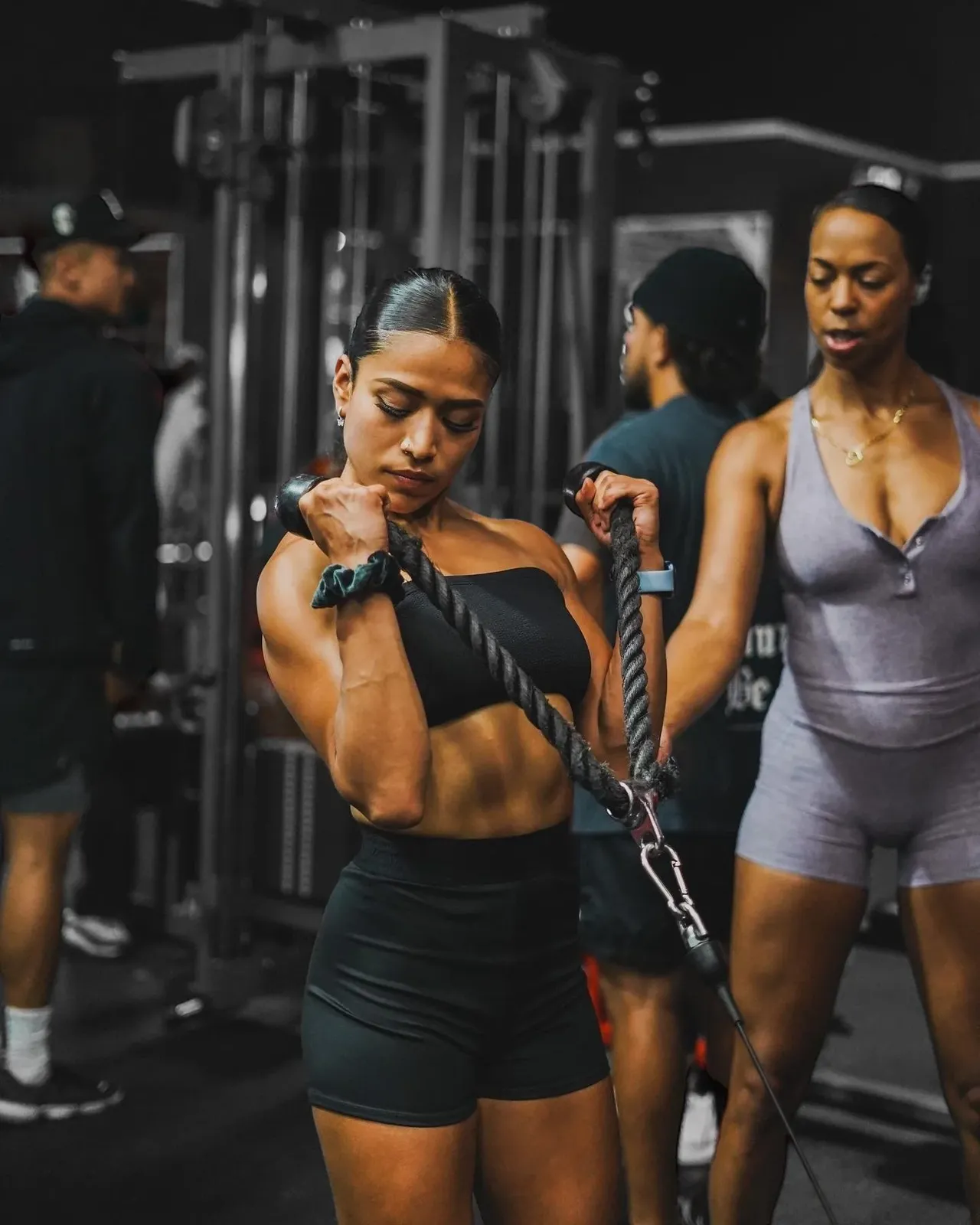
We typically run 3-4 weeks here: seated cable rows, chest-supported rows, and face pulls at light-to-moderate load, 3 sets of 12-15, twice a week, alongside continued scapular and rotator cuff accessory work. The same approach we use for building progressive overload into a strength program applies here — small, consistent weekly increases, not jumps. If rowing at a given weight is pain-free and clean for a full week, we add 5-10%. That's the entire progression model.
Phase 3: Reintroducing Pressing Without Setting Yourself Back
Pressing comes last because it loads the shoulder in more vulnerable positions — especially overhead and at the bottom of a bench press. We start horizontal before vertical, and we start with dumbbells before a barbell, because dumbbells let each arm move independently and don't force a fixed bar path your shoulder might not be ready for.
The sequence we use: floor press (reduced range, protects the bottom position) for 2 weeks, then flat dumbbell bench for 2-3 weeks, then incline dumbbell press, and only after all of that is pain-free for multiple weeks do we touch overhead pressing. Push-ups get reintroduced around the same time as flat dumbbell press, done on an elevated surface first to reduce range before progressing to the floor.
Loads start conservative — often 40-50% of what the person was lifting before the injury — and climb by 5% weekly as long as there's zero sharp pain and full range is maintained. If pain shows up at any point in this phase, we drop back one exercise variation, not the whole program. A client going through this after a labral strain took about 9 weeks to get from floor press back to a comfortable flat bench working weight, which is a realistic timeline most people should expect rather than the 2-3 weeks they're hoping for.
Train Everything Else Hard While the Shoulder Heals
This is the part that separates a smart comeback from a slow one. Your legs, core, and the uninjured arm don't need to sit idle because your shoulder is hurt. Squats, deadlifts (adjust grip if needed — mixed grip or straps take shoulder stress out of the pull), leg press, lunges, and most core work can continue at close to full intensity from week one.
Single-arm work on the unaffected side also carries a documented cross-education effect — training one limb produces measurable strength retention in the opposite, temporarily immobilized limb. It's not a replacement for direct work once you're cleared, but it means the injured side isn't losing as much ground as you'd assume during the early weeks.
We structure this the same way we'd build any periodized strength block — lower body and core carry the primary training stress while upper body work stays restricted, then the emphasis flips as the shoulder clears each phase. A client who keeps squatting twice a week and holds their deadlift numbers steady during an 8-week shoulder rehab comes out the other side in a completely different position than someone who stopped training altogether. They're not rebuilding their entire body — they're just catching one joint back up.
Common Mistakes We See in Long Beach Clients Coming Back
The number one mistake is rushing back to a prior one-rep max instead of rebuilding from a percentage. We've had clients try to jump straight back to their pre-injury bench number in week one of Phase 3 because "it felt fine" during the warm-up sets. It doesn't stay fine. Build back in 5-10% weekly jumps, not all at once.
Second mistake: ignoring the uninjured side. People get so focused on the hurt shoulder that scapular and rotator cuff work on the healthy side gets dropped entirely. Train both sides through every phase — symmetry matters for how the whole upper body moves.
Third mistake: stopping rehab exercises the moment pain disappears. Pain-free doesn't mean fully rehabbed. Strength and endurance in the rotator cuff and scapular stabilizers typically lag 3-4 weeks behind the disappearance of pain. Keep the accessory work in your program for at least a month after you feel normal.
Fourth mistake: comparing your timeline to someone else's. A grade 1 AC sprain and a rotator cuff repair are not the same injury with the same clock. Go by range of motion, pain response, and strength symmetry — not the calendar.
Bringing Boxing and Rotational Work Back In
For clients who box or want to get back to it, the shoulder has extra demands — repeated rotational force, extension at full speed, and a lot of volume on the jab arm specifically. We don't reintroduce bag work until pressing strength is roughly 80% back to baseline and the shoulder has handled a full training cycle without a flare-up.
When we do bring it back, it starts with shadowboxing and light mitt work focused on form, not power. Combinations stay short — twos and threes — before we build back to full rounds. Mobility through the thoracic spine and shoulder capsule matters enormously here, because a stiff shoulder forces the body to compensate through the low back and neck to generate punch speed, which creates a second problem on top of the first.
This is exactly why we pair strength rehab with dedicated mobility work built specifically for boxing performance — it's not a nice-to-have, it's part of why the shoulder got hurt in the first place for a lot of our boxing clients. Power output on the bag typically returns to 90%+ of pre-injury levels within 4-6 weeks of controlled reintroduction, assuming the strength phases before it were done correctly.
Recovery Work That Actually Speeds This Up
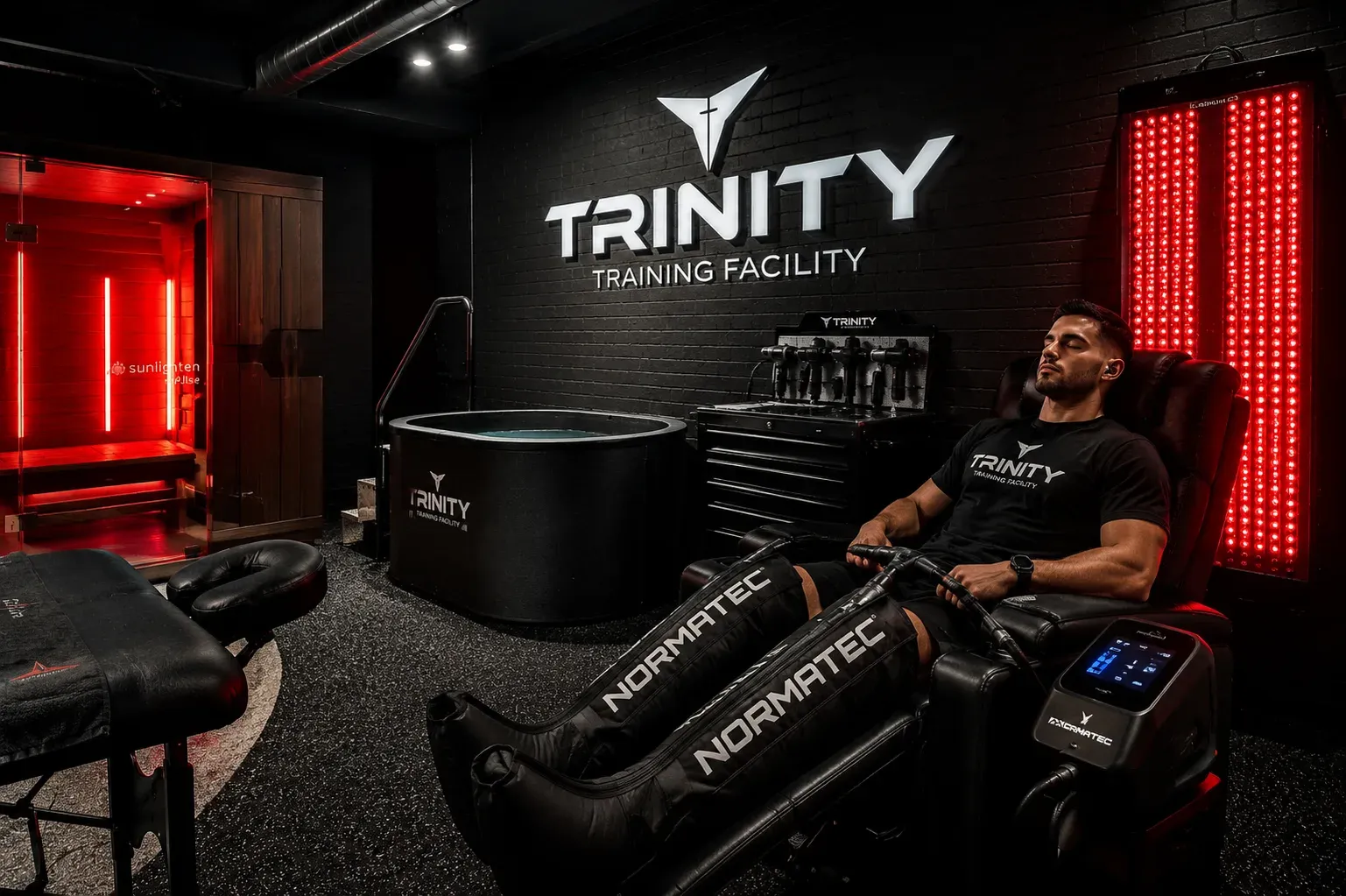
Sleep, soft tissue work, and load management do more for shoulder recovery timelines than any supplement or gadget. Clients who are sleeping under 6 hours a night consistently report slower pain resolution and slower strength return in our experience running this process repeatedly — that's not a controlled study, that's just a pattern we see over and over.
We build in deliberate deload weeks every 3-4 weeks during the rehab process, even though the person is already training at reduced capacity. The shoulder specifically benefits from this because tendon and ligament tissue remodels on a slower timeline than muscle — pushing load up every single week without a periodic step back is a common way people stall out in Phase 2 or 3.
We lean on the same framework described in our guide to building a personalized recovery plan — tracking soreness, range of motion, and sleep quality weekly gives you real data on whether you're progressing or quietly digging a hole. Ice or heat, massage, and mobility drills are useful tools inside this framework, but they don't replace the loading progression itself. No amount of soft tissue work rebuilds tendon strength the way graded resistance training does.
Building a Shoulder That Doesn't Re-Injure
The end goal isn't just getting back to your old numbers. It's building a shoulder that's more resilient than the one that got hurt in the first place. That means permanent additions to your program, not temporary rehab exercises you drop once you feel fine.
Keep rotator cuff and scapular accessory work in your program year-round — 2 sets of band work, twice a week, is a small time cost for a large reduction in re-injury risk. Keep your pulling-to-pressing ratio balanced; a lot of shoulder injuries in lifters trace back to years of heavy bench and overhead press with almost no direct rowing or rear delt work to match it.
If you're rebuilding general strength and conditioning capacity after any injury, not just this one, our breakdown of compound lifts that build real strength is a good reference for what the full program should look like once you're cleared for normal training again. The shoulder work doesn't replace that program — it gets folded back into it.
What To Do Next
If you're sitting on a shoulder injury right now and you're not sure whether you should be training through it, around it, or not at all — that's exactly the conversation to have before you guess your way into a longer injury. We've run this exact process with dozens of Long Beach clients coming back from rotator cuff strains, labrum issues, and post-surgical shoulders, and the ones who come out stronger are the ones who get an actual plan instead of winging it.
Book a free intro at Trinity Training Facility and bring whatever information you have from your doctor or PT. We'll build the phase-by-phase plan around your specific restriction, not a generic template, and get you back to full strength on a realistic timeline. Contact us to schedule your free intro session and get a real plan for the shoulder instead of another few months of guessing.
Key Takeaways
- Get written clearance and a specific movement restriction list from your doctor or PT before loading the shoulder again — not a vague 'take it easy.'
- Pulling strength (rows, face pulls, band work) should return to full capacity before you load pressing movements again.
- Pain-free range of motion is the gate you have to pass before adding external load — not time elapsed since injury.
- Most re-injuries happen from jumping back to a prior one-rep max instead of rebuilding in 5-10% weekly increments.
- Training the rest of the body hard during shoulder rehab prevents the 6-8 week strength and conditioning losses that make the comeback harder than the injury.