Building Functional Strength for Everyday Life: 5 Progressive Overload Exercises for Your Long Beach Routine
Build real-world strength with 5 progressive overload exercises Long Beach clients use to move furniture, carry surfboards, and climb stairs pain-free.
Functional strength for everyday life comes from five compound movement patterns — squat, hinge, press, carry, and lunge — trained with progressive overload, meaning you add small, measurable increases in weight, reps, or difficulty every 1-2 weeks. Start with goblet squats, trap bar deadlifts, overhead presses, loaded carries, and split squats, and track every session so you know exactly what to beat next time.
The Tuesday a Client Threw Out His Back Moving a Couch
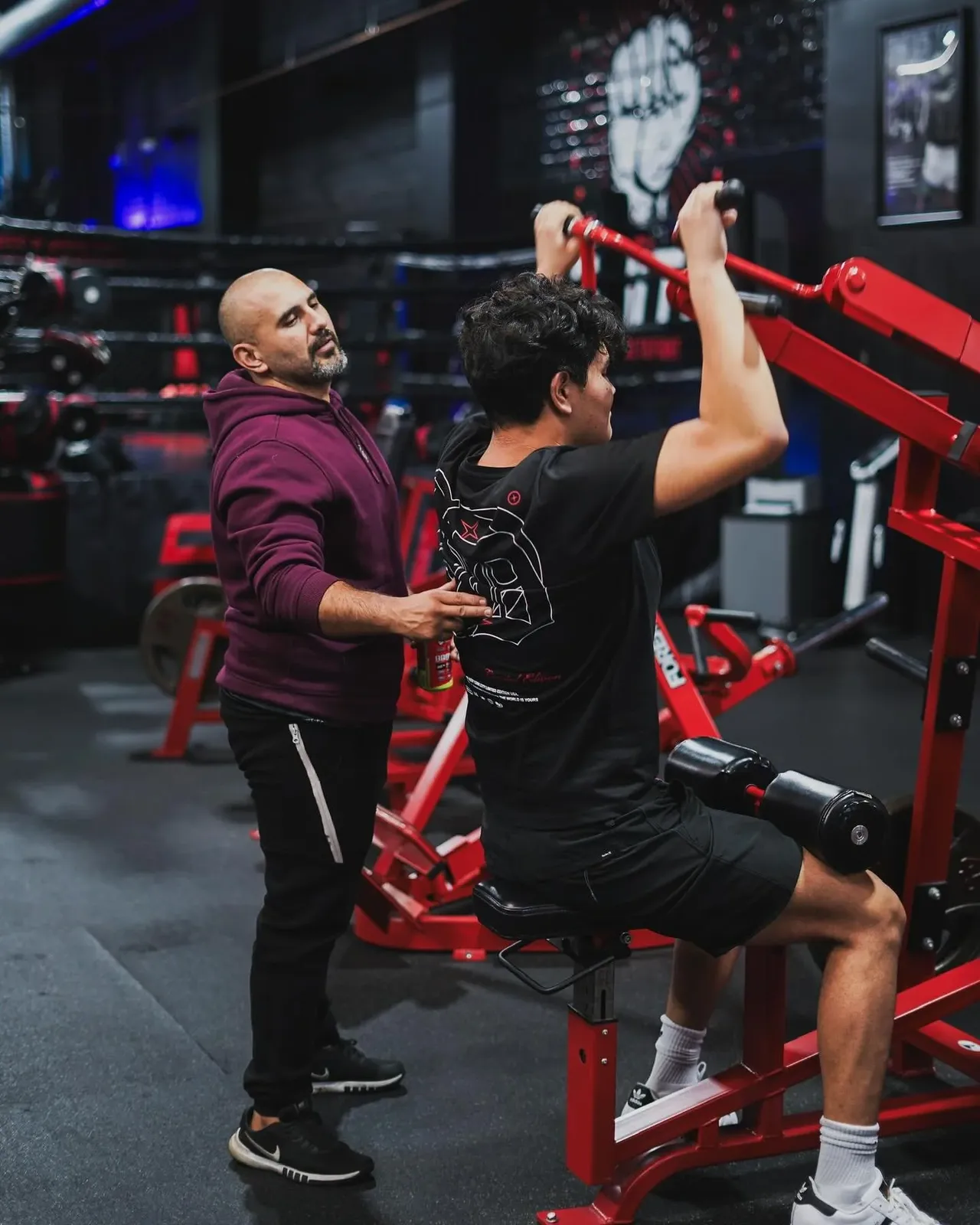
Marcus walked into Trinity Training Facility two years ago the day after he threw his back out moving a couch into his new apartment near 2nd Street. He wasn't out of shape by most standards — he had a chain-gym membership he used twice a month for treadmill work. When we tested his hip hinge on day one, he couldn't lift an empty 35 lb kettlebell off the floor without rounding his lower back into a comma shape.
That session told us everything we needed to know. Marcus didn't need more cardio or another set of bicep curls on an isolation machine. He needed a body that could handle real load in real positions — carrying a surfboard down to the water at Belmont Shore, hauling grocery bags up two flights of stairs near Retro Row, picking a toddler up off the floor without a second thought.
Six months later, Marcus pulled a 225 lb trap bar deadlift for reps and moved apartments again without a single complaint. Nothing about that transformation involved a trendy piece of equipment. It came down to five compound movements, applied with progressive overload, tracked on paper every week. This article breaks down exactly what we did with him and dozens of clients since, with the actual numbers, so you can apply the same framework yourself.
What Functional Strength Actually Means for Life in Long Beach
Functional strength is not a marketing term for burpees and battle ropes. It means building strength in the movement patterns your body relies on outside the gym: squatting down and standing back up, hinging at the hips, pressing an object overhead, carrying a load for distance, and stabilizing on one leg. Climbing the stairs at a Belmont Heights bungalow, walking uneven sand at the beach, loading a kayak onto a roof rack in Alamitos Bay — all of it reduces to some combination of those five patterns.
Chain gyms build around machines because machines are easy for untrained staff to supervise and easy to fill a 40,000 square foot floor with. The tradeoff is that a leg extension machine trains your quads in a seated position your body will basically never replicate. A goblet squat trains your quads, hips, core, and upper back simultaneously, in the exact position you use to pick up a laundry basket or a dog.
This is the core idea behind progressive overload exercises for functional strength: you're not training muscles in isolation, you're training patterns under increasing load, so the pattern gets stronger and more resilient over time. The five exercises below were chosen because together they cover every major pattern a healthy adult needs.
Why Progressive Overload Is the Only Way to Build Strength That Lasts
Progressive overload is the principle that your body only adapts — builds new muscle, strengthens tendons, improves coordination — when you consistently ask it to do slightly more than it did last time. Not dramatically more. Slightly more. The research consensus, summarized by the National Strength and Conditioning Association, is consistent: strength gains stall within a few weeks once the training stimulus stops increasing, no matter how hard someone trains emotionally (NSCA, Progressive Overload Principle).
In practice, one of four things has to change regularly: weight, reps or sets, tempo or range of motion, or training frequency. At Trinity, we default to this progression scheme for new clients:
The mistake we see constantly with people who train on their own, especially former athletes, is training hard without training progressively. They show up, sweat, and leave — but use the same 30 lb dumbbells for a year because nobody is tracking the number. A notebook or a phone note with last session's numbers is worth more than any supplement you could buy. If you can't answer "what did I lift last time" in five seconds, you're not applying progressive overload, you're just exercising.
Exercise 1: Goblet Squat Progressing to Front Squat
The goblet squat is where almost every client at Trinity starts, regardless of age or experience. Hold a single dumbbell or kettlebell vertically against your chest, feet shoulder-width apart, and squat until your elbows brush the inside of your knees. The weight held in front counterbalances your torso, making it easier to keep an upright chest than a barbell back squat — a real advantage for anyone rebuilding confidence after a back injury.
Most adults start with a 25-35 lb kettlebell for 3 sets of 8 reps, adding 5 lbs once all three sets hit clean depth with no heel lift. A client training twice a week typically moves from 25 lbs to 50-55 lbs within eight weeks, at which point grip and rack position become the limiting factor — your signal to progress to a barbell front squat.
The most common mistake we correct is heels rising off the floor at the bottom, which shifts load onto the knees and away from the hips and glutes. The fix is ankle mobility work plus a two-inch heel wedge (a pair of five-pound plates works) until mobility catches up. Second most common mistake: rushing the descent — count two full seconds down, pause at depth, then drive up through the whole foot.
Exercise 2: Trap Bar Deadlift Progressing to Conventional Deadlift
The hip hinge is the pattern behind nearly every "I threw my back out" story we hear at intake, which is why Marcus's case is so common. The trap bar deadlift is the safest entry point because you stand inside the bar rather than in front of it, keeping the load centered under your hips instead of out in front of your spine.
New clients typically start with just the empty trap bar (40-55 lbs depending on model) for 3 sets of 6 reps, adding 10 lbs per session as long as the lower back stays flat — no rounding, no excessive arching. A client training the hinge pattern twice weekly usually adds 100-150 lbs to their trap bar deadlift within 12 weeks, a motivating number to watch climb on paper.
Once someone can pull 1.5 times their bodyweight from a trap bar cleanly, we introduce the conventional barbell deadlift, which demands more hip mobility and lat engagement. The biggest technical error we see is letting the bar drift away from the body during the pull, turning a hip-dominant lift into a lower-back-dominant one. Cue clients to drag the bar up the shins like it's on rails, and to take the slack out before pulling by pushing the floor away with the legs first.
Exercise 3: Standing Overhead Press Progressing to Push Press
The press pattern gets neglected because most gym programming defaults to horizontal pressing — bench press, push-ups, chest machines. But the movement you actually use daily, sliding a suitcase into an overhead bin or lifting a box onto a garage shelf, is vertical, not horizontal.
Start standing with a pair of dumbbells at shoulder height, feet hip-width apart, ribs stacked over the pelvis. Press straight overhead until the dumbbells nearly touch, then lower under control. Most adults start with 15-20 lb dumbbells per hand for 3 sets of 8, adding 2.5-5 lbs per hand every one to two sessions as long as the low back doesn't arch to compensate.
Once strict pressing stalls — usually between 30-40 lb dumbbells for most clients — we introduce the push press, which uses a small dip and drive from the legs to move heavier loads overhead. This isn't cheating; it trains explosive hip and leg power that transfers to real tasks like putting a suitcase in an overhead bin. The most common error is arching the lower back for extra range of motion. Fix it by bracing the core hard before every rep, as if about to take a punch to the stomach, and stopping the rep the instant the ribs flare.
Exercise 4: Loaded Carries — Farmer's Walk Progressing to Suitcase Carry
If you had to pick the single most underrated exercise for daily function, it's the loaded carry. Grab a heavy dumbbell or kettlebell in each hand, stand tall, and walk for distance or time. That's it — no complicated technique, which is exactly why it transfers so directly to carrying grocery bags up a flight of stairs or hauling a cooler down to the sand.
Start with a pair of 35-45 lb dumbbells for 3 rounds of 40-yard walks, resting 60-90 seconds between rounds. Add 5-10 lbs per hand every two weeks, or extend to 60 yards before adding weight if space is limited. Grip strength is almost always the first thing to give out — a feature, not a bug, since grip built into a compound carry beats isolated wrist curls.
Once bilateral carries feel easy, progress to the suitcase carry: a single heavy dumbbell carried in one hand only. This forces your obliques and deep core muscles to resist side-bending for the entire walk — precisely the stability your spine needs hauling one heavy bag through an airport. The most common mistake is letting the loaded-side shoulder shrug toward the ear; keep it pulled down and back, and switch hands only at the end of a full round, not mid-set.
Exercise 5: Split Squat Progressing to Bulgarian Split Squat
Every exercise so far has been bilateral — both feet on the ground, load split evenly. But almost nothing outside the gym happens on two feet at once. Walking, climbing stairs, stepping off a curb, and catching your balance on wet sand at Junior's Beach are all single-leg tasks, which is why unilateral training belongs in every serious program.
The split squat is the entry point: staggered stance, front foot flat, back heel lifted, lowering the back knee toward the floor while keeping the torso upright. Start bodyweight only for 3 sets of 8-10 reps per leg, focusing on a controlled two-second descent. Once that feels easy with good balance, add light dumbbells at the sides, starting around 10-15 lbs per hand.
The Bulgarian split squat elevates the back foot on a bench, increasing range of motion and forcing the front leg to do nearly all the work. This single change makes the exercise dramatically harder — most clients drop back to bodyweight or very light dumbbells when they first switch, and that's expected, not a regression. The most common technical error is letting the front knee cave inward under load. Cue clients to push the knee out over the second and third toes throughout the rep, and slow the tempo down until that cue becomes automatic.
Putting It Together: A Sample 4-Week Progressive Overload Block
Programming five exercises well matters more than programming twenty exercises poorly. Here is a simplified version of the block we build for new clients, run two to three times per week with at least one rest day between sessions:
A client following this block twice weekly for 12 weeks — three full cycles — typically adds 15-25 lbs to their goblet squat, 60-100 lbs to their trap bar deadlift, 10-15 lbs per hand to their overhead press, and roughly doubles their starting farmer's walk load. Those are averages pulled from client logs at our Long Beach facility over the last three years. The deload week is the piece people skip when training alone, and it's what prevents the nagging elbow and shoulder pain that derails consistency. Four weeks of building followed by one week of backing off beats eight straight weeks of grinding.
Common Mistakes That Stall Progress — and What to Do Instead
The single biggest mistake is training hard without tracking numbers. Effort without a written record of last session's weights and reps isn't progressive overload — it's just exercise, and exercise without progression plateaus fast. Keep a simple log and reference it before every working set.
The second mistake is chasing heavier weight before the pattern is technically sound, especially on the squat and hinge. A 15% increase in weight with a 10% breakdown in form isn't progress, it's a future injury. ACSM's resistance training guidelines are explicit that technical proficiency should precede load increases, particularly for adults new to structured training (ACSM Resistance Training Guidelines). If your last three reps look noticeably worse than your first three, that's today's ceiling, not a signal to add weight.
The third mistake is ignoring recovery — protein intake, sleep, and rest days between hitting the same pattern hard. Training the same hinge pattern heavy three days in a row on five hours of sleep stalls your deadlift, it doesn't speed it up. Two to three focused sessions per week with real recovery outperforms daily training done half-recovered. And don't abandon a lift because week one felt awkward — most new patterns feel foreign for the first two or three sessions. Give any new pattern four sessions before judging it.
Your Next Step
Functional strength isn't built by finding a perfect workout online and running it for a month. It's built by picking the right five patterns, loading them a little more each week, writing the numbers down, and staying patient through the slow weeks. Marcus didn't get his 225 lb trap bar deadlift from one great session — he got it from roughly 50 sessions where the only goal was beating last time's number by a small, repeatable amount.
If you're in Long Beach and want a coach to test your squat, hinge, press, carry, and single-leg strength, then build a progressive overload plan around your actual starting point, book a strength assessment at Trinity Training Facility. We'll show you exactly where you stand and what the next 12 weeks should look like.
Key Takeaways
- Functional strength is built from five movement patterns: squat, hinge, press, carry, and single-leg — not from isolation machines or random workouts.
- Progressive overload means adding 2.5-5 lbs, one rep, or a slower tempo every 7-14 days, not just training hard and hoping for change.
- A trap bar deadlift is the safest entry point to hip-hinge strength for most adults over 35 or anyone with a history of low back pain.
- Loaded carries like the farmer's walk build the grip and trunk stability that directly transfers to carrying groceries, kids, and moving boxes.
- Logging your weights and reps every session is the single biggest predictor of whether a client actually gets stronger within 90 days.
- Long Beach terrain — stairs, hills near Signal Hill, sand at the beach — punishes weak unilateral strength, which split squats and step-ups directly fix.