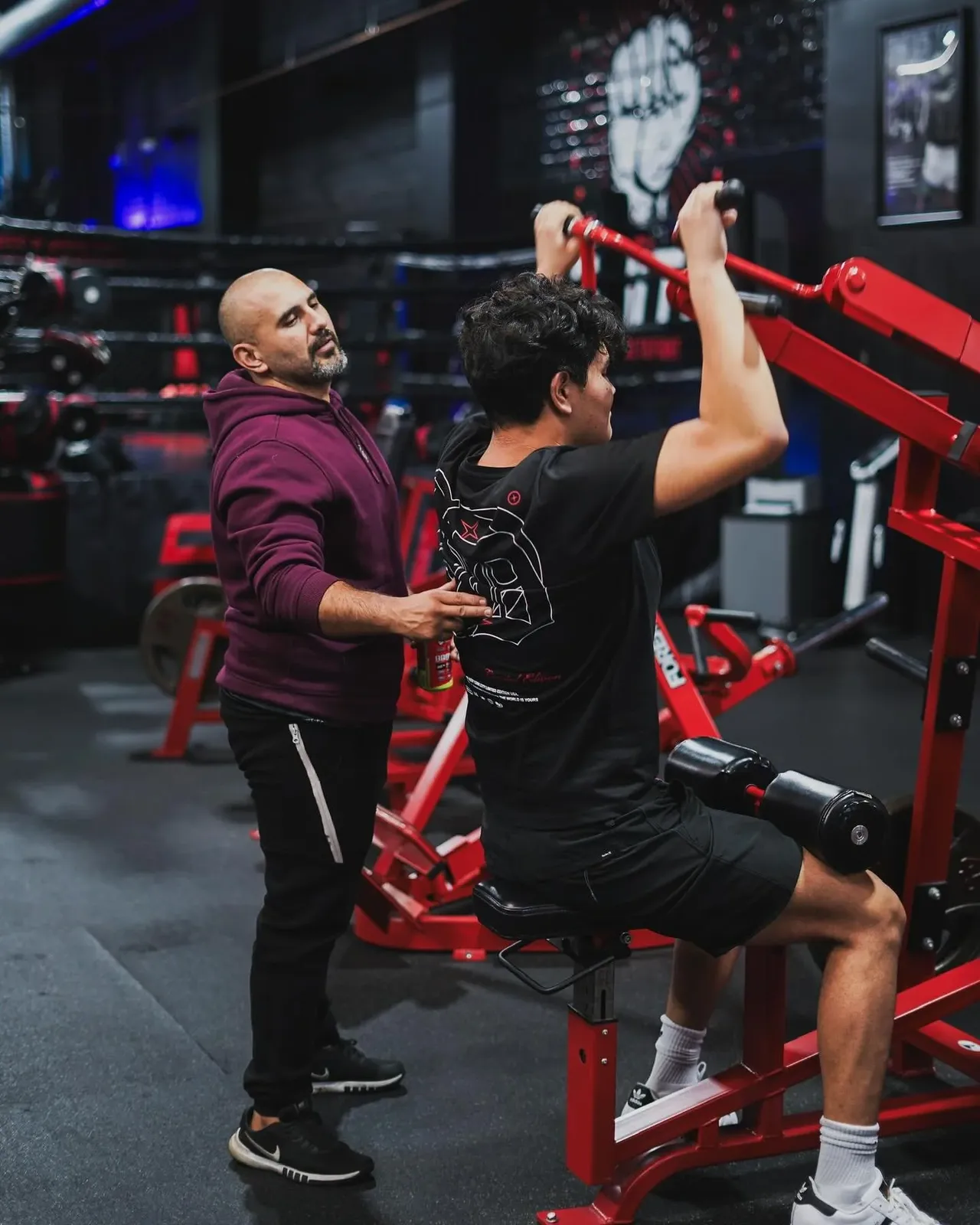
Boxing Workouts for Faster Hands and Better Endurance
Build faster hands and gas tank that lasts. A Long Beach coach breaks down the drills, strength work, and recovery that actually move the needle.
Faster hands and better boxing endurance come from three things done together: speed-specific drills done fresh (not after you're gassed), strength training that builds rate of force development, and conditioning that matches the sport's actual work-to-rest ratio. Train speed for 6-10 short, max-effort reps per set, build power with med ball throws and Olympic lift variations, and condition with 2-3 minute rounds at boxing-specific intensity, not steady-state cardio.
A member walked into Trinity last year after training on his own for eight months. Decent bag work, ran three miles a few times a week, shadowboxed in his garage most nights. His problem wasn't effort — it was that his hands looked the same speed in month eight as they did in month two. He was tired more often, sure. But not faster. That's the pattern we see constantly with self-trained boxers and even some gym-trained ones: hours logged, no speed gained. The fix isn't more rounds. It's training speed and endurance as two separate qualities that need two separate approaches, then stacking strength work underneath both.
Why Hand Speed Isn't Just Genetic
People assume fast hands are something you're born with. Some of that is true — fiber type distribution matters. But most of the gap between a slow amateur and a fast one comes down to training error, not genetics. If you only ever throw punches while fatigued, you're training your nervous system to fire slow patterns, because that's the only pattern available when your CNS is depleted.
Speed is a skill, and skills get grooved by repetition under the right conditions. If every rep of your combinations happens in round 6 of a tired session, you're rehearsing the tired version of your jab, not the fast one. The fast version needs to be trained separately, early, and fresh.
This is why we program speed work at the front of a session, right after the warm-up, before any conditioning rounds happen. Five to eight sets of 8-10 seconds of maximum-speed combinations on the bag, full recovery between sets (60-90 seconds), technical focus on snap and return speed rather than power. This is not a conditioning drill. If you're gassed by set four, you're doing it wrong — drop the volume, not the intensity.
The Energy System Problem With Most Boxing Workouts
A boxing round is roughly 3 minutes of high-intensity, intermittent work — bursts of punching output separated by clinches, footwork, and defensive pauses — followed by a 60-second rest. That's an interval pattern, not a steady-state one. Yet most people who "train for boxing endurance" default to jogging or the elliptical, which builds aerobic base but does almost nothing for the specific ability to recover between three-minute bursts of high output.
Your body has to relearn how to buffer lactate and recover phosphocreatine stores within that 60-second window between rounds. That only happens if you train in that exact rhythm. A boxer who runs 5Ks all offseason and never does round-based interval work will still gas by round 4, even with a great aerobic engine underneath it.
The fix: structure conditioning in actual round intervals. Six to twelve rounds of 2-3 minutes of work (bag, mitts, or footwork circuits) with 60-90 seconds rest, matching whatever round length you're training toward. Track your work-to-rest recovery — if your heart rate isn't dropping by 20-30 beats in that rest window by week 4, your rest periods need to shrink slightly to force adaptation, or your work intensity needs to come down until your engine catches up.
Building a Hand Speed Program: The Numbers That Matter
Specificity beats volume here. A hand speed block should have three numbers you're tracking every week: rep duration, rest ratio, and total quality reps per session.
We also track combination count, not just punch count. A member doing 4-punch combinations at max speed for 8 seconds might get 5-6 combos per set. If that number climbs to 8-9 combos in the same window over 4 weeks with no loss of snap, that's real, measurable hand speed progress — not a guess, a number on a sheet.
This is the same principle behind progressive overload in strength work — you need a number to chase, or "training hard" becomes a feeling instead of a result. If you haven't read our breakdown on applying progressive overload systematically, the same logic transfers directly to speed training — track it or you're guessing.
Speed Drills That Actually Translate to the Bag and Sparring
Not every "speed drill" carries over. Speed bag work, for example, builds rhythm and shoulder endurance, but it trains a completely different motor pattern than a straight punch thrown with hip rotation. It looks impressive. It doesn't make your jab faster.
What actually transfers:
Rotate these three across a week rather than doing all of them every session. Two speed-focused sessions per week is plenty on top of technical and conditioning work — more than that and the nervous system stops adapting and starts just accumulating fatigue.
Endurance Work Without Killing Your Speed
The mistake we see most: someone decides they need "more cardio," so they add daily long runs on top of their boxing sessions. Four weeks later their hands are slower, not faster, because they've built a chronic fatigue base that never lets the nervous system recover enough to express speed.
Endurance and speed compete for recovery resources. If you're doing five conditioning sessions and two speed sessions in the same week with no deload, the conditioning will win and your speed numbers will quietly decline. This is the single most common reason a boxer plateaus or regresses despite training more.
The better structure is a 3:1 or 2:1 ratio favoring quality over volume — two hard conditioning sessions and two speed/technical sessions per week, with one full recovery day and one active recovery day (light footwork, mobility, easy bag work at 50% output). If you're prepping for a fight and need more volume, that ratio can shift closer to fight week, but it should build there, not start there.
Strength Training's Role in Punch Speed
Punches are not an arm movement. Force is generated from the ground, transferred through the hips and torso, and expressed at the fist last. That means the strength qualities that actually move your hand speed number live in your legs, hips, and core rotation — not your biceps.
Three lifts do more for punch speed than any amount of extra shadowboxing:
This should run on a separate day or the same day after speed work, never right before a speed session — you want fresh legs for explosive lifting. For a full breakdown of how a structured lifting block supports boxing performance specifically, see our 6-week strength training program built for boxers. And if you want the broader case for why progressive lifting outperforms random gym sessions for any Long Beach athlete, our piece on progressive overload and real strength gains lays out the framework we use with every member.
Recovery and Why Overtrained Boxers Get Slower
We've had members show up convinced they've lost their hand speed for good, when the actual issue was six straight weeks of training without a single deload. Fatigue masks fitness. You can be getting objectively stronger and faster in your muscles and CNS capacity while looking and feeling slower in the gym because you're carrying too much accumulated fatigue to express it.
Signs you're in this hole: resting heart rate creeping up 5-8 beats over baseline, grip strength down, motivation to train dropping even though you love the sport, and — the tell specific to boxers — combinations that used to feel automatic now feeling like you're thinking through each punch.
The fix is a planned deload every 4-6 weeks: cut volume by 40-50% for a week, keep intensity low-to-moderate, prioritize sleep and protein intake. Most boxers see their hand speed numbers jump right after a deload week, not during the hardest training block — that's the fatigue lifting off a fitness level that was already there. If you're coming back from any kind of injury or layoff, our article on how strength training supports injury recovery covers how to rebuild that base without setting yourself back further.
Sample 4-Week Hand Speed and Endurance Block
Here's a simplified version of a block we run with members prepping for sparring or a smoker fight:
Week 1 — Baseline: 2 speed sessions (5 sets x 8-second bursts), 2 conditioning sessions (6 rounds x 2 min, 60 sec rest), 2 strength sessions (trap bar jumps, med ball throws, kettlebell swings).
Week 2 — Build: Speed sessions increase to 6 sets. Conditioning moves to 8 rounds x 2 min. Strength stays the same load, add 1 set per lift.
Week 3 — Peak: Speed sessions add resisted-to-unresisted contrast sets. Conditioning increases to 8 rounds x 2:30, rest drops to 60 seconds flat. Strength intensity increases 5-10%.
Week 4 — Deload and test: Volume cut by 40% across the board. End the week with a benchmark: max combos thrown in an 8-second burst, and rounds completed at target heart rate recovery. Compare to week 1 numbers.
Members who run this exact structure consistently see combo counts climb 15-25% and can typically add 2 full rounds to their conditioning ceiling by the end of the block. That's a testable, repeatable result — not a vague "feel faster" claim.
Common Mistakes That Stall Progress
The recurring errors we correct most often with boxing members:
These mistakes overlap heavily with general strength training errors we see across every discipline at Trinity, not just boxing. Our piece on common strength training mistakes to avoid covers several of the underlying programming errors — imbalanced volume, no progression tracking — that show up in boxing conditioning just as often as in a barbell program.
When to Get a Coach's Eyes On Your Mechanics
Programming solves the physical capacity side of hand speed — the energy systems, the strength base, the recovery. But a real ceiling on speed often comes down to mechanics you can't see in yourself: dropping your hand before you throw, overcommitting your weight, telegraphing with your shoulder before the punch fires.
We've had members add 4 inches of range to their jab reach and a visible tick of speed just by fixing a shoulder drop nobody had ever pointed out to them. No amount of extra bag rounds fixes a mechanical leak — it just reinforces it faster.
If you've been training consistently for 8-plus weeks with a structured speed and conditioning plan and your numbers still aren't moving, that's the signal to get a coach's eyes on your form specifically, not to add more volume. Film your combinations from the side, compare week to week, and bring that footage in — it's the fastest way for a coach to find the one or two fixes that unlock the rest of the work you've already put in.
If you're in Long Beach and want a plan built around your actual conditioning level, sparring schedule, and goals instead of a generic program pulled off the internet, come in for a free intro session. We'll test your current output, build the block that fits where you actually are, and get you tracking numbers that mean something. Book your free intro at Trinity Training Facility and let's get your hands moving the way they should.
Key Takeaways
- Hand speed is a skill you train fresh, not a byproduct of getting tired on the bag — do speed drills in the first 15 minutes of a session, never last.
- Punch speed comes from hip and leg power more than shoulder or arm strength, so rotational med ball throws and trap bar jumps carry over more than curls or bench work.
- Boxing-specific conditioning means training in 2-3 minute work intervals with 60-90 seconds rest, matching real round structure instead of long steady-state cardio sessions.
- Overtraining kills hand speed before it kills strength — a boxer who trains hard 6 days a week with no deload will look slower in week 4 even though nothing physically changed except fatigue.
- A structured 4-week block alternating speed, power, and conditioning emphasis produces measurably faster combinations than random daily bag work.
- Most amateur boxers plateau because they never load their legs and hips — punches are thrown from the ground up, not the shoulder out.