The 4-Week Upper Body Blast Plan for Long Beach Women Who Want Real Strength
A Long Beach personal trainer's 4-week upper body strength plan for women, with exact sets, reps, loads, and progression built for real results.
A 4-week upper body strength plan for women works when it manipulates volume and load in phases: a base week at moderate volume, two weeks of progressive overload, and a deload week to consolidate strength gains. Women following this structure at Trinity Training Facility typically add 10-20 pounds to their bench press and 1-2 full push-ups within four weeks by training upper body twice weekly with compound lifts prioritized over isolation work.
Maria came into Trinity Training Facility at 34 years old with a familiar story. She'd been going to a Long Beach chain gym three days a week for over a year, doing the same circuit of light dumbbells, cable machines, and twenty-minute treadmill sessions. Her arms looked the same as they had twelve months earlier. Her bench press, when we finally tested it, was an empty 20-pound barbell for six shaky reps. She wasn't lazy and she wasn't undisciplined. She was doing a program that was never designed to build strength in the first place.
This is the pattern we see constantly with women who train in Long Beach without a structured plan. They accumulate gym hours without accumulating strength. The fix isn't more cardio or lighter weights for higher reps — it's a phased upper body program that applies real progressive overload over a defined block of time. What follows is the exact 4-week upper body plan we've run with dozens of clients at Trinity, including the sets, reps, and loading logic behind each week.
Why Long Beach Women Plateau on Upper Body Strength
The most common upper body training mistake we see in new female clients is chronic under-loading. Someone will do three sets of 15 reps on a chest press machine at a weight that leaves eight reps in the tank, week after week, for months. Nothing about that stimulus tells the body it needs to adapt. The muscle isn't challenged past what it already handles, so strength stays flat.
The second mistake is program-hopping. A client tries a boxing class Monday, a random YouTube arm workout Wednesday, and a group fitness class Friday that barely touches pressing or pulling movements. There's no thread connecting the sessions, no week-over-week increase in load, and no way to know if progress is happening because nothing is being measured consistently.
The third issue is specific to Long Beach's gym culture: intimidation around the free weight section. Most commercial gyms here have their dumbbell racks dominated by men doing curls, and women often default to the 5-12 pound dumbbells out of habit rather than capability. In our assessments, we regularly find women capable of pressing 20-25 pound dumbbells for reps who've never picked up anything heavier than 10 pounds. That gap between capability and habit is where this plan starts.
The 4-Week Blast Plan: How It's Structured
This program runs two upper body sessions per week, spaced roughly 72 hours apart — for example, Monday and Thursday. Each session takes 45-55 minutes and centers on four compound lifts plus two accessory movements. The plan follows a classic linear progression: Week 1 builds a technical base at moderate volume, Weeks 2 and 3 add load while volume shifts downward, and Week 4 deloads to let the nervous system consolidate the gains before you test your numbers again.
Every session opens with the same core lifts in the same order: incline dumbbell press, chest-supported row, seated dumbbell shoulder press, and lat pulldown. Keeping the same lifts across all four weeks is intentional. Strength gains come from repeated exposure to the same movement pattern under increasing load, not from constant exercise variation. Save variety for accessory work.
Rest periods matter as much as the sets themselves. On the four main lifts, rest 90-120 seconds between sets. Cutting rest short to save time is the single fastest way to sabotage strength gains, because you show up to set three or four already fatigued and unable to hit the target reps.
Week 1: Building the Base
Week 1 is about establishing a true working weight and locking in form, not chasing fatigue. For each of the four main lifts, do 3 sets of 10 reps at a weight where the last 2 reps of the final set are genuinely difficult but not failing. If you can do more than 12 reps with clean form, the weight is too light — add 5-10 pounds and try again next set.
A typical Week 1 session for a client starting fresh: incline dumbbell press 3x10 at 15-pound dumbbells, chest-supported row 3x10 at 20-pound dumbbells, seated shoulder press 3x10 at 12-pound dumbbells, lat pulldown 3x10 at a moderate cable stack setting. Accessory work follows: 2 sets of 12 tricep pushdowns and 2 sets of 12 bicep curls.
By the end of Week 1, every client should have a written log with the exact weight and reps completed on every set. This log is the entire engine of the program. Without it, Week 2's loading decisions are guesswork.
Expect some soreness 24-48 hours after each session, especially in the chest and upper back if this is new stimulus. That soreness should fade by session two. If it doesn't, the loading was too aggressive for a true beginner and needs to come down 10-15%.
Week 2: Adding Load and Intensity
Week 2 shifts the rep target down and the load up. Move to 3 sets of 8 reps on all four main lifts, increasing weight by 5-10% from what you logged in Week 1. If Maria pressed 15-pound dumbbells for 10 reps in Week 1, Week 2 calls for 17.5-20 pound dumbbells for 8 reps.
This is the week most clients feel the mental shift. The weight now feels genuinely challenging, and form under fatigue becomes the coaching focus. Watch for shoulders creeping up toward the ears on presses and lower back arching excessively on rows — both are signs the load has outpaced technique and needs to come down slightly rather than force through with poor mechanics.
Accessory volume increases modestly: 3 sets of 10 on tricep and bicep work instead of 2 sets of 12. The goal isn't to exhaust these smaller muscle groups; it's to give them just enough additional stimulus to keep pace with the bigger lifts.
By the end of Week 2, most clients report the workout takes noticeably more effort but doesn't leave them wrecked. If a session leaves you unable to lift your arms comfortably the next day, dial back load by 5% in Week 3 rather than pushing through.
Week 3: Peak Volume Phase
Week 3 is the heaviest week of the block. Sets drop to 4, reps drop to 6, and load increases another 5-10% over Week 2's numbers. This is a true strength-focused rep range, and it's where most of the four-week block's actual strength gain gets built.
Because the reps are lower, rest periods extend slightly — move to a full 2 minutes between sets on the four main lifts. Trying to rush this week's rest periods is the most common way clients stall on their final sets and miss reps they'd otherwise hit.
A sample Week 3 session: incline dumbbell press 4x6 at 22.5-25 pound dumbbells, chest-supported row 4x6 at 27.5-30 pound dumbbells, seated shoulder press 4x6 at 15-17.5 pound dumbbells, lat pulldown 4x6 at an increased cable setting. Accessory work drops back to 2 sets of 10 to protect recovery capacity for the main lifts.
This week also tends to reveal true strength ceilings. If a client misses the target reps on set 4 of any lift, that's useful information — it tells us the true working max for that movement, which becomes the baseline for programming the next training block after the deload.
Week 4: Deload and Testing
Week 4 cuts volume roughly in half: 2 sets of 8 reps at the Week 2 load, not the Week 3 load. This isn't a rest week in the sense of skipping the gym — it's a planned reduction that lets accumulated fatigue clear out while keeping the movement pattern active.
Midweek of Week 4, typically on the second session, we retest. For presses, that means finding a true 5-rep max on the incline dumbbell press and seated shoulder press. For rows and pulldowns, we look for the heaviest weight that can be moved for a clean set of 6.
This is the moment clients like Maria see the number that makes the whole block worth it. Her incline dumbbell press moved from 15-pound dumbbells for 10 reps in Week 1 to a 5-rep max of 27.5 pounds per hand by the end of Week 4 — a jump that would have taken six months on her old chain-gym routine, if it happened at all.
After testing, the next four-week block starts from these new numbers. Strength building isn't a one-time event; it's blocks stacked on blocks, each one starting from a slightly higher baseline than the last.
Common Mistakes Women Make in Upper Body Training
The most damaging habit is defaulting to the same 8-10 pound dumbbells across every exercise regardless of the movement. Pressing and rowing muscles are larger and stronger than the small stabilizers used in lateral raises or curls — using one light weight for everything under-trains the big lifts and over-fatigues the small ones.
A close second is skipping compound lifts entirely in favor of isolation machines. Bicep curl machines and pec-deck flyes have a place as accessories, but they can't replicate the total-body strength demand of a loaded press or row. Clients who only do isolation work plateau fast because the stimulus never scales meaningfully.
Third, many women stop a set the instant it starts feeling hard, well before actual muscular failure. Growth and strength adaptation happen in that last rep or two of genuine effort. Stopping at "somewhat challenging" instead of "genuinely difficult" leaves progress on the table every single session.
Finally, inconsistent session spacing kills momentum. Training upper body Monday, then not again until the following Sunday, doesn't provide enough frequency for the nervous system to reinforce the movement pattern. Stick to the 72-hour spacing as closely as your schedule allows.
Nutrition and Recovery to Support the Plan
Strength gains happen during recovery, not during the workout itself, which makes protein intake non-negotiable during this block. Target 0.7-1 gram of protein per pound of bodyweight daily. A 140-pound client should be eating 100-140 grams of protein spread across 3-4 meals — roughly a palm-sized portion of protein at each sitting.
Sleep is the second lever, and it's the one clients most often ignore. Under 6 hours of sleep consistently blunts strength gains regardless of how well the training plan is written. We ask clients to track sleep alongside their workout log during this four-week block, because the correlation between poor sleep weeks and missed reps is almost always visible in the data.
Hydration matters more than most people expect for pressing strength specifically — even mild dehydration reduces power output in upper body lifts. Aim for half your bodyweight in ounces of water daily, more on training days.
Between sessions, light activity like walking or an easy mobility flow supports recovery better than complete inactivity. Full rest days without movement tend to leave shoulders and upper back tighter, not looser, going into the next session.
Tracking Progress and What Results to Expect
Weight on the bar or dumbbells is the clearest marker of progress, but it's not the only one worth tracking. Log push-up capacity weekly — even if it's knee push-ups at the start — along with how many strict reps you can complete before form breaks down.
Take a simple measurement of upper back and shoulder circumference at the start and end of the four weeks. Visible changes in this area often show up before the scale or mirror reflects anything, since upper body strength training tends to improve posture and shoulder definition quickly.
Realistic expectations: most women in this program add 10-20 pounds to their main presses over four weeks, cut rest time needed between sets as conditioning improves, and report feeling noticeably more capable carrying groceries, lifting kids, or moving furniture. These functional wins matter as much as the numbers on paper.
What this plan won't do in four weeks is produce dramatic visible muscle size — that takes months of consistent training and a caloric surplus. What it reliably does is prove that strength gains happen fast when the loading is actually progressive, which builds the confidence to keep going into the next training block.
Getting Started at Trinity Training Facility
This plan works on paper, but the difference between a program that produces results and one that produces frustration usually comes down to load selection and form correction in the first two weeks. Guessing wrong on starting weight either stalls progress with too-light loads or risks shoulder strain from too-heavy ones.
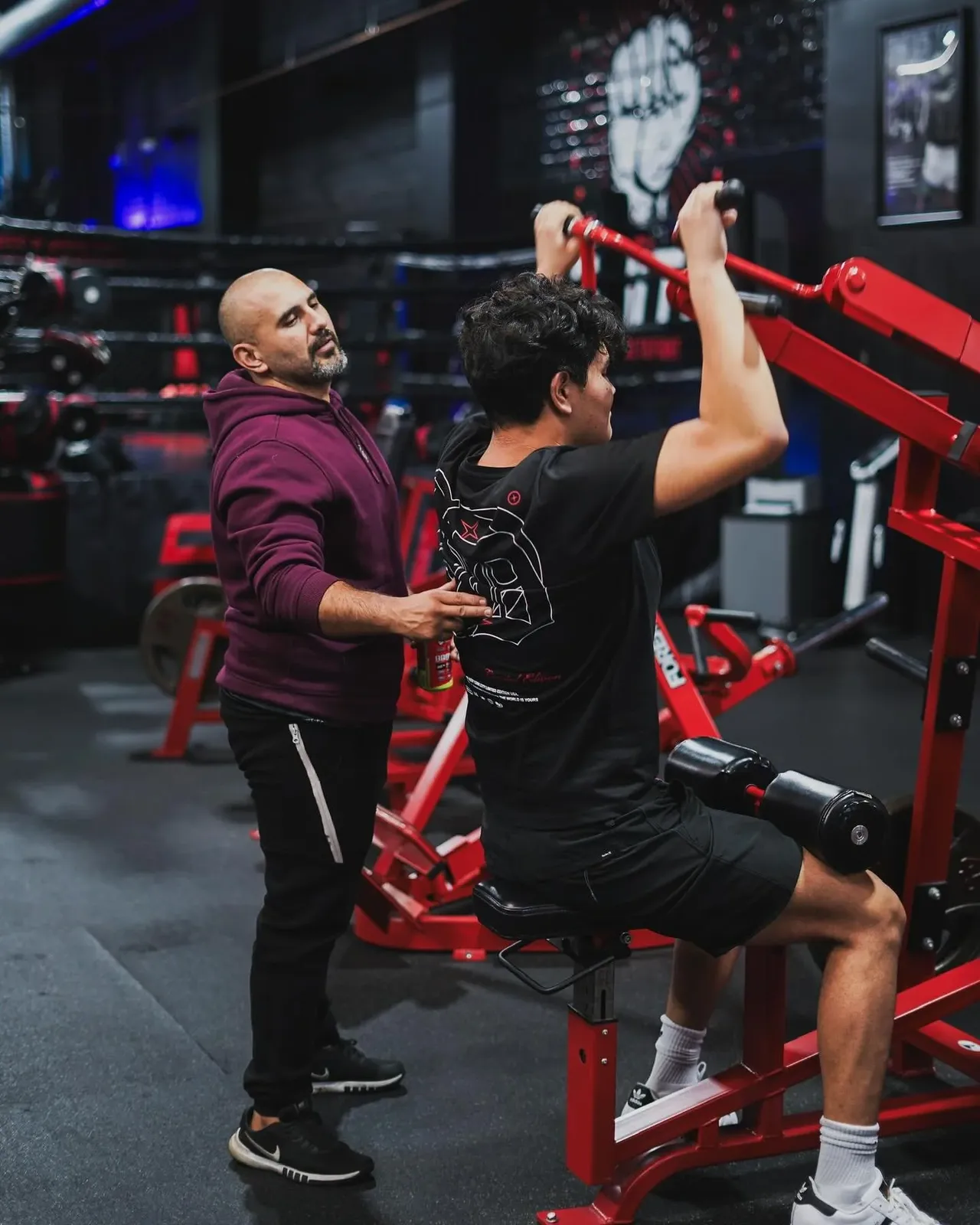
At Trinity Training Facility, every new client starts with a strength assessment before Week 1 begins, so the loading numbers in this plan are calibrated to your actual capability rather than a generic starting point. We adjust each session based on what you log, correct form in real time on the four main lifts, and handle the retesting process at the end of Week 4 so you walk away with real numbers, not guesses.
If you're ready to stop cycling through random workouts and start a structured strength block, book a strength assessment at Trinity Training Facility in Long Beach. We'll test your current upper body numbers, build your Week 1 loading targets, and get you on the bar for your first real session this week.
Key Takeaways
- Two focused upper body sessions per week, spaced 72 hours apart, build more strength than five random gym days without a plan.
- Progressive overload across four weeks means moving from 3x10 at a moderate load in Week 1 to 4x6 at a heavier load in Week 3, then deloading in Week 4.
- Compound lifts like incline dumbbell presses, rows, and overhead presses should make up 70% of training volume, with isolation work filling the rest.
- Most women underestimate their upper body capacity because gym culture pushes them toward light dumbbells and high reps instead of real loading.
- Recovery between sessions, not the workout itself, determines whether strength gains show up on the bar in Week 3 and Week 4.
- Tracking load, reps, and bodyweight push-up progress weekly gives objective proof the plan is working, separate from how the scale moves.