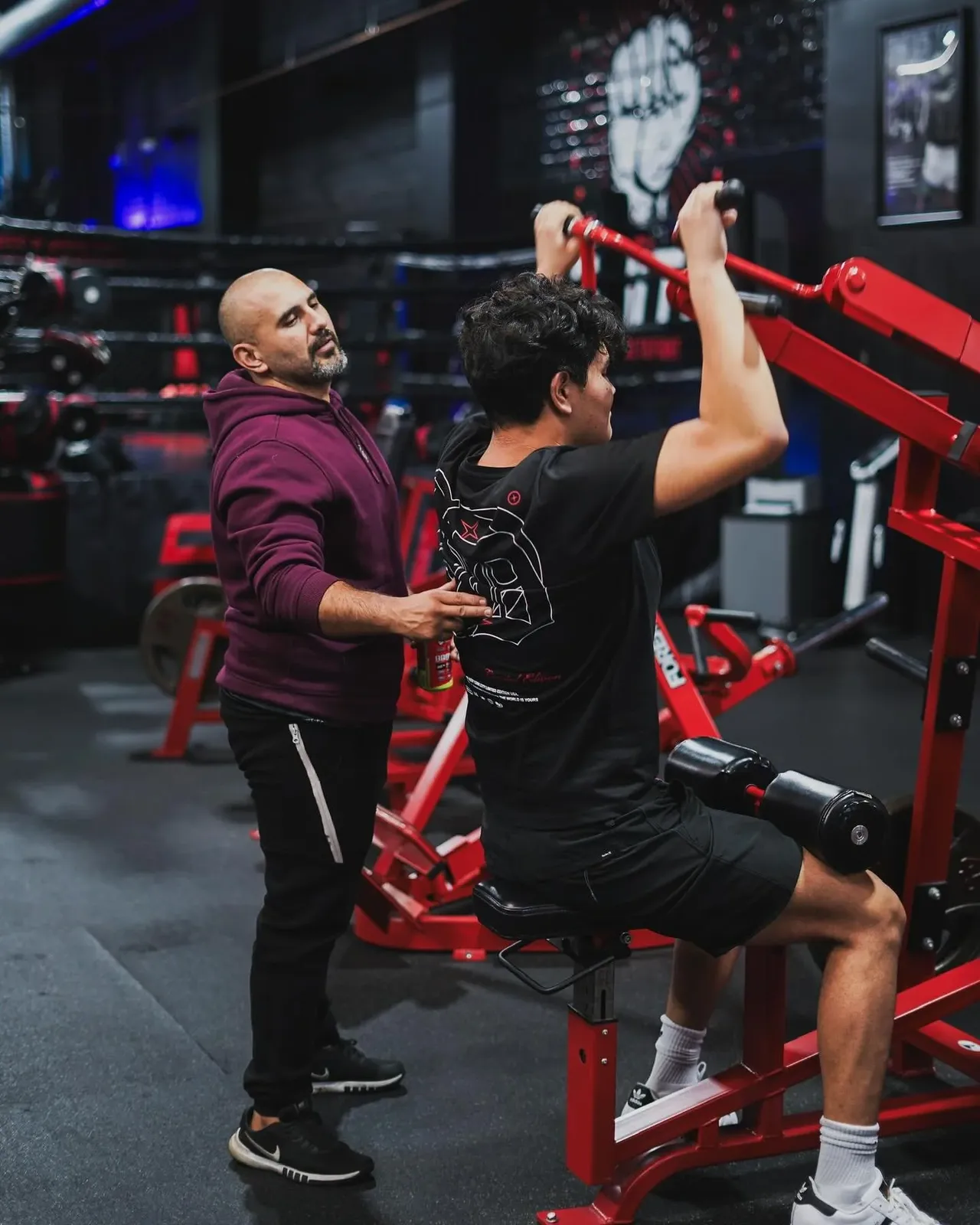
Optimizing Your Body for Peak Athletic Performance: A 4-Week Strength and Conditioning Protocol for Enhanced Power Output
A 4-week strength and conditioning protocol built to raise power output, not just add weight to the bar. Week-by-week plan from Trinity Training Facility.
A 4-week strength and conditioning protocol for power output uses a wave structure: week 1 rebuilds movement quality and work capacity, week 2 loads maximal strength at 85-92% of 1RM, week 3 converts that strength into speed with contrast pairing and ballistic work, and week 4 tapers volume 40-50% before retesting. Most Long Beach lifters see 8-15% gains in vertical jump and bar speed when the block is run with actual load tracking and 48-72 hours of recovery between high-intensity sessions.
A client walked into Trinity Training Facility last spring benching 225 for reps, squatting 315, and still getting beat off the line by guys 20 pounds lighter at his boxing gym. He was strong. He was not powerful. Those are not the same thing, and the gap between them is where most Long Beach lifters get stuck for years without knowing why.
This article breaks down the exact 4-week strength and conditioning protocol we built for him and have since run with dozens of clients chasing the same problem: strength that will not translate into speed, explosiveness, or athletic output. No filler weeks, no guesswork. Just a week-by-week plan with the loads, rep ranges, and rest periods that actually move the needle on power output.
The 6 A.M. Client Who Couldn't Explain Why He Was Stuck
Marcus, 29, had been training on his own for three years before he came to us. His numbers on paper looked solid, but his coach at his boxing gym kept telling him he was slow to react and slow to close distance. He assumed the answer was more squatting. It wasn't.
When we tested his vertical jump, he hit 19 inches. For a 29-year-old male athlete with his strength numbers, we expect 24 to 28 inches. That gap told us everything: he had built a strength engine with no transmission connecting it to speed. His nervous system had never been trained to fire fast, only to fire hard and slow.
That is the pattern we see constantly with intermediate lifters in Long Beach who train at chain gyms with generic programming. They chase 1-rep maxes and Instagram numbers, and their coaches never program the ballistic and contrast work that actually converts strength into usable power. Marcus ran this exact 4-week block and added 4 inches to his vertical jump and dropped his 10-yard sprint time by 0.11 seconds by the retest.
The rest of this piece is that program, laid out week by week with the actual loads and rep schemes we used with him and have since replicated with strength-trained clients across our facility.
What Power Output Actually Is (and Why Bench Numbers Don't Measure It)
Power is force multiplied by velocity. It is not how much weight you can move, it is how fast you can move a given amount of force. A 400-pound deadlift tells you almost nothing about how quickly someone can generate force off the ground in a 10-yard sprint or a first step on a boxing feint.
Most commercial gym programming trains one end of the force-velocity curve and ignores the other. Heavy squats, presses, and deadlifts build maximal force capacity. But without ballistic training, plyometrics, and speed-strength work, that force capacity never gets expressed quickly. The nervous system adapts to whatever demand you give it, and slow, grinding reps teach the body to produce force slowly.
This is why a 4-week block dedicated specifically to power conversion works. According to the National Strength and Conditioning Association, periodized programs that sequence maximal strength phases followed by power-specific phases produce measurably better transfer to athletic performance than programs that train strength and power simultaneously with no structure (NSCA). The sequence matters as much as the exercises.
We test power output at intake using three simple metrics: vertical jump (Vertec or jump mat), broad jump, and a 10-yard sprint. These three numbers give us a baseline we can retest at the end of week 4 to prove the block worked, not just assume it did.
Week 1: Rebuild the Movement Base and Work Capacity
Week 1 is not glamorous, and clients who skip it because they want to jump straight into heavy lifting are the ones who get hurt in week 2. This week is about cleaning up movement patterns under moderate load and building the work capacity the rest of the block depends on.
Training splits 4 days: two lower-body sessions, two upper-body sessions, each running 60-70% of 1RM for 3-4 sets of 6-8 reps on primary lifts (trap bar deadlift, front squat, incline press, weighted pull-up). Tempo matters here — 2 seconds down, 1 second pause, explosive up. This teaches the body to accelerate out of the bottom position, which sets up everything that follows.
We also introduce low-intensity plyometrics this week: box step-offs, pogo hops, and med ball chest passes for 3 sets of 6-8 reps, focusing on landing mechanics and ground contact time rather than height or distance. This is skill acquisition, not intensity.
By the end of week 1, clients should feel fatigued but not beat up. If someone is sore for 4+ days after any session, we scale volume back 10-15% before moving into week 2's heavier loading.
Week 2: Load the System — Maximal Strength Phase
Week 2 is where load goes up and rep range comes down. Primary lifts move to 85-92% of 1RM for 3-5 sets of 2-4 reps, with full 3-4 minute rest between sets. This is not a week for supersetting accessory work into your rest periods — the nervous system needs that full recovery window to produce a true maximal effort on the next set.
We keep the same four lifts from week 1 (trap bar deadlift, front squat, incline press, weighted pull-up) rather than introducing new movements, because skill under heavy load matters more than variety right now. Adding a new exercise pattern at 90% of a load you have never tested is how people tear things.
Accessory work drops to 2 sets of 8-10 reps on secondary movements (Romanian deadlift, dumbbell row, DB shoulder press) just to maintain volume without adding fatigue that competes with the primary lifts.
This is also the week we retest 1RM estimates using a 3-rep max on the primary lift, calculated with a standard percentage chart, rather than pushing a true 1-rep attempt. A true max attempt this early in a 4-week block adds unnecessary joint stress and central nervous system fatigue that will bleed into week 3, which is the phase that actually determines whether this protocol works.
Week 3: Convert Strength Into Speed
This is the week most programs skip entirely, and it's the reason most lifters never see their strength show up athletically. Load on primary lifts drops to 60-70% of 1RM, but bar speed becomes the metric that matters, not the weight on the bar.
We pair a heavy compound lift with an explosive movement in the same rest window — this is contrast training. Example: 3 reps of front squat at 80% of 1RM, rest 90 seconds, then 5 broad jumps for max distance, rest 3 minutes, repeat for 4 rounds. Research on post-activation potentiation shows that a near-maximal contraction can measurably increase the force output of an explosive movement performed shortly after (PubMed), which is exactly the effect we're chasing in this phase.
Sample week 3 pairings:
Rest between pairings runs 3-4 minutes, non-negotiable. Cutting rest short turns this into a conditioning session and defeats the purpose — the nervous system needs that recovery window to fire at full speed on every rep.
Week 4: Peak, Test, and Deload
Volume drops 40-50% this week. This is the week clients fight us on the most, because they feel recovered and want to push. That instinct is exactly what ruins a power block — the gains from weeks 1-3 need a lighter week to actually express themselves.
Training runs 2 sessions instead of 4, both short (35-40 minutes), focused on low-volume ballistic work: 3 sets of 3-4 reps on jumps, throws, and sprint starts at maximum effort with full recovery. No new strength work, no grinding sets, no accessory volume beyond basic maintenance.
Retesting happens on day 3 or 4 of the week, after 48 hours of lighter activity: vertical jump, broad jump, and 10-yard sprint, same protocol as intake. Marcus's 4-inch vertical jump gain and 0.11-second sprint improvement both showed up on this retest day, not earlier in the block — which is the entire point of building a taper into the plan instead of testing on tired legs.
Eating for a Power Block: What Actually Matters
Power training is glycogen-demanding work. Explosive efforts at high intensity burn through stored carbohydrate fast, and clients who cut carbs aggressively during this block consistently underperform on bar speed and jump testing compared to clients eating adequate carbohydrate around training sessions.
We set protein at 0.8-1g per pound of bodyweight daily, non-negotiable, based on research summarized by Examine.com showing that athletes in intense training blocks need protein intake at the higher end of standard recommendations to support recovery and adaptation (Examine.com). For a 190-pound male client, that's 150-190g of protein daily, split across 4-5 meals.
Carbohydrate intake scales with training day intensity: 2-3g per pound on week 2 and week 3 heavy days, dropping to 1.5g per pound on week 4's lighter sessions. A practical day during week 2 for that same 190-pound client looks like: oats and eggs at breakfast, chicken and rice at lunch, a pre-training banana and rice cake, then salmon, potatoes, and vegetables at dinner.
Hydration and electrolytes matter more here than in a standard hypertrophy block because central nervous system fatigue compounds with dehydration. We have clients add a sodium and potassium electrolyte mix on training days, particularly during the heavier week 2 sessions.
Recovery Protocols That Make or Break This Program
This protocol fails without adequate recovery between sessions, and sleep is the single biggest variable we track. Clients logging under 7 hours of sleep during week 2 and week 3 consistently show flat or declining bar speed numbers, regardless of how well they eat or train.
We schedule 48-72 hours between max-effort strength sessions and require at least one full rest day per week with no structured training, just walking, light mobility work, or easy swimming. Athletes who try to squeeze in extra conditioning on rest days during this block almost always show blunted power output by week 3.
Soft tissue work matters too, but it is not a substitute for sleep or rest days. We use 10-15 minutes of foam rolling and banded mobility work on hip flexors, ankles, and thoracic spine before each session, focused on the joints that limit force transfer during jumps and sprints.
For clients managing nagging joint issues alongside this block, we scale plyometric volume down and substitute lower-impact alternatives like sled pushes and resisted sprints for box jumps, which still train speed-strength without the same eccentric landing stress.
Five Mistakes That Kill Power Gains
The first mistake is skipping week 1. Clients who jump straight to heavy loading without rebuilding movement quality get hurt or plateau by week 2 because their positions break down under load.
The second is cutting rest periods short during contrast sets in week 3. Resting 60 seconds instead of 3 minutes turns a power session into a fatigue session, and the whole point of the pairing is lost.
The third is skipping the week 4 deload because a client feels good and wants to keep pushing heavy. The nervous system needs that lighter week to express the adaptations built in weeks 1-3, and testing on fatigued legs produces numbers that undersell the actual progress made.
The fourth is under-eating carbohydrate during the heaviest training weeks, which blunts glycogen availability for explosive work and shows up directly as slower bar speed and shorter jump distances.
The fifth is running this block without a baseline test. Without a documented vertical jump, broad jump, and sprint time from day one, there is no way to prove the program worked, and clients tend to underestimate progress that isn't measured against a number.
Who Should Run This Protocol (and Who Should Wait)
This block is built for lifters and athletes who already have a strength foundation — someone who can squat at least 1.25x bodyweight and has trained consistently for 6+ months. It assumes basic competency with barbell movements and comfort with plyometric loading.
Beginners with under 6 months of training experience should run a general strength foundation phase first. Introducing max-effort loading and high-impact plyometrics to an untrained nervous system and unprepared connective tissue is a fast way to get hurt rather than get faster.
This protocol also fits boxers, combat athletes, and field-sport athletes in the Long Beach area looking for a targeted off-season block to raise explosiveness before returning to sport-specific training. Clients recovering from lower-body injury within the last 3 months should get cleared by their physical therapist before the plyometric components in weeks 1 and 3.
If you have the strength base and want to find out what your body actually does with it, book an assessment at Trinity Training Facility. We'll test your vertical jump, broad jump, and sprint time, build your version of this 4-week block around your numbers, and retest you on day one of week 5 so the results are on paper, not just a feeling.
Key Takeaways
- Power output is force multiplied by velocity, not just how much weight you can move, which is why max-strength-only programs stall athletic performance
- A 4-week block works because it is long enough to adapt (roughly 3-4 weeks per documented training cycle) but short enough to test and adjust before overuse symptoms build up
- Week 2 should push loads to 85-92% of 1RM on primary lifts while week 3 drops load to 30-60% of 1RM and increases bar speed
- Contrast training, pairing a heavy compound lift with an explosive movement in the same rest window, produces measurable post-activation potentiation in trained lifters
- Deloading in week 4 by cutting volume 40-50% while keeping intensity moderate is what allows the nervous system to express the power gained during weeks 1-3
- Sleep under 7 hours and protein under 0.8g per pound of bodyweight are the two most common reasons clients fail to convert this protocol into actual performance gains