






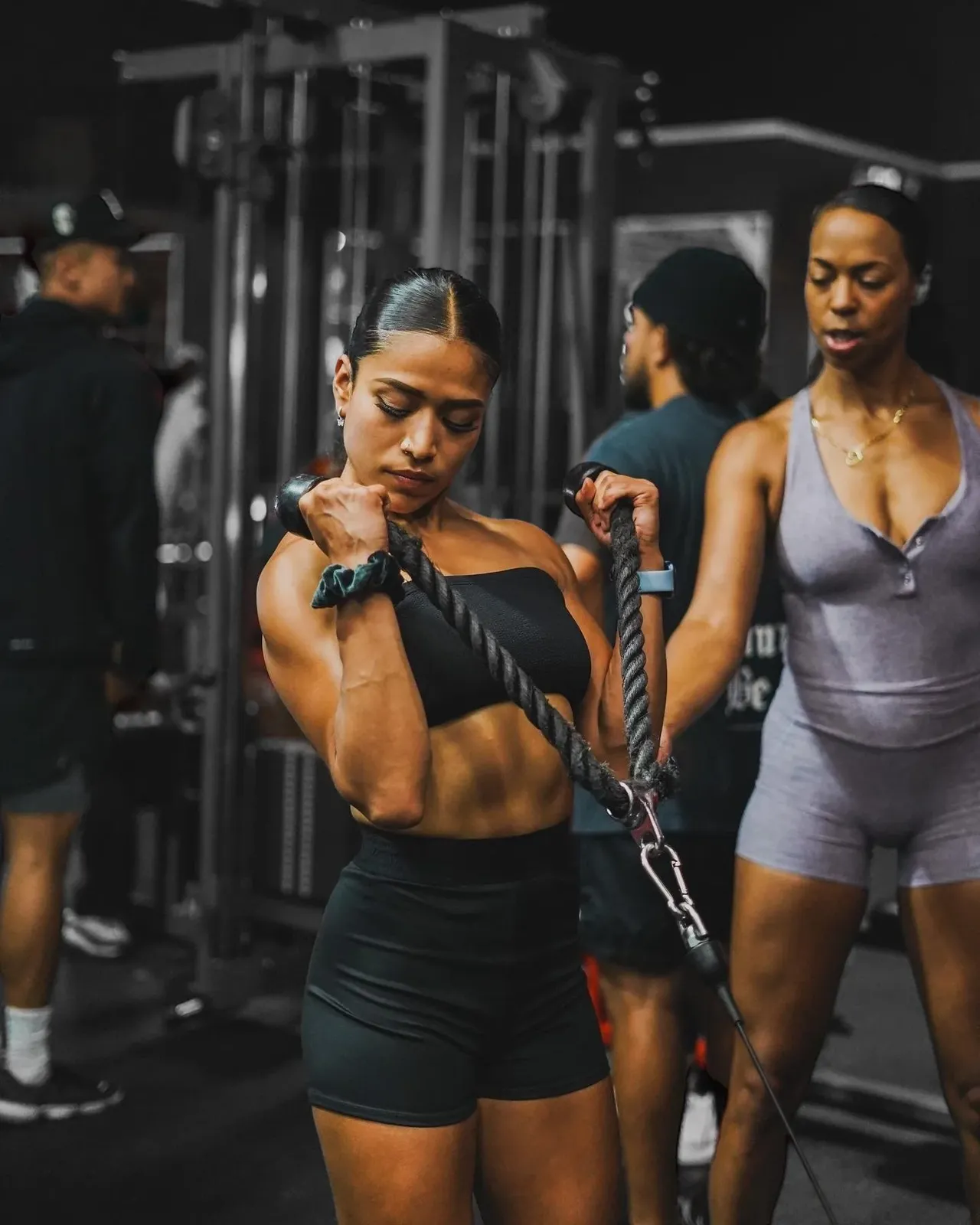

Boxing Drills for Explosive Power in Long Beach
Boxing drills that build real explosive power: medicine ball throws, plyometrics, and heavy bag work from a Long Beach strength coach.
Boxing drills for explosive power combine medicine ball throws, jump rope intervals, plyometric footwork, resistance band punches, and heavy bag power combinations, programmed in 4-week blocks with full recovery between max-effort reps. Power comes from moving sub-maximal loads as fast as possible, not from grinding out fatigued reps. Pair this with a dedicated strength base and you get faster hands, harder shots, and legs that hold up in round three.
You've got a guy at your gym who can bench 275 and squat 350, and in round two of sparring he's arm-punching like he's never lifted a day in his life. Meanwhile a 140-pound amateur with half his strength numbers is cracking the bag hard enough to move it a foot on every cross. That's the gap between strength and power, and if you train boxers or train for boxing yourself, closing that gap is the whole game. Strength gives you a ceiling. Boxing drills for explosive power are what let you actually touch it.
This isn't about more rounds on the bag or longer conditioning circuits. It's about specific drills, done with real intent, programmed so your nervous system actually adapts instead of just getting tired. Below is the exact drill menu and structure we use at Trinity with boxers and combat athletes training in Long Beach, plus the mistakes that quietly cap most people's power for years.
Why Strength Alone Doesn't Make You Hit Harder
Strength is the maximum force you can produce, period, no time limit. Power is how much of that force you can produce fast — and a punch has about 50-80 milliseconds to do its damage. You can be strong and still be slow if you've never trained your body to express force quickly.
This is why a stronger fighter sometimes gets outhit by someone lighter. Rate of force development — how fast force ramps up — is a trainable quality separate from one-rep max strength. You build it with low-fatigue, high-intent movements: throws, jumps, and strikes performed at or near maximum speed, not grinding reps.
That doesn't make the weight room irrelevant. A deadlift and squat base raises the ceiling power drills pull from. If you haven't built that foundation yet, start with our guide on 5 compound lifts to build real strength before layering in the speed work below. Power training without a strength base is like sharpening a knife that was never forged.
The sequence that works: build general strength for 6-8 weeks, then shift emphasis toward power while maintaining strength with lower volume. Most of our boxing clients run both concurrently once they have a year of lifting under them, dedicating two days to power-specific work and keeping one heavy strength session per week.
Medicine Ball Rotational Throws: The Foundation Drill
If you do nothing else from this article, do this one. Rotational medicine ball throws against a wall teach your hips and shoulders to sequence the way they need to for a cross or hook — hips fire first, torso rotates, arms whip through last. Most amateur boxers reverse this order and arm the punch, which is exactly why they don't hit hard despite training for years.
Use a 4-6 kg ball (women's boxing clients typically start at 3-4 kg). Stand side-on to a solid wall, load your back hip, and throw the ball explosively at shoulder height, rotating through your core like you're throwing a cross. Catch the rebound and reset — don't chain reps together.
We program this twice a week for boxing clients, always early in a session when the nervous system is fresh. If you want a full lift-and-throw progression built around this pattern, our 6-week strength training program for boxers breaks down exactly how we layer it with squats, presses, and pulls across a training block.
Jump Rope Intervals That Actually Build Power, Not Just Cardio
Jump rope gets filed under "conditioning" and that's a mistake. Done right, it's a plyometric drill that trains your calves and ankles to produce force fast and repeatedly — the same quality you need to pivot, step, and reset your stance mid-exchange without your legs turning to concrete by round three.
Most people skip rope slow and flat-footed for 10 straight minutes. That builds general work capacity, which has its place, but it does nothing for power. For power carryover, you need short, maximal-effort bursts.
Try this structure twice a week:
A fighter who can't do a single double-under isn't ready for this version yet — spend two weeks on basic timing first. Rushing this drill before the footwork is clean just reinforces sloppy, heel-heavy jumping, which is the opposite of what you're after. If your ankles and calves feel tight or restricted rather than springy, that's a mobility issue worth fixing before you load more speed work on top of it.
Heavy Bag Power Combinations: Train Intent, Not Just Volume
Three-minute rounds on the heavy bag, every punch at the same 70% pace, is the single most common waste of training time we see walk through the door. If every shot is thrown at the same intensity, you're training punch endurance, not punch power — and those are different qualities with different drills.
Instead, build rounds around designated "kill shots." In a jab-jab-cross-hook combination, punches 1-3 are rhythm and setup, thrown at 60-70% speed to control distance and timing. The 4th punch — the hook — gets thrown at 90-100% intent, full hip rotation, like you're trying to put it through the bag.
Structure for a power-focused bag round:
This mirrors how power actually shows up in sparring: most of the fight is positioning and feinting, and the fight-changing shot is the one thrown with full commitment off a clean setup. For the conditioning side of bag work and how to recover from these sessions without your shoulders locking up, see our boxing workout recovery guide.
Plyometric Footwork: Building Springy, Explosive Legs
Boxing power starts in the ground, travels up through the legs and hips, and only arrives at the fist last. If your legs are flat and slow, your hardest punch is capped no matter how strong your upper body is. Plyometric footwork drills train your legs to load and release force quickly — the same mechanism you use to plant, pivot, and drive a punch.
Three drills we rotate through with boxing clients at Trinity:
Women's boxing clients especially benefit from lateral bound work, since a lot of hook and counter power comes from hip stability on a single planted leg. Our piece on functional strength training for women's boxing goes deeper into that single-leg strength connection if you want the full program.
Resistance Band Overspeed Punches
Overspeed training means moving at a velocity slightly faster than you could unassisted, which teaches your nervous system to fire at a higher rate. For boxing, light resistance bands anchored behind you, looped around your wrists, let you throw punches with assistance on the way out and resistance on the way back — training both the explosive extension and the fast retraction that keeps your hands up for the next shot.
Setup: anchor a light-to-medium resistance band at chest height behind you, loop a handle around each wrist, and throw your combinations into open air or at a bag with the band adding resistance through the punch.
This drill exposes a flaw most self-taught fighters never notice: they throw hard but return slow, leaving their chin exposed a half-second longer than they should. If you train alone without a coach watching your hands, record yourself doing this drill — you'll see the retraction gap immediately on video in a way you can't feel in the moment.
Programming It: A 4-Week Explosive Power Block
Random drills without a structure is how people plateau or get hurt. Here's the exact framework we use for a focused power block, built around two dedicated power sessions per week alongside normal boxing and strength training.
Week 1 — Introduction: Medicine ball throws (3x6), box jumps (3x5), bag power rounds (4 rounds). Keep intensity at 80% to groove patterns before pushing speed.
Week 2 — Build: Medicine ball throws (4x6), lateral bounds added (3x6/side), bag power rounds (5 rounds), introduce resistance band punches (2x12).
Week 3 — Peak: Full drill menu at 95-100% intent, jump rope power intervals added, bag rounds increased to 6. This is the hardest week — volume and intensity both near max.
Week 4 — Deload: Cut volume by 40%, keep intensity high but sets short (2-3 per drill). This week is what lets the adaptation actually show up; skipping it is why a lot of home-built programs stall.
If you're running this alongside a strength cycle rather than a pure boxing block, our 4-week boxing endurance plan pairs well with this structure — endurance on non-power days, power drills on dedicated days, with at least 48 hours between max-intent sessions.
The Mistakes That Quietly Kill Power Gains
We see the same three errors walk through the door constantly, usually from people who've been training hard but not training smart.
Mistake 1: Training power while fatigued. If you tack power drills onto the end of an exhausting conditioning session, you're not training power — you're training your body to be explosive while tired, which reinforces slow, compensated movement patterns. Power work goes first, when you're fresh, or on a separate day entirely.
Mistake 2: No rest between reps. Chaining medicine ball throws or box jumps back-to-back without rest turns a power drill into a conditioning drill. Both have value, but if your goal is power, 60-120 seconds of real rest between sets is non-negotiable.
Mistake 3: Skipping the strength base. Plyometrics and throws sharpen the power you already have; they don't create strength out of nothing. A fighter with a weak posterior chain who only does speed drills will plateau fast — usually within 3-4 weeks — because there isn't enough raw force underneath the speed to improve. Progressive overload in the weight room is what raises the ceiling; see our guide on progressive overload for strength for how that progression should actually look month over month.
Recovery: The Part Everyone Skips
Power drills are hard on your central nervous system in a way that doesn't always show up as muscle soreness. You can feel fine physically and still be flat and slow on explosive drills because your CNS hasn't recovered from the last session. This is the single most under-managed variable in home-built boxing programs.
Signs you're not recovering between power sessions: your vertical jump or throw distance drops session over session, your hands feel heavy on the bag, or you're more irritable and sleeping worse than usual. Any one of these is a signal to back off, not push through.
Practical recovery minimums for anyone running two power sessions a week:
If your joints — especially shoulders and ankles — feel tight or restricted rather than just tired, that's often a mobility limitation showing up as a power leak. Our guide on mobility training for boxing performance covers the specific ranges of motion that matter most for punch mechanics, and our personalized recovery plan guide walks through building a recovery routine around your specific training load rather than guessing.
Put This in Front of a Coach Who Can See Your Mechanics
Reading a drill list gets you started. It doesn't catch the fact that you're arming your cross instead of rotating through it, or that your landing mechanics on box jumps are quietly loading your knees wrong rep after rep. Every fighter we've trained who plateaued on power had a mechanical leak somewhere that they couldn't see or feel themselves — that's what a second set of trained eyes is for.
Key Takeaways
- Explosive power is rate of force development, not raw strength — you need both a strength base and speed-focused drills to express it in the ring.
- Medicine ball rotational throws (4-6kg) teach the hip-to-shoulder sequencing that puts power into a cross or hook.
- Power drills require near-full recovery between reps (60-120 seconds) — training power while fatigued just trains fatigue.
- Heavy bag combinations should include designated 'kill shots' thrown at 90-100% intent, not every punch at the same pace.
- Plyometric footwork (lateral bounds, box jumps, ladder work) builds the elastic legs that let you load and explode off either foot.
- A 4-week power block with a deload week prevents the joint and CNS burnout that kills most home-grown boxing conditioning programs.