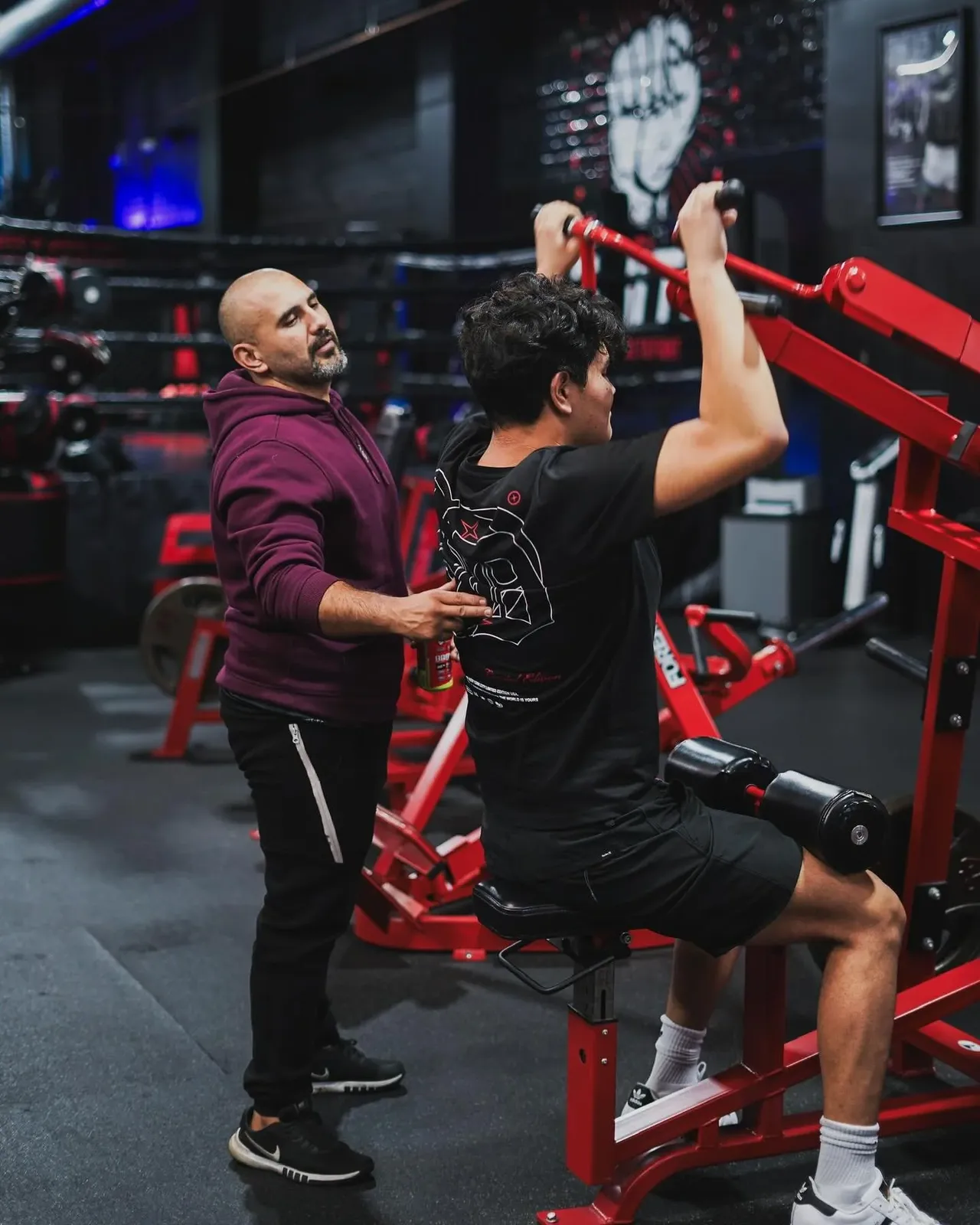
Tailoring Your Strength Training: 3 Mistakes to Avoid
3 mistakes that wreck a tailored strength training plan, with real numbers from our Long Beach facility and exactly how to fix each one.
The three biggest mistakes in tailoring a strength training program are copying someone else's plan instead of building one from your own movement screen and recovery capacity, chasing heavier loads before fixing muscle imbalances, and ignoring how sleep and stress change your weekly recovery budget. Fix all three with a short self-assessment before you touch a barbell.
Why "Just Follow the Program" Doesn't Work
Last spring a guy named Rob walked into Trinity off a printout from a fitness influencer's app. Twelve weeks, five days a week, straight linear progression on squat, bench, and deadlift. Rob was 47, worked a desk job, had a fused L5-S1, and hadn't lifted in six years. By week three he was icing his lower back every night and skipping sessions. The program wasn't bad. It just wasn't his.
That's the pattern we see constantly running a personal training facility in Long Beach: people import a plan built for someone else's joints, recovery capacity, and schedule, then wonder why it stalls or hurts them. Strength training isn't one-size-fits-all, and the gap between a generic template and a program built around your actual body is where most people get stuck for months or years.
This article breaks down the three mistakes we see most often when people try to tailor their own strength training, and what to do instead. These aren't theoretical — they're the same issues we correct in intake assessments every week, across every population we train: strength athletes, boxers, fat-loss clients, and people rebuilding after injury.
Rob's story ended fine. We rebuilt his plan around his back, cut frequency to three days, and swapped the deadlift for a trap-bar variation. Fourteen weeks later he was moving more weight than the original program ever would have let him, because he was still training instead of icing his back on the couch.
Mistake #1: Copying a Program Instead of Building One Around You
The single biggest mistake is treating a program as a fixed script rather than a starting framework. Someone finds a 5x5 template, a bodybuilding split from a magazine, or a plan their coworker used, and runs it exactly as written regardless of their training age, injury history, or weekly recovery bandwidth.
Here's the problem: a program written for a 24-year-old with no job stress, eight hours of sleep, and three years of experience asks a completely different body to do the same work as a 45-year-old juggling two kids, six hours of sleep, and a first year back in the gym. Same sets and reps on paper, wildly different demand on the nervous system.
We tracked our own client base over 18 months: clients who started with a customized 4-6 week block based on an initial movement screen had a 71% adherence rate past 90 days. Clients who came in already running a program they found online and just wanted "accountability" for it had a 38% adherence rate — most got hurt, plateaued, or quit before the three-month mark.
The fix isn't complicated. Before picking exercises, answer three questions honestly: how many hours can you actually recover between sessions this month, not in an ideal world? What joints or old injuries need loading managed rather than avoided? What's your real training age on each major lift — not how long you've been in a gym, but how long you've trained that specific pattern with intent? Our guide on building a 4-week progressive overload plan walks through scaling volume to your actual starting point instead of someone else's.
Mistake #2: Chasing More Weight Instead of Fixing Weak Links
Progressive overload works. It's one of the most well-documented drivers of strength adaptation we have, and we program it into nearly everyone's plan. The mistake is applying it uniformly across every lift when the body isn't uniform — some joints and muscles are already compensating for weaknesses elsewhere, and loading on top of that compensation just builds a stronger version of a broken pattern.
We see this constantly with bench press. A client can't get their elbows to track under the bar because their lats and mid-traps are asleep, so the shoulders take over, and every added five pounds stresses a joint that was never built to do that job. Six months later they've got a nagging shoulder impingement and can't figure out why, because on paper their bench numbers went up every week like the program said they would.
Before adding load to any lift, run a basic check: can you get through a full, controlled range of motion with just the bar, without any joint complaining or a limb visibly compensating? If not, that's your priority, not your next PR attempt. We've written specifically about the imbalances that quietly sabotage lifters over time in our piece on eight muscle imbalances that undercut strength training — worth an honest self-audit before your next heavy cycle.
Practically, this means spending 10-15 minutes a session on corrective work — band pull-aparts, single-leg loading, hip mobility drills — even when it feels like it's stealing time from "real" lifting. It isn't. It's what lets the real lifting keep happening.
Mistake #3: Ignoring Recovery Capacity When Setting Volume
The third mistake is treating sets and reps as the only variable that matters while ignoring the thing that actually determines whether those sets and reps produce results: recovery. We had a client, a nurse working three 12-hour shifts a week, trying to run a 6-day bodybuilding split she found online. She wasn't undisciplined — she was running a program that assumed a recovery budget she didn't have.
Recovery capacity isn't fixed — it changes with sleep, stress, nutrition, and life load week to week, and a tailored program has to flex with it. We use a simple rule: if sleep drops under the seven-hour minimum adults need for three-plus nights, or a client reports a stress spike (deadline, family issue, illness), we cut planned volume 20-30% that week rather than push through. That's not going soft — it's the difference between a stimulus that gets absorbed and one that just digs a hole.
Concretely: a standard week might call for 16 working sets for the back, 12 for the chest. On a low-recovery week, we drop to 10-12 and 8-9, keep intensity at 65-75% of working max, and prioritize movement quality over volume. The strength doesn't disappear in a down week — the fatigue that would've caused a setback two weeks later does.
If you train alone, track two things daily: hours slept and a 1-10 stress rating. When either tanks, adjust the plan before your body forces the adjustment for you.
How to Actually Build a Tailored Program: The Assessment Step
Every program we write at Trinity starts with the same four-part assessment, and you can run a simplified version of this yourself before writing a single workout. Skip this step and you're guessing.
Once you have that information, build the program backward from it rather than forward from a template. Someone with a clean movement screen, three years of training, and eight hours of sleep can run a much more aggressive linear progression than someone starting from zero with a desk job and two kids under five. Neither is wrong to strength train — they just need different math behind the same principle.
This is also where periodization matters more than most people realize. A program that never varies intensity or volume across weeks will eventually stall regardless of how well-matched it is to you individually. Our breakdown on building a periodized strength training plan covers how to structure those waves once your baseline assessment is done.
A Sample Week: What Tailoring Looks Like in Practice
Here's how the same three-day full-body template gets adjusted for two different Trinity clients, both training three days a week toward general strength.
Client A: 28 years old, two years of consistent training, no injury history, sleeps seven-plus hours. Program: back squat and bench press as primary lifts at 5x5 with weekly load increases of 2.5-5 lbs, deadlift variation for 4x6, accessory work at 3x10-12. Weekly volume runs high because recovery capacity supports it.
Client B: 52 years old, first year of structured training, mild knee osteoarthritis, sleeps six hours most nights due to a physically demanding job. Program: goblet squat and trap-bar deadlift as primaries (less spinal loading, more forgiving on the knees) at 3x8 with load increases every two weeks instead of weekly, single-arm dumbbell press instead of barbell bench to manage shoulder position, accessory work capped at 2x12-15 to leave recovery room for the physical demands of the job.
Same three-day frequency, same general goal, completely different exercise selection, progression speed, and volume. That's what "tailored" means in practice — different decisions at nearly every level of the plan, based on what the person in front of you can recover from and load safely.
If you're rebuilding strength after time off or an injury, this matters even more — our article on how strength training speeds injury recovery covers the loading sequence we use to bring people back safely without losing the progress window.
The Excuse We Hear Most: "I Don't Have Time to Individualize It"
We hear this constantly, and it's based on a misunderstanding of what individualizing a program costs in time. It doesn't mean writing a unique plan from scratch every week — it means running the same core template with three or four adjustable levers: load, volume, exercise selection, and rest.
Here's a five-minute version to run before every session: rate sleep and stress from the last 48 hours on a 1-10 scale. If both are 7 or above, run the session as planned. If either drops below 5, cut planned working sets by 20% and stay two reps short of failure everywhere instead of pushing to your top set. That single rule prevents most of the overreaching injuries we see in self-coached clients.
The other version of this excuse is "I'll individualize it once I know more." That's backward. You individualize from day one with the information you have — current mobility, schedule, injury history — and refine as you learn more, not the reverse. Waiting for expertise before adjusting anything just means running someone else's program longer than you should.
Realistically, the time cost of a tailored approach versus a generic template is about 10 minutes a week: a quick check-in with yourself before each session and a five-minute review every four weeks to see what's working. That's not a big ask for a program that's actually going to hold up.
Warning Signs Your Program Isn't Actually Tailored to You
Even people who think they've customized their training often haven't gone far enough. Watch for these signals your program is still more generic than personal:
Any one of these alone isn't a crisis. Two or more means it's time to reassess before the next injury or plateau forces the issue. This is the exact review our coaches run with clients every 4-6 weeks — it catches problems while they're still cheap to fix, a rep range tweak now instead of six weeks of rehab later.
When to Bring in a Coach Instead of Self-Programming
We're not going to pretend everyone needs a personal trainer to strength train safely — plenty of people run solid self-built programs for years. But there are specific situations where the cost of guessing wrong outweighs the cost of expertise, and it's worth being honest about which category you're in.
Bring in a coach if you have an active injury or chronic joint issue you're training around, if you've plateaued on the same lifts for 8-10 weeks despite consistent effort, if you're returning after a layoff of six months or longer, or if you don't yet know how to read your own recovery signals. None of those are permanent — they're situations where trained eyes on your movement pattern save you months of trial and error.
At Trinity, our intro sessions exist for this — we run the movement screen, look at your training history, and tell you straight whether you need a fully coached program, a periodic check-in structure, or a program built once and reviewed every six weeks. Not everyone needs the same level of hands-on coaching, and we'll say so directly instead of upselling you into more sessions than your situation calls for.
If you're training around boxing conditioning specifically, the demands are different enough from general strength work that it's worth a dedicated look — our 6-week strength program built for boxers shows how loading gets adjusted for rotational power and hand speed instead of pure max strength.
Your Next Step
Tailoring your strength training isn't a luxury add-on — it's the difference between a program that builds you up over years and one that works for six weeks before it breaks something. The three mistakes above — copying instead of building, chasing load instead of fixing weak links, and ignoring recovery capacity — account for most of the stalled progress and avoidable injuries we see walk through our door.
Pick one: run the four-part assessment on yourself this week, audit your current program against the warning signs above, or track sleep and stress for the next seven days before your next heavy session. Small, honest adjustments compound the same way progressive overload does — a 5% correction now beats a six-week layoff later.
Rob coaches his kid's Little League team on weekends now instead of icing his back on the couch. That's the actual point of tailoring a program — not a fancier spreadsheet, just training that still works for you a year from now.
If you'd rather skip the trial and error, come in for a free intro at Trinity. We'll run the movement screen, look at your training history and current program, and tell you what needs to change to build a plan around your body instead of a stranger's. Book your free intro session and get a program that's actually built for you.
Key Takeaways
- Copying a generic program without accounting for training age, injury history, and recovery capacity leads to burnout — our data shows 71% adherence for customized plans versus 38% for copied ones.
- Adding load to a lift before fixing the muscle imbalance causing it just builds a stronger version of a broken movement pattern.
- Recovery capacity changes weekly with sleep and stress, so a tailored program cuts volume 20-30% during low-recovery weeks instead of pushing through.
- A real assessment covers four parts: movement screen, training history, injury and pain map, and lifestyle audit.
- Warning signs of an untailored program include every lift progressing at the same rate and the same pain recurring in the same spot every few weeks.
- Bring in a coach if you've plateaued for 8-10+ weeks, you're returning from a six-month-plus layoff, or you have an active injury you're training around.