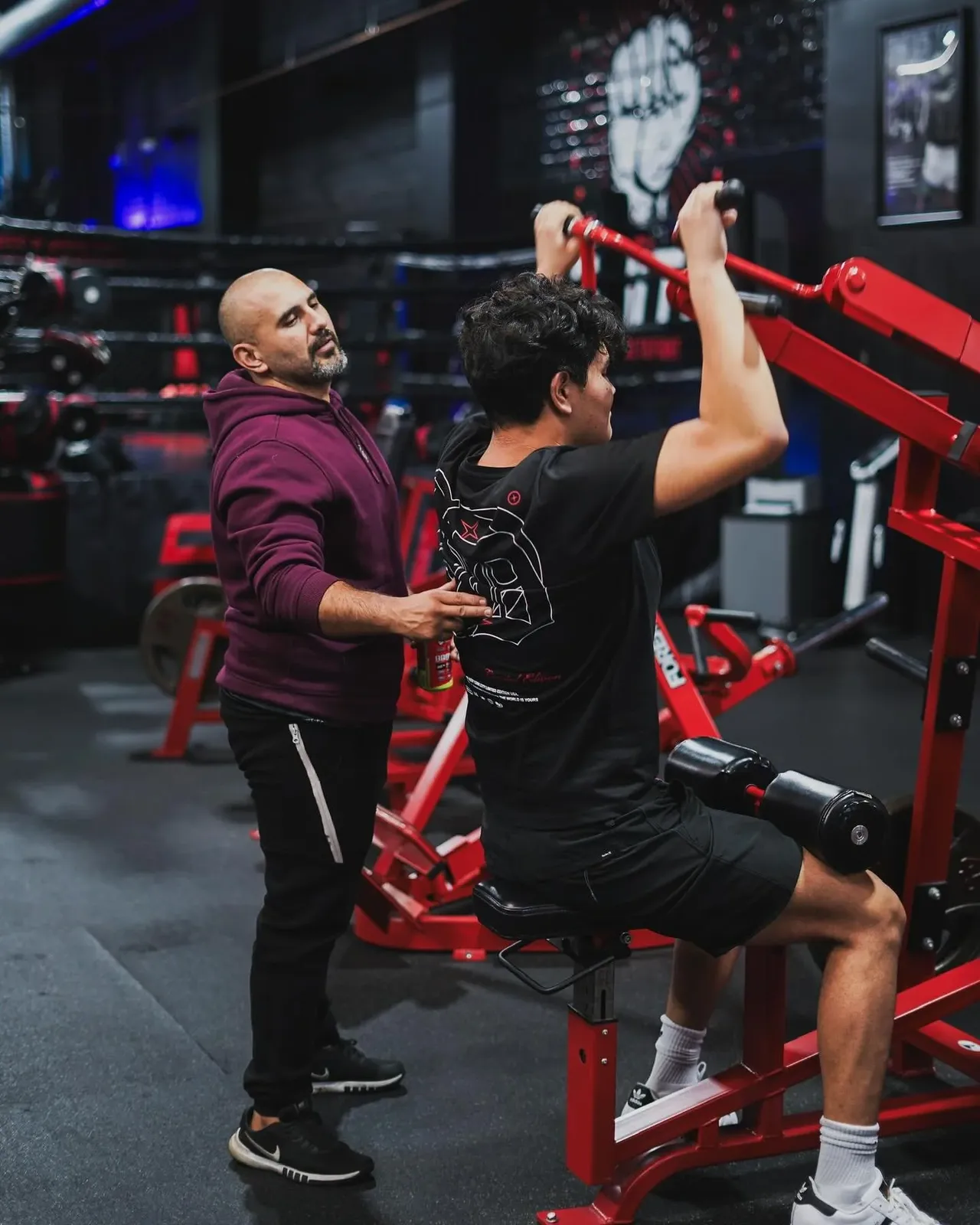
Periodized Strength Training: A 12-Week Progression Plan for Long Beach Athletes
A 12-week periodized strength training plan built for Long Beach athletes—four blocks, real load numbers, and a testing week that proves the work.
Periodized strength training organizes a training cycle into distinct blocks—each with a different volume, intensity, and goal—so an athlete builds a base, adds load, intensifies near maximal effort, then peaks and tests. A 12-week plan broken into four 3-week blocks (hypertrophy base, accumulation, intensification, peak/test) produces measurable strength gains without the plateaus that come from doing the same sets and reps every week.
A client named Marcus walked into our Long Beach facility in January squatting 275 for a single, stuck there for four straight months of his own programming, and asked why nothing was moving. He was training hard — four days a week, sweating through every session — but he was doing the same 4x8 at the same weight range every single week. His body had adapted to the stimulus months earlier. There was no plan behind the sweat, just repetition. Twelve weeks later, using the exact block structure below, he pulled a 315 squat for a clean single. Nothing about his effort changed. The structure did.
This is what periodized strength training solves. It's not a buzzword-level programming style reserved for competitive powerlifters — it's the difference between training and randomly exercising. For Long Beach athletes balancing work, surf sessions, and gym time, a structured 12-week block gets you measurable strength without wasting the hours you already put in.
What Periodization Actually Means
Periodization is the deliberate manipulation of training variables — volume, intensity, exercise selection, and rest — across defined blocks of time, so the body is never asked to adapt to the exact same stimulus for more than a few weeks. Instead of picking a weight and grinding the same sets and reps for 12 weeks straight, you cycle through phases that each build a different physical quality: work capacity, strength, and finally peak output.
A 2017 meta-analysis published in Sports Medicine reviewed dozens of studies comparing periodized programs against non-periodized ones and found periodized training produced significantly greater gains in maximal strength. That's not a marginal edge — it's the difference between a client hitting a new 1RM in week 12 and a client stuck exactly where they started.
The mechanism is straightforward. Constant, unchanging stress creates a fast initial adaptation followed by a plateau, because the nervous system and muscle tissue have no new signal to respond to. Varying the volume and intensity across blocks forces continued adaptation. Weeks 1-3 build the tissue capacity to handle heavier loads later. Weeks 4-6 teach the nervous system to recruit more motor units. Weeks 7-9 push intensity close to true limits. Weeks 10-12 express that strength as a tested max.
None of this requires exotic programming software. It requires a plan written down before week 1 starts, with every week's sets, reps, and target percentage of 1-rep max decided in advance — not improvised in the moment based on how the bar feels that day.
The 12-Week Framework: Four Blocks, One Goal
The plan below breaks into four 3-week blocks, each with a distinct volume and intensity target. This structure works whether the athlete is training for a specific squat/bench/deadlift number, a boxing camp strength baseline, or general athletic performance.
Each block ends with a lighter week — not always a full deload, but a planned reduction in either volume or intensity so fatigue doesn't compound. Skipping this step is the single biggest reason 12-week cycles fail before they finish. A body that never gets a break from accumulating fatigue shows up to week 10 already cooked, and the numbers on the bar reflect it.
Main lifts (squat, bench press, deadlift, and a primary pull like weighted pull-ups) drive the program. Accessory work — lunges, rows, core stability, single-leg work — fills in around the main lifts but doesn't follow the same percentage-based progression. It stays in the 8-15 rep range throughout, adjusted only for fatigue.
Block 1, Weeks 1-3: Build the Base
The first three weeks aren't about lifting heavy. They're about building the tendon, ligament, and connective tissue capacity that heavier loads in later blocks will depend on. Skip this phase and jump straight to max-effort work, and you're the client who tweaks a low back in week 2 instead of hitting a new PR in week 12.
Programming for Block 1: 4-5 sets of 8-10 reps at 65-72% of 1RM on the main lifts, three main-lift sessions per week, 90 seconds rest between sets. A 200-pound squatter, for example, works in the 130-145 pound range for these three weeks — light enough to move fast, heavy enough to matter.
Accessory volume is highest here: 3-4 exercises per session at 10-15 reps, targeting the muscles that support the main lifts. Think goblet squats, Romanian deadlifts, dumbbell rows, and core anti-rotation work. This is also the phase to clean up technique flaws — a slight valgus knee collapse or rounded low back on the deadlift gets fixed now, at manageable loads, before the weight gets heavy enough to make bad mechanics dangerous.
Week 3 ends with a rep-max test at the prescribed percentage (not a true 1RM) to confirm the numbers used for Block 2 are accurate. If someone grinds through 8 reps at 72% like it's a 3-rep max, the percentages get adjusted up before Block 2 begins.
Block 2, Weeks 4-6: Accumulate Strength
Weeks 4-6 shift the emphasis from tissue capacity to actual strength accumulation. Volume drops slightly, intensity climbs to 75-82% of 1RM, and rep ranges tighten to 5-6 per set across 4 working sets.
This is where most clients start feeling real progress — bar speed on submaximal weight increases, and lifts that felt heavy in Block 1 start moving faster. Rest between sets extends to 2-3 minutes because the nervous system needs full recovery to keep bar speed high at this intensity; rushing rest periods here just accumulates fatigue without building strength.
A sample week 5 squat session: bar warm-up, then 4 sets of 5 at 78% of 1RM, followed by 3 sets of 8 walking lunges per leg and 3 sets of 12 back extensions. For a 275-pound squatter, that's four sets of 215 pounds for 5 clean reps — hard, but repeatable across the week's other sessions.
Accessory volume drops to 2-3 exercises per session, 8-12 reps, prioritizing recovery capacity over additional stimulus. Week 6 typically includes a built-in deload: intensity stays around 70%, but volume drops by roughly 40%, giving joints and the central nervous system a chance to catch up before the harder work in Block 3. Athletes who skip this deload almost always report flat or declining numbers by week 8.
Block 3, Weeks 7-9: Intensify
This is where the program earns its name. Intensity jumps to 85-90% of 1RM, reps drop to 3-4 per set, and total volume decreases to 3-4 working sets. The nervous system is now the primary target, not the muscle tissue — you're training the body to recruit more motor units and fire them with greater synchronization under heavy load.
A 315-pound deadlifter in week 8 might work up to 3 sets of 3 at 87%, or roughly 274 pounds, with full 3-minute rest between sets. Bar speed is the metric that matters here, more than the number on the plates. If reps are grinding and slowing dramatically compared to week 7, that's a signal to hold the load rather than push it, because a slow, grinding rep at 87% two weeks before testing is how strains happen.
Accessory work drops to nearly nothing beyond core stability and light mobility — this block is about recovering enough between main-lift sessions to hit each one with full intent, not about adding extra stimulus. Three main-lift days per week remain, but total time in the gym per session often shrinks, since fewer total sets are needed at this intensity.
Week 9 is the second built-in deload of the cycle. Volume drops sharply — often to just 2 sets of 2-3 at 75% — while intensity stays present enough that the body doesn't lose the adaptation gained over the prior six weeks. This is the week clients most want to skip because they feel strong. It's also the week that determines whether Block 4 produces a new max or a missed lift.
Block 4, Weeks 10-12: Peak and Test
The final block has one job: express the strength built over the previous nine weeks as a tested number. Volume drops to its lowest point of the cycle — often just 1-3 reps per set across 2-3 working sets — while intensity climbs to 92-97% of 1RM and beyond in the final testing session.
Week 10 works up to a heavy triple or double at roughly 92%. Week 11 works up to a heavy single at 95-97%, essentially a dress rehearsal for the test. Week 12 is the test itself: a true 1-rep max attempt on each main lift, following a full warm-up progression (bar, 40%, 60%, 75%, 85%, 92%, then the attempt).
This is the block where fatigue management matters most. Sleep, protein intake, and stress levels outside the gym directly determine whether the nervous system can produce a maximal output on test day. Clients who show up to week 12 sleep-deprived and under-fed almost never hit the number their training log suggests they're capable of — the strength is there, but the body can't access it under acute stress.
Marcus's 315 squat happened on exactly this schedule: a 300-pound triple in week 10, a 310 single in week 11, and 315 for a clean single in week 12 — a 40-pound improvement over his stalled starting point, achieved with the same four training days per week he'd always had.
Tracking Load, RPE, and Recovery
A periodized plan only works if you're actually tracking what happens each session, not just following the written numbers blindly. Two tools matter most: load logs and Rate of Perceived Exertion (RPE).
Every working set gets logged — weight, reps, and an RPE from 1-10, where 10 means no more reps were possible. If the plan calls for 78% of 1RM at an RPE of 7 and the actual set feels like a 9, that's a signal the percentage was based on an inflated 1RM estimate, or that fatigue is running higher than expected. Adjust the next session down 5% rather than forcing the written number.
Bar speed is the second signal, especially in Blocks 2 and 3. A rep that moves noticeably slower than the same weight moved the previous week — even without failing — indicates accumulated fatigue before it shows up as a missed lift. Simple video review on a phone, comparing week-to-week bar speed at matched percentages, catches this early.
Recovery markers matter just as much as performance markers. Resting heart rate, sleep hours, and simple soreness ratings (1-5 scale) taken each morning flag when a client is heading into overreaching territory before a session goes badly. A client whose resting heart rate climbs 8-10 beats above baseline for two consecutive mornings is a candidate for an extra rest day, not a heavier squat session.
Common Mistakes That Wreck a 12-Week Cycle
The most common failure point isn't lack of effort — it's ignoring the plan once it stops feeling exciting. A few patterns show up repeatedly with clients who don't hit their week 12 numbers:
Fueling the Cycle: Nutrition and Recovery
Strength gained on paper doesn't transfer to the platform if the body isn't fueled to support it. Block 1 and 2, with their higher volume, typically require a slight caloric surplus or maintenance intake with protein at 0.8-1 gram per pound of bodyweight to support the tissue repair from increased training volume.
Block 3 and 4 shift the priority toward recovery quality over total food volume. Carbohydrate timing around the heaviest sessions — 30-50 grams in the two hours before a max-effort squat or deadlift day — supports the glycogen availability that near-maximal lifts demand. Protein stays consistent at 0.8-1 gram per pound throughout, since muscle protein synthesis doesn't shut off just because volume drops.
Sleep is the recovery variable most clients underestimate. Seven to nine hours isn't a wellness platitude in this context — it's the window in which growth hormone release and nervous system recovery actually happen. A client running on 5-6 hours through Block 3 is training with a nervous system that hasn't fully recovered from the previous session, which shows up directly as flat bar speed and missed reps at percentages that should be manageable.
Simple recovery tools — 10 minutes of mobility work on lower-body days, a short walk on rest days to keep blood flow moving, and consistent hydration — round out the support system. None of this needs to be complicated. It needs to be consistent for all 12 weeks, not just the weeks that feel hard.
Running This Plan in Long Beach
Long Beach athletes have specific scheduling realities that matter for how this plan actually gets executed: early shifts at the port, surf sessions before work, boxing camps that add extra fatigue on top of strength training. The 12-week structure above assumes three main-lift sessions per week, which fits into a Monday/Wednesday/Friday or Tuesday/Thursday/Saturday split for most working schedules.
Clients balancing a boxing conditioning schedule alongside this strength block typically need Block 3's volume trimmed further — dropping accessory work almost entirely and keeping conditioning to lower-intensity sessions on off-days from main lifts. The 92-97% work in Block 4 doesn't coexist well with hard sparring the same week; that's a scheduling conversation worth having with a coach before week 10 arrives, not after a missed lift.
The structure works because it's written down before it starts. A trainer who can look at a client's log in week 7 and know exactly what week 8 should look like — rather than deciding session-to-session — is the difference between a program and improvisation with weights.
If you're four months into training with no real change in your numbers, the plan is the problem, not your effort. Book a strength assessment at Trinity Training Facility and we'll build your 12-week block around your current lifts, your schedule, and the test day that proves it worked.
Key Takeaways
- Periodized training beats non-periodized training for maximal strength gains, according to a 2017 meta-analysis in Sports Medicine.
- A 12-week cycle splits cleanly into four 3-week blocks: hypertrophy base, accumulation, intensification, and peak/test.
- Intensity should climb from roughly 65% of 1RM in week 1 to 92-97% by week 12, while volume drops as intensity rises.
- Tracking RPE and bar speed matters more than chasing PRs every session—most plateaus come from ignoring recovery signals, not from undertraining.
- A deload isn't optional; skipping the week 9 or week 6 deload is the single most common reason a 12-week block falls apart.
- Nutrition and sleep aren't separate from the program—under-fueling during the intensification block is where most Long Beach clients lose the gains they built in weeks 1-6.