





5 Compound Lifts to Build Real Strength in Long Beach
5 compound lifts Long Beach lifters need for real strength: trap bar deadlift, front squat, pull-up, press, row, with sets, reps, and progression.
The five compound lifts that build the most real-world strength are the trap bar deadlift, front squat, weighted pull-up, standing barbell press, and barbell row. Together they train every major movement pattern (hinge, squat, pull, push) in just two or three sessions a week, which beats isolation machine work for strength, time efficiency, and injury resilience.
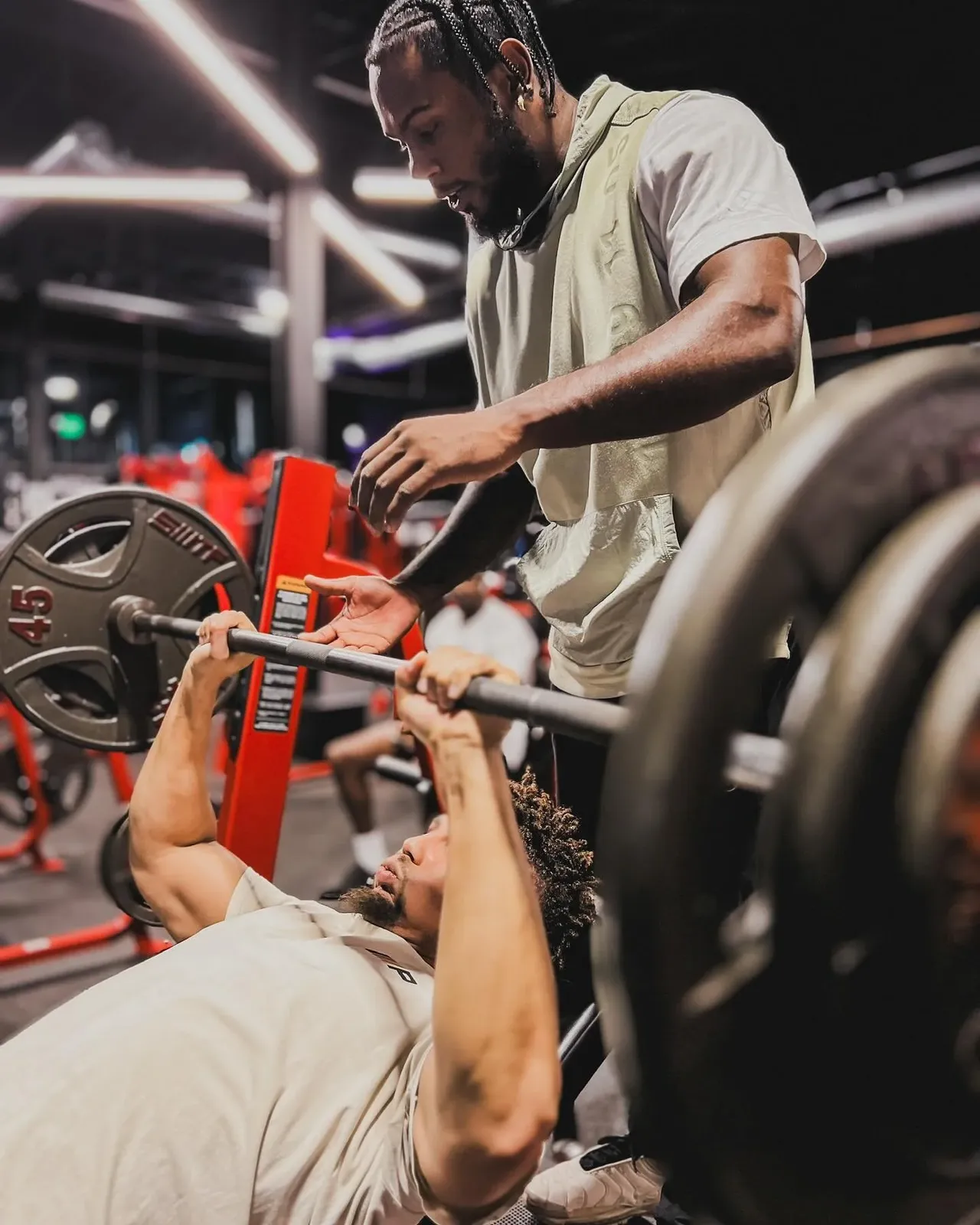
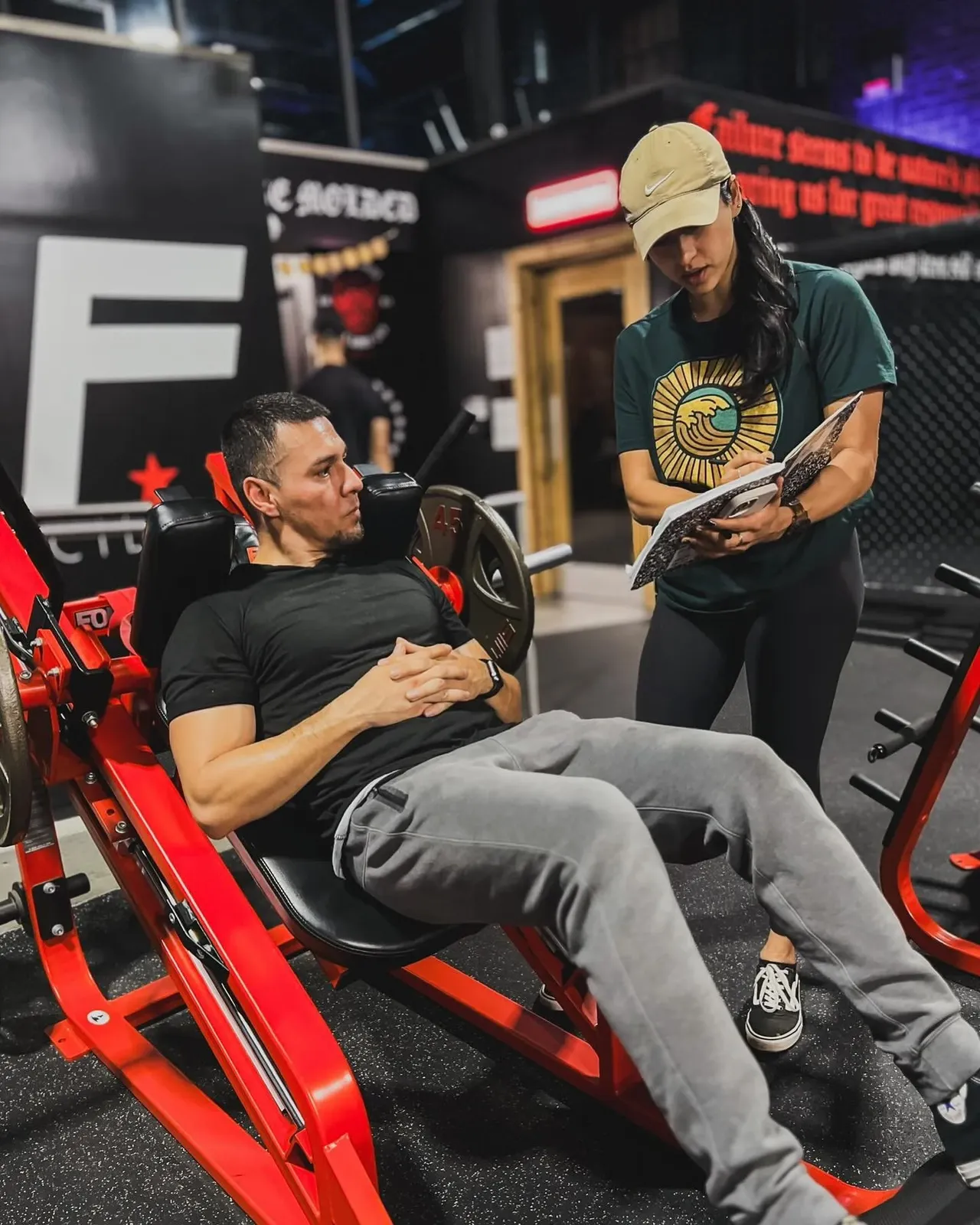
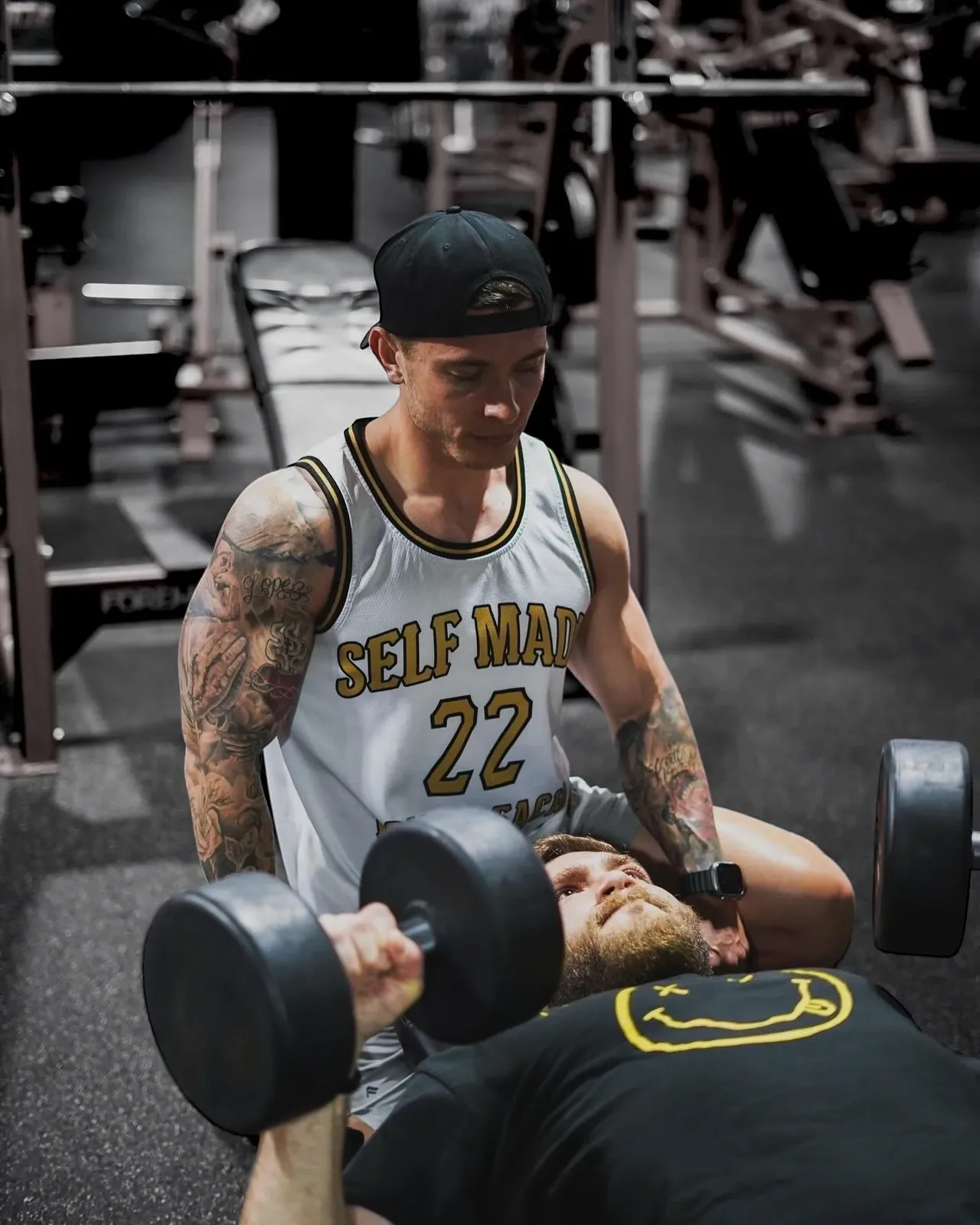
Walk the floor of any 24 Hour Fitness on a Tuesday night and you'll see the same pattern: a guy doing leg extensions, cable curls, and a seated row machine, chasing a pump instead of strength. Three months later he looks the same. We see the opposite version at Trinity every week — someone who's been "working out" for two years but can't do a single bodyweight pull-up or hinge a barbell off the floor without their lower back rounding. The gap isn't effort. It's exercise selection. If you want strength that transfers to real life — carrying your kid, throwing a hook with authority, not blowing out your lower back picking up a cooler — you build your training around compound lifts, not machines. Here are the five we program most at our Long Beach facility, why they work, and how to add them to your routine without wrecking your joints in week one.
Why Five Compound Lifts Beat Fifteen Machines
A compound lift moves more than one joint at a time — your hips, knees, and ankles fire together on a squat; your shoulders, lats, and core all load on a pull-up. Machines isolate a single joint, which has its place for rehab or finishing work, but it will never build the kind of total-body strength that holds up outside the gym. When we test new clients at intake, the ones who've spent years on machines consistently fail basic movement screens: they can't load a hip hinge, their shoulders don't stabilize overhead, and their grip gives out before their back does.
The other piece is efficiency. If you train three days a week — which covers most of our members with jobs and kids — you don't have time for 20 exercises. Five compound lifts, rotated and progressed correctly, hit every major muscle group and movement pattern: hinge, squat, push, pull, and carry. That's the whole body in five lifts instead of fifteen.
This isn't a new idea. It's how every serious strength program has been built for the last 60 years, and it's the backbone of how we structure progressive overload for strength with every client who walks through our doors. The five lifts below are non-negotiable in our programming because the data from our own client logs — hundreds of training blocks over the past few years — shows they produce the fastest strength gains with the lowest injury rate when coached correctly.
Compound #1: The Trap Bar Deadlift
If you only add one lift from this list, make it this one. The trap bar deadlift puts the load in line with your center of gravity instead of out in front of you like a straight bar, which means less shear stress on the lower back and an easier bar path to learn. We start almost every new strength client here because it teaches the hip hinge faster than any other movement.
A realistic starting point for a beginner is the 45 lb trap bar alone for 3 sets of 8, focusing on bracing the core and pushing the floor away rather than yanking the weight up. Most clients add 5-10 lbs per session for the first month before progress slows. Within 8-12 weeks, we regularly see clients go from pulling just the bar to pulling 185-225 lbs for sets of 5, a legitimate strength milestone for someone who came in with zero barbell experience.
Program it once or twice a week, never on back-to-back days. The most common fault is rounding the upper back at the bottom. Fix it by cueing "proud chest" and dropping the weight 10-15% until the position holds for every rep. If you've had a disc issue or chronic low back pain, this is also the safest deadlift variation to reintroduce loaded hip hinging — we cover the broader return-to-training process in our guide to building a personalized recovery plan for Long Beach athletes coming back from injury.
Compound #2: The Front Squat
The front squat beats the back squat for most of our general population clients because the bar position forces an upright torso, which protects the lower back and builds the kind of quad and core strength that shows up in boxing footwork and everyday balance. It's harder to learn in week one — the wrist mobility to hold the rack position trips people up — but the payoff is worth it.
We coach a strap or cross-arm grip for anyone who can't get their wrists flat yet, and we pair the lift with ankle and hip mobility drills before every session. A client squatting 95 lbs for 3x6 in month one who sticks with consistent twice-weekly training can reasonably expect 135-155 lbs for the same rep scheme by month four, assuming body weight and sleep stay in a reasonable range.
Depth matters more than load here. We'd rather see someone hit parallel with 95 lbs than quarter-squat 155. The common mistake: clients cut depth short because their ankles won't let the knee travel forward. The fix isn't more squatting — it's 5 minutes of ankle dorsiflexion work before the bar ever gets loaded, the same mobility-first approach we use with our boxers (see our breakdown of mobility training for boxing performance).
Compound #3: The Weighted Pull-Up
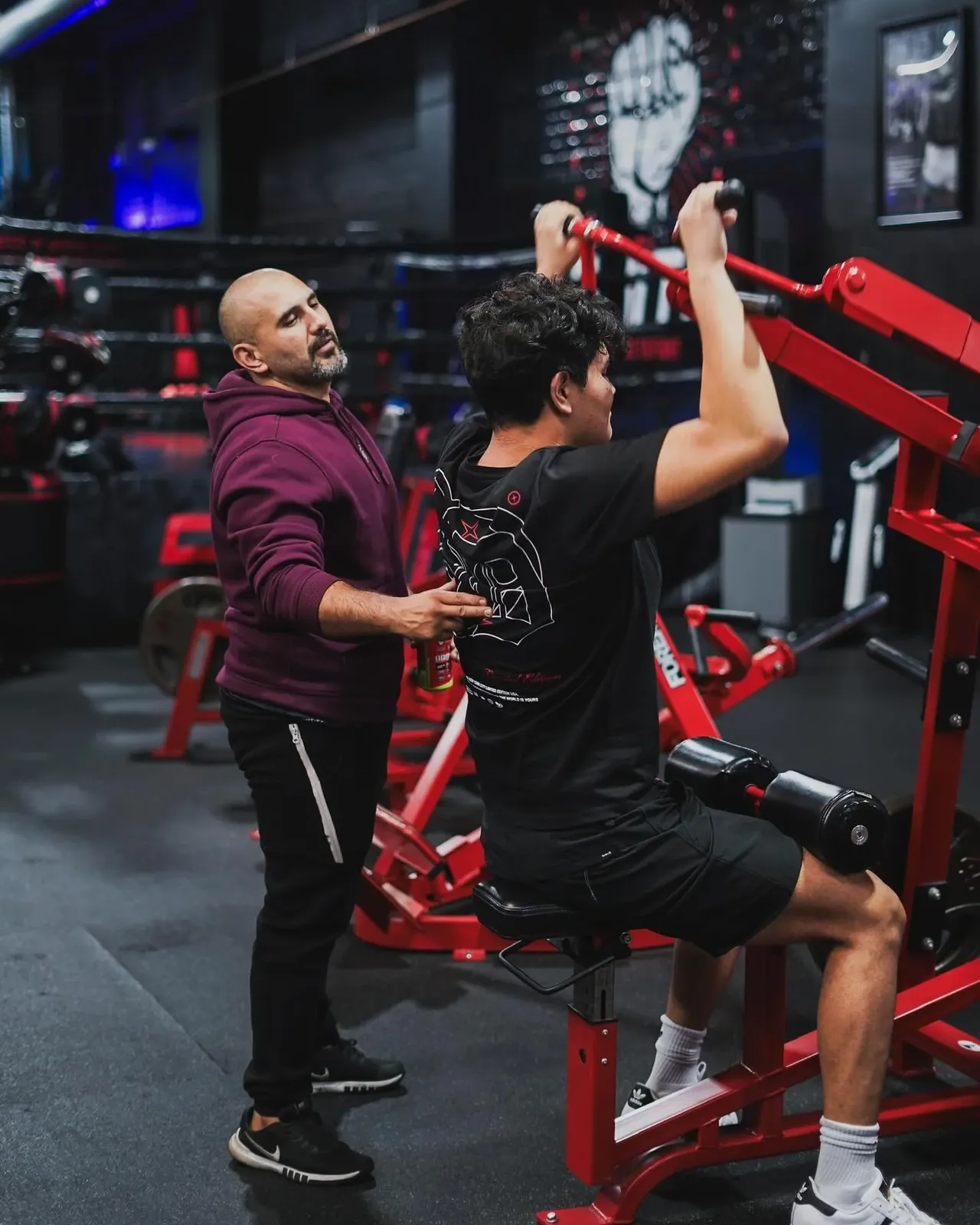
Most adults can't do a single strict pull-up, and that's fine — it's a starting point, not a disqualifier. We build toward it with banded pull-ups or lat pulldowns for the first 4-6 weeks, then move to full bodyweight reps, and only add external load once someone can hit 3 sets of 8 clean bodyweight reps.
Once a client is there, we load a dip belt starting with 5-10 lbs and add weight every 1-2 weeks as long as form holds: full hang at the bottom, chin clearly over the bar at the top, no kipping. This is the single best lift for building the kind of back and grip strength that carries over to boxing (controlling an opponent in the clinch), grappling, and simply not having your shoulders round forward at a desk all day.
A client who starts at bodyweight-only pull-ups and trains this twice a week can typically add 25-45 lbs of external load over a 12-week block. The biggest mistake we correct is partial range of motion — people get excited about adding weight and start cutting the bottom half of the rep. We'd rather regress the load and protect the full range every time.
Compound #4: The Standing Barbell Press
The overhead press gets skipped constantly because it's humbling — most people can press less overhead than they think, and it exposes weak core and glute bracing fast. That's exactly why we program it. It builds real shoulder strength and teaches full-body tension, which protects the shoulder joint far better than years of machine shoulder presses done in a seated, braced position that lets the core check out.
Start with an empty 45 lb bar for technique, or a 15-25 lb bar for smaller-framed clients, for 3 sets of 10, bracing the glutes and abs hard enough that the bar path stays dead vertical. From there, add 2.5-5 lbs per session. A beginner male client typically reaches 95-115 lbs for sets of 5 within 10-12 weeks; a beginner female client typically reaches 55-75 lbs in the same window, with wide individual variation based on starting upper body strength.
The common fault: pressing the bar forward around the face instead of straight up, which turns the lift into a front raise and stalls shoulder progress. Fix the bar path before you add weight — a lighter, correct rep is worth more than a heavier, sloppy one.
Compound #5: The Barbell Row
If the overhead press is the lift people skip because it's humbling, the barbell row is the lift people skip because it's boring. That's a mistake. A strong row balances out all the pressing most people do by default (bench, push-ups, overhead press) and builds the mid-back strength that keeps your shoulders from caving forward — which matters whether you're deadlifting, throwing a jab, or sitting at a desk eight hours a day.
We coach a hip-hinged, flat-back position with the bar pulled to the lower ribs, not the neck. Start at 65-85 lbs for 3 sets of 10 and add 5 lbs every session or two as form allows. Clients training this consistently twice a week typically add 40-60 lbs to their working weight over a 12-week block.
The most common fault is turning the row into a standing shrug by yanking with momentum instead of pulling with the back. If you can't control the weight down on a 2-3 second eccentric, it's too heavy — drop it 10-20% and rebuild the pattern before you add another plate.
How We Program These Five Lifts Into a Week
Five lifts doesn't mean five separate workout days. For a typical three-day-a-week client, we split it like this: Day 1 is trap bar deadlift and standing press, Day 2 is front squat and barbell row, Day 3 repeats a lighter deadlift and press, with pull-ups woven into both upper body days as a finisher. That gives each major pattern two touches per week, the minimum effective dose for a natural lifter to see consistent week-over-week progress.
Sets and reps shift depending on the phase. In a strength-building block we run 4-5 sets of 4-6 reps at 75-85% of a working max. In a hypertrophy or "add muscle" block, we drop to 3-4 sets of 8-12 at 65-75%. Rotating between these phases every 4-6 weeks — instead of grinding the same rep scheme for months — is the core idea behind the periodization approach we use for strength clients in Long Beach, and it's the difference between a client who plateaus at month three and one who's still setting PRs at month nine.
If you're self-programming, write your numbers down every session. "Felt good" isn't data. 135x5 on a trap bar deadlift is, and it's the only way to know if you actually progressed or just went through the motions.
Common Mistakes We See With These Five Lifts
The number one mistake is adding weight before the movement pattern is clean. We'd rather hold a client at 95 lbs on a front squat for three extra weeks until depth and bar path are consistent than let them chase 135 lbs with a pattern that's going to cause a knee or back issue six months down the line.
Second is ignoring the warm-up. A proper warm-up for these five lifts isn't a light jog — it's 5-8 minutes of hip and ankle mobility, a few activation sets for the glutes and upper back, then 2-3 progressively heavier warm-up sets of the actual lift before the working weight. Skipping this is how a "fine" Tuesday turns into a tweaked lower back on Wednesday.
Third, and this one's specific to compound lifts: programming all five, all out, every single session. Your nervous system needs recovery between heavy pulling and heavy pressing days just as much as your muscles do. We break down this exact failure pattern — and the fix — in three common strength training mistakes to avoid, and it's one of the most common reasons new clients tell us they "used to lift but stopped making progress."
Recovery Between Sessions Matters As Much As the Workout
Compound lifts tax your central nervous system more than isolation work, which means recovery isn't optional once you're pulling 185 lbs off the floor or pressing 95 lbs overhead for real sets. Sleep is the single biggest lever — clients getting under 6 hours a night consistently stall on these lifts regardless of how well the program is written. Aim for 7-8 hours, non-negotiable during a strength block.
Protein intake matters nearly as much. A client in the 150-200 lb range building strength on this program needs roughly 0.7-1 gram of protein per pound of bodyweight daily to recover between sessions — that's 105-200 grams spread across 3-4 meals, not crammed into one post-workout shake.
Between heavy sessions, we also program active recovery: 10-15 minutes of easy mobility work, walking, or light boxing pad work rather than complete rest. For clients training at high intensity multiple times a week, we lay out the exact protocol in our guide to recovery for high-intensity trainers, which covers everything from soft tissue work to sleep tracking.
Building This Into Your Own Training Right Now
You don't need to overhaul your entire routine this week. Pick one lift from this list you're currently not doing — most people are missing the trap bar deadlift or the standing press — and add it to your next session at a conservative weight. Track the number. Add a small amount next time. That's the entire system; everything else is detail.
If you're training at a commercial gym and don't have access to a trap bar, a dumbbell deadlift variation or a hex bar, if the gym carries one, works as a substitute until you can get on a proper platform. The point isn't the exact equipment — it's committing to compound movement over machine isolation as your default.
If you want this built into a real program instead of guessing at sets and reps on your own, that's exactly what we do at Trinity. Come in for a free intro session, we'll test your current strength on these patterns, flag what's limiting you, and build a plan around it. Book your free intro at Trinity Training Facility and we'll get you under a bar the right way.
Key Takeaways
- Compound lifts move multiple joints at once, building strength that transfers to daily life and sport, unlike single-joint machine exercises.
- The trap bar deadlift is the safest entry point for beginners because it reduces shear stress on the lower back compared to a straight bar.
- Weighted pull-ups should only be loaded once a client can perform 3 sets of 8 strict bodyweight reps with full range of motion.
- Rotating between strength blocks (4-6 reps at 75-85% of working max) and hypertrophy blocks (8-12 reps at 65-75%) every 4-6 weeks prevents plateaus.
- Recovery factors like 7-8 hours of sleep and 0.7-1 gram of protein per pound of bodyweight directly determine how fast these lifts progress.
- Clean movement pattern always comes before added weight; sloppy reps with heavier loads lead to injury, not faster strength gains.