








Implementing Periodization in Your Long Beach Training: A 4-Week Cycle for Max Strength Gains
Stuck at the same weights for months? Here's the 4-week periodization cycle we run at Trinity Training Facility in Long Beach to drive real strength gains.
Periodization means deliberately cycling training volume and intensity over set blocks so your body adapts instead of stalling. A 4-week model works well for most lifters: Week 1 builds volume at 65-70% of 1RM, Week 2 intensifies at 75-80%, Week 3 peaks at 85-92%, and Week 4 deloads at 50-60% before the cycle repeats one notch heavier.
The Plateau Every Long Beach Lifter Hits Eventually
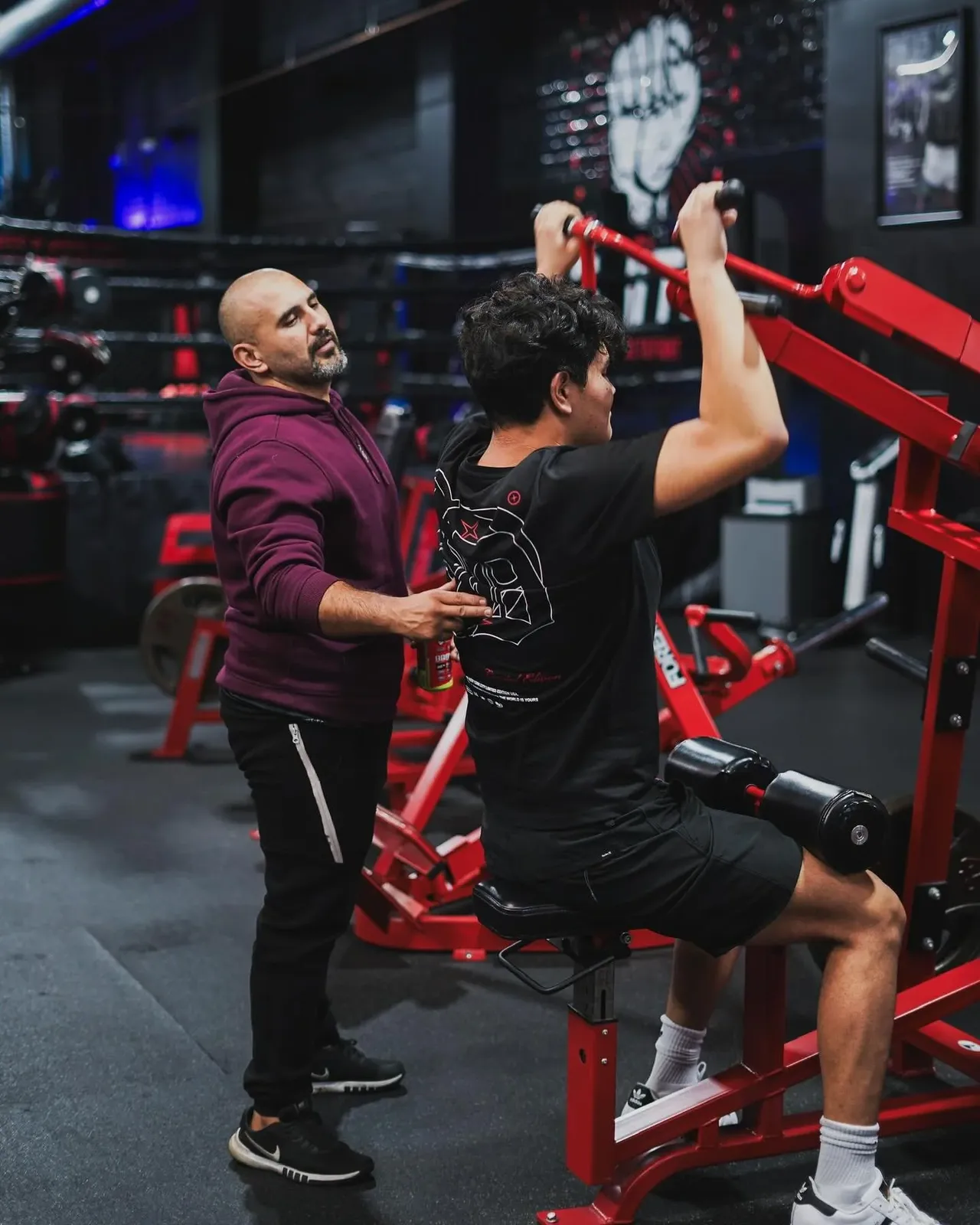
A client walked into Trinity Training Facility last spring bench pressing 185 for a set of five, same as he'd been doing for four months. He wasn't hurt, he wasn't undertrained, and he showed up three times a week without fail. He was just doing the same 3x8 at roughly the same weight, session after session, hoping consistency alone would move the needle. It doesn't. Muscles and nervous systems adapt to a stimulus, and once they've adapted, that exact stimulus stops producing change.
That's the plateau problem, and it's the single most common reason we see intermediate lifters stall out between 6 and 18 months into training. The fix isn't more effort or more soreness — it's structure. Specifically, it's periodization: deliberately cycling volume and intensity so the body is always chasing a slightly different target instead of grinding against the same wall.
This article breaks down the exact 4-week periodization cycle we run with strength-focused clients at our Long Beach facility, including the percentages, rep ranges, and the mistakes that derail most people who try to build their own program from a YouTube video.
What Periodization Actually Means
Periodization is the planned manipulation of training variables — mainly volume (total sets and reps) and intensity (percentage of your one-rep max) — over defined blocks of time. It is not the same thing as "muscle confusion" or randomly swapping exercises every week. Random variation actually works against strength gains because the body needs repeated exposure to a movement pattern to get measurably stronger at it.
Instead, periodization keeps the core lifts constant (squat, bench, deadlift, overhead press, or their close variations) while systematically shifting how much weight and how many total reps you're doing with them from week to week. Early research on this, including the 2002 Rhea et al. study published in the Journal of Strength and Conditioning Research, found that undulating and linear periodized programs both significantly outperformed non-periodized, fixed-set training for strength outcomes over comparable time frames.
In practice, this means a lifter's four-week block might look like: higher volume at moderate load, then moderate volume at higher load, then low volume at peak load, then a planned recovery week. Each phase serves a specific physiological purpose — building work capacity, building strength-specific adaptation, testing the ceiling, then allowing supercompensation to occur before the next cycle begins slightly heavier than the last.
Why a 4-Week Cycle Fits Real Schedules
Most periodization models you'll find online are built for competitive powerlifters running 8- to 16-week macrocycles toward a meet. That's overkill and, frankly, unrealistic for the working professionals, parents, and recreational athletes who make up most of our client base in Long Beach. A 4-week cycle gives you a complete adaptation loop — accumulation, intensification, peak, deload — inside a time frame short enough that people actually finish it.
We've found that clients who commit to a single 4-week block are far more likely to stay consistent than clients handed a 12-week spreadsheet on day one. There's a psychological benefit too: a 4-week cycle gives you a concrete test date roughly once a month, which creates a natural checkpoint to reassess and adjust rather than drifting through months of undefined "just show up and lift."
It also matches how most people's lives actually work. Four weeks is short enough to survive a busy work month, a minor illness, or a vacation without the whole plan falling apart. If you miss a session in Week 2, you adjust within the block instead of losing three months of programming logic.
Week 1: Volume Accumulation
Week 1 is about building work capacity, not testing strength. Load sits around 65-70% of your one-rep max, with higher total volume — typically 4 sets of 8-10 reps on your main lifts. The goal is to accumulate quality reps under moderate fatigue, refine bar path and bracing technique, and prepare connective tissue for the heavier loads coming in Weeks 2 and 3.
For a lifter with a 225 lb squat 1RM, Week 1 squat work would land around 145-155 lbs for 4x10. It should feel manageable — an RPE (rate of perceived exertion) of 6 to 7 out of 10, meaning you're leaving 3-4 reps in the tank on every set. If clients are grinding reps in Week 1, the cycle is programmed too aggressively and needs to be scaled back.
Accessory work during this week also runs higher volume: think 3 sets of 12-15 on rows, lunges, and core work. This is the week to address weak points and movement quality issues you won't have bandwidth to fix once intensity climbs. We typically program 4-5 total exercises per session in Week 1, with 60-90 second rest periods to keep density high without compromising form.
Week 2: Intensification
Week 2 trims volume and adds load. Main lifts move to roughly 75-80% of 1RM for 3 sets of 5-6 reps, RPE climbing to 7-8. This is the week most clients describe as the psychological turning point of the cycle — the bar feels noticeably heavier, but the lower rep count means total fatigue per session actually drops compared to Week 1.
Using the same 225 lb squat example, Week 2 loading lands around 170-180 lbs for 3x6. Rest periods extend to 2-3 minutes between working sets on the main lift to allow for full recovery between heavier efforts — this isn't a metabolic conditioning phase, it's a strength phase, and rushing rest periods here undermines the whole point.
Accessory volume drops to 3 sets of 8-10 reps, and we usually cut one accessory exercise per session compared to Week 1 to protect recovery capacity for the main lift. This is also the week we watch bar speed closely. If a lifter's bar speed on their working sets slows dramatically compared to Week 1's lighter loads, that's useful data for dialing in Week 3's peak numbers.
Week 3: Peak Week
Week 3 is where the previous two weeks of work get tested. Load climbs to 85-92% of 1RM for 2-3 sets of 2-4 reps, sometimes finishing with a true heavy single at 90%+ for lifters with enough training experience to test safely. RPE here runs 8-9 — hard, technically demanding sets, but always with a controlled bar path and a spotter or safety pins in place.
For that same 225 lb squat, Week 3 top sets land in the 190-205 lb range. This is not a maximal-effort week where you're grinding out ugly, form-breaking reps — it's a controlled peak that tells you and your coach exactly where your strength stands heading into the next cycle. If a lifter can't hit these numbers with clean technique, that's the signal to repeat Week 2 loading rather than push forward.
Volume drops sharply this week — 2-3 total working sets on the main lift, minimal accessory work, and sessions that run shorter (35-40 minutes instead of 55-60) because the nervous system, not the muscles, is doing the heavy lifting. We tell clients this is the week to sleep more and stress less, not the week to also start a new diet or a new job.
Week 4: Deload and Supercompensation
Week 4 is where most self-coached lifters sabotage their own progress by skipping it entirely. Load drops to 50-60% of 1RM for 2 sets of 6-8 reps — deliberately easy. This isn't laziness; it's the mechanism by which your body converts three weeks of accumulated training stress into an actual strength adaptation. Supercompensation, the physiological principle behind this, requires a reduction in stress for the adaptation to fully express itself.
Using our 225 lb squat example again, deload week lands around 115-135 lbs for 2x8 — a weight that should feel almost too light. That's the point. Clients who insist on training hard through Week 4 consistently report flat or declining performance at the start of their next cycle, while clients who genuinely back off come back into Week 1 of the next block noticeably stronger.
We also use Week 4 for mobility work, extra soft tissue care, and technique drilling with an empty bar or light dumbbells. It's a full week, just not a heavy one. By the end of Week 4, the next cycle's Week 1 loading gets recalculated based on Week 3's peak performance — if you hit 205 for a clean single instead of your projected 200, the whole next cycle shifts up accordingly.
Tracking the Numbers That Actually Matter
None of this works without a log. Every session at Trinity Training Facility gets recorded: exercise, load, sets, reps, and RPE. Without that data, you're guessing at percentages instead of programming off real numbers, and you have no way to know if Week 3's peak actually represented progress from the last cycle.
The three numbers we care about most session to session are working load, total volume (sets multiplied by reps multiplied by weight), and RPE trend. If RPE creeps up week over week at the same prescribed percentage, that's an early warning sign of accumulated fatigue, poor sleep, or under-eating — something to address before it turns into a missed lift or an injury.
We recommend logging in a simple spreadsheet or app rather than trying to remember numbers between sessions. Clients who track consistently break plateaus roughly twice as fast as those who train "by feel" alone, because tracking removes the guesswork about whether last cycle's Week 3 peak was actually beaten this time around.
Mistakes That Kill a Cycle Before It Starts
The most common mistake we see is treating every session like a max-effort day. Lifters who go hard regardless of the week's prescribed intensity burn out their nervous system by Week 2 and have nothing left for the actual peak in Week 3. Periodization only works if the easy weeks stay easy.
The second most common mistake is skipping the deload entirely, usually out of a belief that rest days equal lost progress. In reality, strength gains consolidate during recovery, not during the workout itself — the training stimulus just creates the opportunity for adaptation. A missed deload doesn't just cost you Week 4; it usually costs you the first two weeks of the next cycle too, since you're starting from a fatigued baseline.
Other frequent errors include copying a program built for a competitive powerlifter without adjusting for training age, using estimated 1RMs that are wildly inflated from an ego lift months earlier, and changing exercises mid-cycle because a lift felt hard on a given day. Consistency of exercise selection across the 4 weeks is what makes the percentages meaningful in the first place — swap the exercise and you've reset the data you need to program correctly.
Fueling and Recovering Through the Cycle
Programming only works if recovery capacity keeps pace with training demand. Protein intake around 0.8-1 gram per pound of bodyweight daily supports the muscle protein synthesis needed to actually use the training stimulus you're generating, particularly during Weeks 2 and 3 when intensity is highest.
During peak week specifically, a small calorie surplus of 200-300 calories above maintenance — mostly from carbohydrates around training sessions — supports better bar speed and recovery between heavy sets. Clients who are aggressively cutting calories during Week 3 almost always underperform their projected peak numbers, which skews the following cycle's programming.
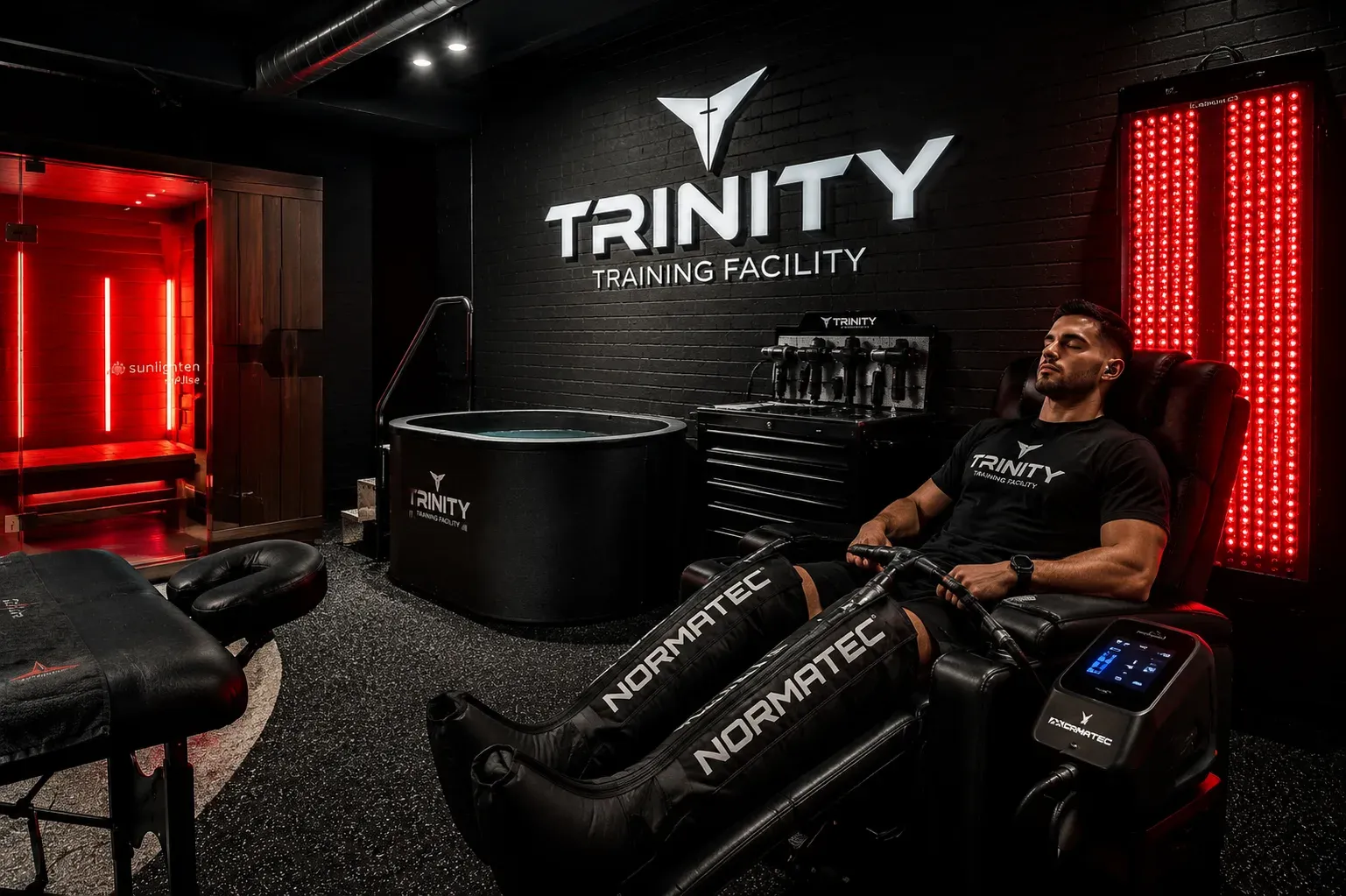
Sleep matters as much as food here. Seven to nine hours nightly is the baseline we ask every strength-focused client to hit, especially during Weeks 2 through 4 when the nervous system is under the most load. Hydration, basic soft tissue work, and keeping outside conditioning work (running, boxing conditioning, etc.) lighter during peak week round out the recovery side of the equation — a cycle can be programmed perfectly and still underdeliver if recovery habits don't support it.
Starting Your First 4-Week Cycle
You don't need a competition total or years of training experience to start periodizing — you need a baseline number for your main lifts and the discipline to actually follow the prescribed percentages instead of freelancing on "easy" weeks. Most clients who start this system see a measurable strength increase, typically 5-10% on their main lifts, within their first two completed cycles.
If you've been stuck at the same weights for more than six weeks despite consistent training, that's the clearest sign a structured cycle, not more effort, is what's missing. Book a strength assessment at Trinity Training Facility in Long Beach and we'll establish your working percentages, build your first 4-week cycle, and coach you through each phase so the numbers translate into real progress instead of another spreadsheet you abandon by Week 2.
Key Takeaways
- Periodization is the planned manipulation of volume and intensity across weeks, not random exercise variation.
- A 4-week block (accumulation, intensification, peak, deload) fits realistic schedules better than 8-12 week programs most people never finish.
- Week 3 (peak week) should include a true top-set test at 85-92% of 1RM, not just 'heavy for the day.'
- Deload weeks (Week 4) at 50-60% intensity are where strength adaptations actually consolidate — skipping them stalls progress.
- Logging load, reps, and RPE every session is the single biggest predictor of whether a lifter breaks a plateau within 90 days.
- Protein intake near 0.8-1g per pound of bodyweight and 7-9 hours of sleep are non-negotiable during peak week.
Sources
- Journal of Strength and Conditioning Research — Rhea et al., Comparison of Linear and Daily Undulating Periodized Programs
- American College of Sports Medicine — Progression Models in Resistance Training for Healthy Adults (Position Stand)
- National Strength and Conditioning Association — Essentials of Strength Training and Conditioning