









Boxing Workout Recovery: Long Beach Training Guide
Learn how to structure boxing workout recovery with real schedules, sleep and nutrition numbers, and mobility work used at our Long Beach facility.
Boxing workout recovery means managing the 48-hour window after hard sessions with protein and carb timing, mobility work for the shoulders and hips, 7-9 hours of sleep, and a structured weekly schedule that separates sparring from heavy strength days. Skipping this leads to slower hands, shoulder injuries, and stalled progress around week three of training.
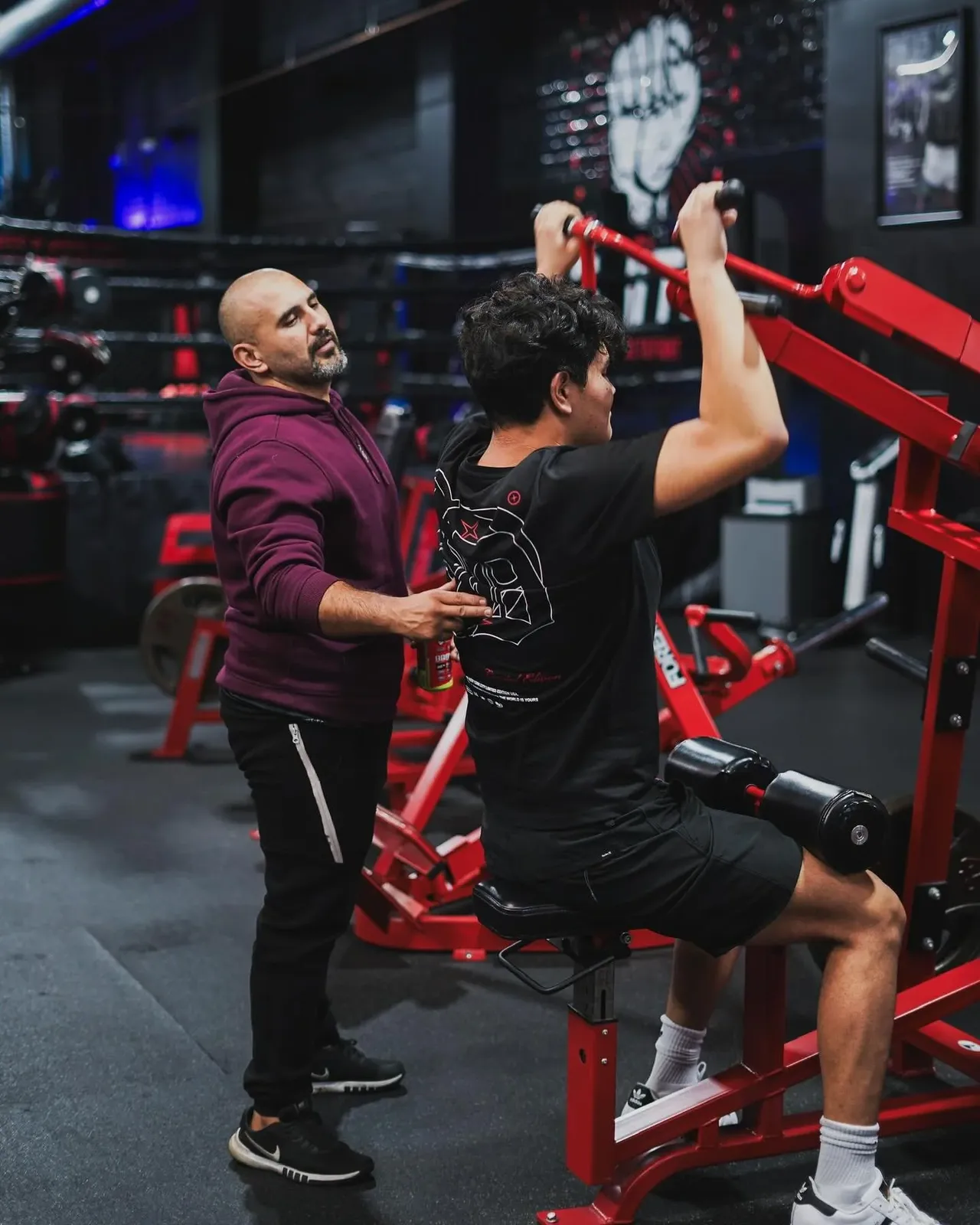
You leave Tuesday's pad session soaked through, shoulders burning, and by Thursday's sparring round your hands feel a half-step slow. You're not out of shape — you're not recovered. This is the pattern we see constantly at Trinity Training Facility here in Long Beach: boxers and recreational fighters stack volume on top of a body that's still repairing itself from the last session, then wonder why their boxing workout recovery stalls out around week three and their output in the ring drops instead of climbing. Boxing is one of the most demanding things you can do to a body — rotational power, repeated eccentric loading on the shoulders, grip and forearm fatigue, and a cardiovascular tax that lifting alone doesn't create. If you train boxing three or more days a week and you're not managing recovery on purpose, you're leaving performance on the table and setting yourself up for a shoulder or lower back issue that sidelines you for a month. Below is how we actually program recovery for boxing clients at our Long Beach facility, with the numbers and schedules we use in real sessions.
Why Boxing Wrecks Recovery Differently Than Lifting
A heavy squat day beats up your legs in a fairly predictable way — soreness peaks at 24 to 48 hours, then fades. Boxing doesn't follow that script. A single hour of pad work or bag rounds involves thousands of sub-maximal rotational contractions through the obliques, lats, and shoulder girdle, plus isometric bracing in the core on nearly every exhale-punch. That volume of small, repeated contractions creates a different kind of fatigue: connective tissue and joint-capsule irritation that doesn't always show up as soreness you can feel.
This is why a boxer can "feel fine" on a Wednesday and still have a flat, slow jab — the central nervous system is fatigued even though the muscle isn't sore. We track this at Trinity by having clients rate hand speed and punch snap subjectively, 1 to 10, before every bag session. A score that drops two or more points below their rolling average for two sessions in a row is our signal to pull volume, not add more rounds.
The other factor people underestimate is grip and forearm fatigue. Wrapping your hands tight for 45 to 60 minutes, three to five days a week, loads the wrist flexors and extensors constantly. We've had clients come in with what they thought was tennis elbow that was actually just undermanaged forearm fatigue from wraps that were too tight and zero forearm-specific recovery work between sessions.
The 48-Hour Window After You Spar or Hit Pads Hard
What you do in the two days after a hard boxing session determines whether your next session is better or worse than the last one. We break this window into three concrete steps for our clients, and none of them are complicated or expensive.
For a deeper breakdown of this exact protocol, including the specific tools we use with high-intensity clients, our recovery hacking guide for high-intensity trainers walks through the full system step by step.
Building a Recovery-First Weekly Boxing Schedule
Most of the boxers who walk into Trinity burned out are training boxing like it's cardio — five or six days a week of bag and pad work with no structure. That's the fastest route to a plateau. Here's the split we actually program for a client training boxing three to four days a week alongside strength work:
Notice sparring sits on Friday with two lighter days built in before it and a full weekend after — that's deliberate. Sparring is the highest-cost session in boxing, and clients who put it mid-week with hard sessions on both sides are the ones who show up flat and get hit more. If you want the conditioning piece dialed in specifically, our 4-week boxing endurance plan lays out exactly how to build the Wednesday interval work without digging a recovery hole you can't climb out of by Friday.
Mobility Work That Actually Moves the Needle
Most boxers stretch their shoulders and call it mobility work. That's not enough. The joints taking the most abuse in boxing — thoracic spine, hips, and the shoulder capsule — need rotational range of motion, not static holds.
At Trinity, every boxing client gets a 10-minute mobility block built around three movements: open-book thoracic rotations (8 per side), 90/90 hip switches (10 per side), and banded shoulder dislocates (12 reps, light band). This takes less time than scrolling your phone between rounds and directly targets the three areas that get tight fastest from repeated punching mechanics.
Hip mobility matters more than most boxers realize because every power punch originates from hip rotation, not the shoulder. A boxer with locked-up hips compensates by overusing the shoulder and lower back to generate punch power, which is exactly how you end up with a rotator cuff strain six weeks into a new training block. We've corrected this in dozens of clients just by adding hip rotation drills twice a week.
If your hips and thoracic spine already move well but your hand speed still isn't where it should be, the limiting factor is usually ankle and foot mobility — footwork drives punch setup, and stiff ankles slow everything down. Our full breakdown on this, including the specific drills we use with competitive amateurs, is in our mobility training guide for boxing performance. Pair that with consistent footwork-specific conditioning and most clients see a visible difference in hand speed within three to four weeks.
Sleep and Nutrition Numbers That Actually Matter
You can't out-stretch a bad sleep schedule. Boxers training four or more days a week need 7 to 9 hours of sleep, and the research backing this isn't close — athletes who drop below 7 hours see measurable declines in reaction time and reactive strength, which in boxing terms means you get hit more and you see punches later. The National Sleep Foundation's research on athletes and sleep is worth reading if you think you're the exception — most people training hard are not.
On the nutrition side, we give boxing clients two numbers to hit consistently: 0.7 to 1 gram of protein per pound of bodyweight daily, and at least 3 grams of carbohydrate per pound on heavy training days. Boxing is glycolytic — it burns through muscle glycogen fast — and boxers who chronically undereat carbs because they're chasing a weight class end up with the exact "slow hands" problem described earlier, except it's fuel-related instead of CNS fatigue.
Hydration gets overlooked constantly. Losing just 2% of bodyweight in sweat without replacing it measurably drops power output and reaction time. For a 170-pound boxer, that's about 3.4 pounds — easy to hit in a 75-minute session in a warm gym with hand wraps and gloves trapping heat. We weigh clients before and after hot sessions during fight camp specifically to catch this before it becomes a pattern.
Active Recovery Days: What to Actually Do
"Rest day" doesn't mean "do nothing" for a boxer training multiple days a week — complete inactivity on your off days actually slows recovery compared to genuine active recovery. The goal on these days is increased blood flow without added fatigue cost.
Our standard active recovery session for boxing clients runs 30 to 40 minutes: 15–20 minutes of zone 2 cardio (bike, incline walk, or easy jump rope — heart rate kept under 130–140 bpm for most adults), followed by 10–15 minutes of foam rolling and mobility work targeting whatever felt tightest in the last session.
A few specifics that matter:
Clients who commit to real active recovery days instead of skipping them or turning them into extra bag work consistently report better hand speed and less shoulder stiffness within two to three weeks.
Common Recovery Mistakes We See at Trinity
Three mistakes account for most of the recovery problems we fix in new boxing clients. First: training boxing and heavy upper-body strength work on back-to-back days. Punching and pressing both tax the shoulder girdle, and stacking them doesn't build more capacity — it just doubles the damage before any repair happens. Separate them by at least 24 hours.
Second: icing everything immediately after every session. Ice has a place for acute injury, but routine icing after normal training sessions can blunt the inflammatory signaling your body needs to actually adapt and get stronger. We reserve ice for genuine overuse flare-ups, not standard post-session soreness.
Third, and the one we see most: no deload. Boxers who train hard for 8, 10, 12 weeks straight without a lighter week almost always hit a wall — plummeting hand speed, irritability, poor sleep, nagging joint pain that won't resolve. We program a deload week every 4 to 6 weeks for every boxing client, where volume drops by roughly 40% and intensity drops too. It's the single highest-leverage recovery tool we use, and it's the one people resist the most because it feels like losing progress. It isn't — it's how you keep the progress you already made.
When to Pull Back vs. When to Push Through
Not every tired day means you need rest, and not every ache means push through it. We teach clients to watch four specific signals rather than guessing: resting heart rate elevated more than 5–7 beats above your normal baseline for two mornings in a row, sleep quality dropping despite normal hours in bed, grip strength feeling noticeably weaker on the bag, and mood or motivation tanking for no clear reason outside the gym.
Any one of these alone is probably nothing. Two or more together, for more than two days, means pull back — drop that day's session to technical work only, skip sparring, and add an extra active recovery day before the next hard session.
This is also where a personalized plan matters more than a generic template. A 45-year-old coming back from a shoulder injury and a 24-year-old amateur prepping for a fight need completely different recovery thresholds, even if they're doing the same bag workout. We build this individually with clients rather than handing out a one-size-fits-all recovery sheet — you can see how we structure that process in our personalized recovery plan guide for Long Beach athletes. The underlying principle from the National Strength and Conditioning Association on monitoring training load and recovery markers backs this approach — individualized tracking consistently outperforms fixed rest-day schedules for avoiding overtraining.
Tying Recovery Into Your Strength Work
Boxing recovery doesn't exist in a vacuum from your strength training — the two have to be programmed together or they work against each other. Rotational power work (med ball throws, cable chops, landmine rotations) taxes the same thoracic and hip structures that boxing uses, so stacking heavy rotational lifting the day before sparring is a common way to show up flat.
We sequence strength blocks around the boxing calendar, not the other way around. In the run-up to a fight or a hard sparring stretch, we shift strength work toward lower-body and posterior chain emphasis — these support punching power without directly fatiguing the exact rotational structures boxing already hammers. Heavier upper-body pressing and rotational strength work gets programmed into lighter boxing weeks instead.
This is the same periodization logic we use across every strength program at Trinity, not just boxing — building in planned waves of higher and lower demand instead of maxing out every week. If you want to understand the framework behind this in more depth, our periodization guide for Long Beach strength training covers exactly how we wave volume and intensity across a training block, which applies directly to how we structure boxing camps too.
Clients who ignore this and train strength and boxing as two separate, uncoordinated programs are the ones who plateau fastest and get hurt most often. Coordinate the two and both improve faster than either would alone.
Your Next Step
If you're grinding through boxing sessions on no real recovery plan, you don't need to overhaul everything tomorrow. Pick one change from this article — add a real active recovery day, fix your sleep number, or build a deload into the next four weeks — and run it for three weeks before judging the result.
If you want this built into an actual program instead of pieced together from an article, come train with us. We run boxing and strength programming together for Long Beach clients every week, and we'll map out a recovery schedule specific to your training load, your goals, and your history — not a generic template. Book a free intro at Trinity Training Facility and we'll build it with you.
Key Takeaways
- Hard boxing sessions create CNS and connective-tissue fatigue that soreness alone won't show you.
- Refuel with 20-30g protein and 40-60g carbs within two hours of a hard session.
- Space sparring at least 24 hours from heavy upper-body strength work.
- Build a 10-minute mobility block for thoracic spine, hips, and shoulders into every training day.
- Program a deload week every 4-6 weeks, cutting volume by roughly 40%.
- Watch resting heart rate, sleep quality, grip strength, and mood together as overtraining signals.