








Optimizing Your Off-Season Training: A Periodized Strength Plan for Long Beach Athletes
A periodized off-season strength plan built for Long Beach athletes. Real phases, rep ranges, and load percentages from Trinity Training Facility's coaching floor.
A periodized off-season strength plan breaks 12-16 weeks into three phases — anatomical adaptation, maximum strength, and power conversion — each shifting sets, reps, and load percentages to build a foundation before competition or summer season. Long Beach athletes who skip this structure and just "train hard" year-round plateau by week six and show up to in-season with nagging joint pain instead of new strength.
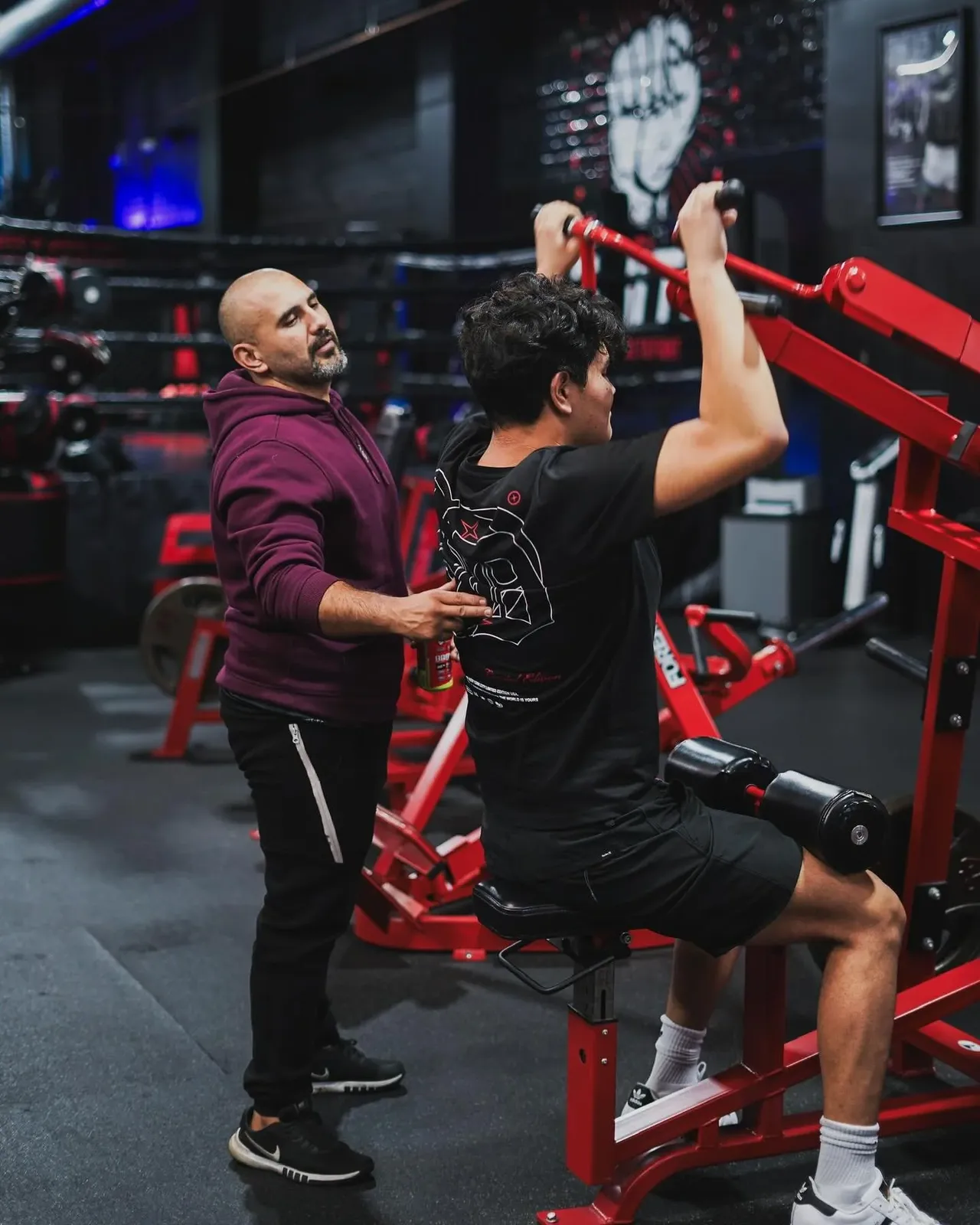
Marcus walked into Trinity in late May with a problem I hear every summer. He's a 34-year-old adult league basketball player who'd been "training hard" since March — same four exercises, same three sets of ten, five days a week. His bench had been stuck at 185 for two months. His knees ached going up the Bluff stairs. He wasn't broken down from too little work. He was broken down from work with no plan behind it. That's what an off-season without periodization looks like: motion without progression.
The off-season is the only time of year an athlete can build strength without the interference of games, tournaments, or fight camps eating into recovery. Waste it on undirected effort and you show up to your season with the same ceiling you had last year. Structure it correctly and you walk in 15-20 pounds stronger on your major lifts with joints that feel better, not worse. This is the exact framework we run for strength athletes, boxers, and weekend competitors who train at our Long Beach facility, laid out so you can apply it whether you're coached or training on your own.
What the Off-Season Actually Means for Long Beach Athletes
For most people reading this, "off-season" isn't a literal sports calendar term — it's the stretch of 12 to 16 weeks between competitive demands where you're not peaking for a specific event. For a boxer, that's the gap between fight camps. For a beach volleyball player, it's the winter months before tournament season ramps back up in April. For a general strength client, it might just be the period after a summer cut where the goal shifts from fat loss back to building muscle and strength.
The mistake we see constantly at Trinity is treating every week of that window identically. Someone will do the same 5x5 squat protocol for four straight months because it worked the first month. It stops working because your body adapts to a specific stimulus within roughly 3-4 weeks — after that, you need a new variable (volume, intensity, exercise selection, or tempo) to keep forcing adaptation.
A properly periodized off-season has a start date, an end date, and three to four distinct phases in between, each with its own goal. You're not just "getting stronger" in a vague sense — you're building tissue tolerance in phase one, maximum force output in phase two, and speed-strength in phase three. Each phase sets up the next. Skip phase one and jump straight to heavy singles, and you're the guy who tweaks his lower back in week three because his connective tissue never adapted to load before his nervous system started chasing max weight.
The Periodization Framework: Macrocycle, Mesocycle, Microcycle
Three terms structure everything that follows, and understanding them changes how you read a program. The macrocycle is the entire off-season block — typically 12-16 weeks for our clients. The mesocycle is a phase within that block, usually 3-6 weeks, built around a specific training goal like hypertrophy or max strength. The microcycle is a single week, where daily sessions are sequenced so hard days and easier days don't collide.
Here's how we lay out a 16-week macrocycle for a typical strength-focused Long Beach client:
Within each mesocycle, week 4 (or the last week of a shorter phase) is almost always a deload — we'll cover exactly what that looks like later. The reason this structure matters is sequencing: tendons and ligaments adapt on a slower timeline than muscle, roughly 8-12 weeks versus 3-4 weeks for measurable hypertrophy. Starting with higher-rep, moderate-load work in phase one builds the connective tissue capacity that lets you safely handle the 85-95% loads coming in phase three. Athletes who skip straight to max-effort work almost always plateau or get hurt by week 6-8 because their tissue never caught up to their ambition.
Phase 1: Anatomical Adaptation and Base Strength (Weeks 1-4)
This phase gets skipped more than any other because it's the least exciting. Loads are moderate — 65-75% of 1RM — and rep ranges sit at 8-12 per set across 3-4 sets. The goal isn't to feel destroyed every session; it's to accumulate volume, groove movement patterns, and build the tendon and joint resilience that heavier phases will demand later.
For Marcus, this meant four weeks of back squat, Romanian deadlift, incline dumbbell press, and weighted pull-ups at 70% of his estimated max for 4 sets of 10, three days a week, with total weekly volume around 16-20 sets per major muscle group. We also added single-leg work — Bulgarian split squats and step-ups — specifically because his knee pain came from years of only ever squatting bilaterally.
A sample week looks like this: Monday is squat-pattern focused (back squat 4x10 at 70%, Bulgarian split squat 3x12 per leg, leg curl 3x15), Wednesday is upper push/pull (incline press 4x10, weighted pull-up 4x8, cable row 3x12), and Friday combines a deadlift variation with accessory core and single-leg stability work. Rest periods stay at 60-90 seconds — shorter than the strength phase — because the goal here includes some metabolic stress, not pure force output.
The biggest mistake in this phase is going too heavy too fast because moderate loads feel easy relative to what an experienced lifter is used to. Resist it. The connective tissue adaptation this phase provides is what keeps you healthy in week 11 when the bar gets genuinely heavy.
Phase 2: Maximum Strength Development (Weeks 5-9)
This is where the numbers on the bar start climbing and most athletes finally feel like they're "really training." Intensity moves to 80-90% of 1RM, reps drop to 3-6 per set, and rest periods extend to 2-3 minutes so you can recover enough between sets to move real weight with good bar speed.
Volume drops relative to phase one — typically 10-14 total sets per major lift pattern per week — because you can't sustain both high volume and high intensity simultaneously without digging a recovery hole. We program the big compound lifts (squat, bench, deadlift, or their boxing-relevant equivalents like trap bar deadlift and standing press) as the primary movement of the session, done first while the nervous system is fresh, followed by 2-3 accessory movements at lower intensity.
A realistic week 6 session for a client whose squat 1RM is 315 lbs: back squat 5 sets of 4 reps at 260-270 lbs (roughly 83-86%), followed by front squat 3x6 at a lighter load for volume, then leg press and hamstring accessory work. The following week, if bar speed stayed consistent and he hit all reps, we'd add 5-10 lbs to the top set.
The progression rule we use: add weight only when every prescribed rep is completed with the bar moving at a consistent speed — not grinding. If reps start slowing dramatically or form breaks on the last set, hold that load for another week rather than pushing forward on a guess. This phase is also where we introduce a mid-phase deload, usually week 7 or 8, dropping volume by roughly 40% and intensity to 65-70% for one week before resuming the climb.
Phase 3: Power and Conversion (Weeks 10-13)
Raw strength without speed doesn't transfer well to sport. A boxer with a bigger deadlift who can't generate force quickly isn't punching harder — he's just stronger in a gym context. Phase three converts the strength built in phase two into usable power by combining heavy, low-rep work (85-95% of 1RM for 1-3 reps) with explosive, lighter-load movements.
We use contrast pairing here: a heavy set of trap bar deadlifts at 90% for 2 reps, followed 60-90 seconds later by a set of broad jumps or med ball slams. The nervous system stays primed from the heavy set, and the explosive movement teaches it to express that strength quickly. For boxers specifically, we pair heavy trap bar work with rotational medicine ball throws against the wall — 3 sets of 5 per side at maximum intended velocity.
A sample week 11 session: trap bar deadlift 4 sets of 2 reps at 88-92% of 1RM, immediately followed by 3 broad jumps for distance; then bench press 4x3 at 85% paired with plyo push-ups; finishing with rotational cable chops for core-to-shoulder power transfer, 3x8 per side.
Total weekly volume in this phase drops to its lowest point of the entire macrocycle — often just 6-9 heavy sets per major pattern — because intensity is high enough that recovery demand per set is significant. This is intentional. You're not trying to accumulate fatigue anymore; you're trying to express the adaptations from the previous nine weeks at maximum output.
Programming the Details: Sets, Reps, RPE, and Deloads
Percentages of 1RM are a starting point, not gospel, because a tested max from six weeks ago doesn't account for how you're recovering today. We layer Rate of Perceived Exertion (RPE) on top of percentage-based programming so athletes autoregulate daily. An RPE 8 set means you could have done 2 more reps if you had to; RPE 9 means 1 more rep; RPE 10 is an all-out max effort. In phase one, working sets should sit around RPE 6-7. In phase two, RPE 7-8. In phase three, top sets can touch RPE 9, but never 10 outside of an actual test day.
Deloads are non-negotiable, and this is the single most common thing self-coached athletes skip. Every fourth week, cut volume by 40-50% and intensity to roughly 60-70% of recent working loads. It feels like you're losing progress. You're not — you're allowing the accumulated joint and central nervous system fatigue to clear so the next block's adaptations actually stick. Athletes who train hard for 12 straight weeks without a deload almost universally show a performance dip in weeks 9-12, right when they should be peaking.
We also track bar speed using simple video review, comparing rep 1 to the final rep of a set on a phone camera. If the last rep looks noticeably slower than the first at the same load, that's a signal you're accumulating fatigue faster than you're adapting, and it's often the earliest warning sign before a stalled lift shows up on paper.
Common Off-Season Mistakes We See at Trinity
The single biggest mistake is treating the off-season like a 16-week max-effort test. Clients come in wanting to hit new numbers every single week from day one. That approach ignores that strength gains compound over a full macrocycle — chasing a new PR in week 2 borrows recovery capacity you need in week 11 when it actually matters for a competition or fight camp.
The second mistake is neglecting single-joint and single-leg accessory work in favor of only the big compound lifts. Marcus's knee pain traced directly back to years of squatting and deadlifting with almost no unilateral strengthening, leaving a strength imbalance between his left and right leg of roughly 18% by force plate testing. We closed that gap over 10 weeks using Bulgarian split squats and single-leg RDLs before his knee stopped complaining on stairs.
Third: ignoring sleep and treating recovery as optional. An athlete lifting 4-5 days a week in a max strength phase needs 7-9 hours of sleep consistently. Clients sleeping 5-6 hours during phase two almost always show stalled bar speed and elevated resting heart rate on our check-ins by week 3 of that block.
Fourth: not testing before you start. Without a real or reasonably estimated 1RM on your major lifts, every percentage in this article is a guess. Spend a session in week 0 establishing accurate numbers — either a true max attempt or a well-calculated estimate from a 3-5 rep max — before phase one begins.
Nutrition and Recovery to Support the Off-Season Build
You cannot build meaningful strength in a caloric deficit — the body prioritizes survival functions over tissue repair when energy is scarce. For athletes moving through a strength-focused off-season, we target a surplus of roughly 200-300 calories above maintenance on training days, with protein intake at 0.8-1 gram per pound of bodyweight daily. For a 180-pound athlete, that's 144-180 grams of protein spread across 4-5 meals, which matters more than hitting the number in one or two sittings because muscle protein synthesis responds to consistent amino acid availability throughout the day.
Carbohydrate timing matters more in the maximum strength and power phases than in phase one, because glycogen availability directly affects your ability to produce force on heavy sets. We have clients front-load 30-40% of daily carbs in the pre- and post-training window — a banana and rice cakes before, a meal with rice or potatoes within 90 minutes after.
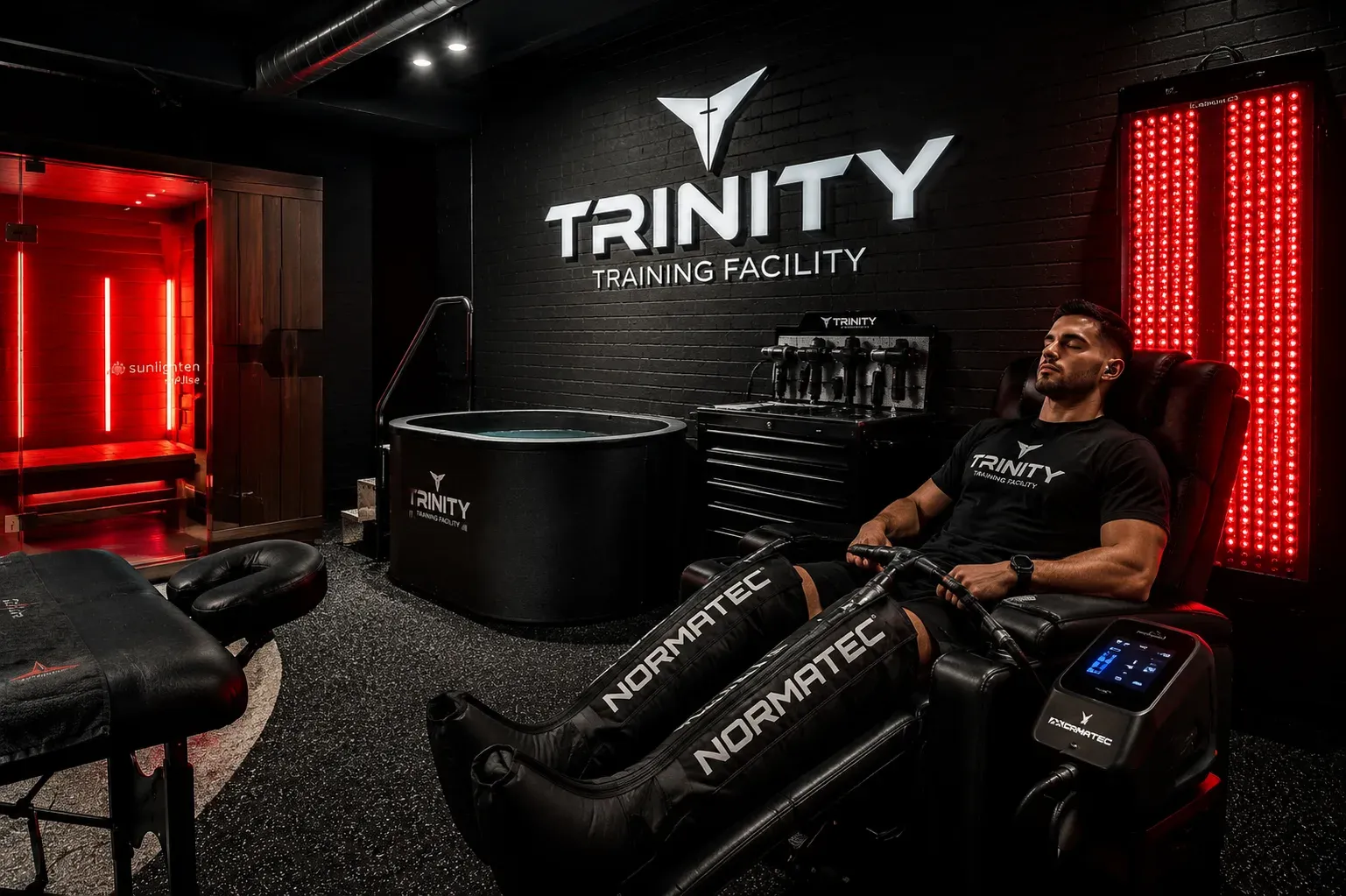
Recovery outside the gym isn't optional supplementation to the program — it's part of the program. That means 7-9 hours of sleep, at minimum one full rest day between heavy lower body sessions, and active recovery work like walking or light mobility on non-training days rather than complete inactivity. Athletes juggling boxing conditioning alongside this strength block need to cap high-intensity cardio to 2-3 sessions weekly during phase two specifically, because the interference effect between heavy strength work and excessive conditioning volume is well documented — you can build both qualities, but not both maximally in the same narrow window.
Tracking Progress and Knowing When to Transition Phases
Guesswork is the enemy of a good periodized plan. We have clients track three numbers weekly: top set load, estimated bar speed (fast, moderate, grinding — a simple subjective category works fine without lab equipment), and a 1-10 joint pain score for any previously problematic area. When load is climbing, speed stays consistent, and pain scores stay flat or improve, you're ready to progress within a phase. When load stalls for two consecutive sessions or pain scores climb, that's your signal to hold, deload early, or address the underlying issue rather than pushing through.
Transitioning between phases isn't purely calendar-based, even though we use a 4-6 week default. If an athlete is still making weekly progress at the end of a scheduled phase, we'll extend it by a week or two before moving on. If progress stalled two weeks before the scheduled transition, that's actually a decent signal the athlete's body is asking for the next stimulus early.
By week 16, the goal isn't just a bigger number on a lift. It's an athlete who moved from grinding out reps in week 1 to producing fast, confident, heavy singles in week 13, with joints that feel more resilient, not less. Marcus finished his 16-week block with a 235-pound bench (up from 185), a squat 1RM 40 pounds higher than his phase one starting estimate, and stairs that no longer bothered his knees. None of that came from training harder in a vague sense. It came from training a specific plan, in a specific order, for a specific reason each week.
If you're heading into an off-season stretch without a phase-by-phase plan behind it, that's the gap to close first — not the next exercise variation or supplement. Book a strength assessment at Trinity Training Facility in Long Beach and we'll build your 12-16 week periodized plan around your actual test numbers, your sport's demands, and the joints you need to protect along the way.
Key Takeaways
- The off-season should run 12-16 weeks and be split into three distinct phases: base hypertrophy, maximum strength, and power conversion.
- Volume should peak early (12-20 sets per muscle group weekly in Phase 1) and taper as intensity climbs toward 85-95% of 1RM in Phase 3.
- A deload week every 4th week (dropping volume 40-50%) prevents the accumulated fatigue that causes most athletes to stall around week 6.
- Tracking bar speed or RPE, not just weight on the bar, tells you when an athlete is ready to progress to the next phase.
- Off-season nutrition needs a caloric surplus of 200-300 calories on lifting days to support the tissue repair strength gains require.
- Athletes who track three specific metrics — load, bar speed, and joint-specific pain scores — transition phases on data instead of guesswork.