







Boxing Workouts After Injury: A Post-Rehab Approach
Post-rehab boxing workouts need real structure, not just lighter mitts. Here's how Long Beach trainers rebuild boxers after injury, phase by phase.
Post-rehab boxing workouts work when you build them in phases: clearance and assessment, kinetic-chain rebuilding without impact, then a graded return to mitts and bag work. Skipping straight back to pad rounds because a client feels fine is how re-injuries happen. A real program takes 6-12 weeks depending on the injury, tracks load week to week, and adjusts off how the joint responds, not off the calendar.
A client walks into Trinity eight weeks post rotator cuff repair, surgeon's note in hand, and says "I just want to hit something again." Every trainer in this business has had that conversation. The temptation is to hand them 10-ounce gloves and let them feel normal for a round or two. That's also how a healed shoulder becomes a re-injured shoulder in week nine. Post-rehab boxing workouts aren't about finding a gentler version of a regular class. They're a separate discipline, built around tissue tolerance instead of motivation, and if you program them like a normal boxing session with the volume turned down, you will eventually get burned.
This is the approach we use at Trinity for clients coming back from shoulder surgery, knee reconstructions, lower back injuries, and general post-surgical deconditioning. It's not theory. It's what's worked across dozens of clients who wanted to get back to boxing without doing it twice.
Why "Just Go Easier" Isn't a Program
Most trainers who haven't dealt with post-surgical clients default to intensity reduction: fewer rounds, lighter bag, shorter session. That's a start, but it misses the actual problem. Post-rehab clients don't just have less capacity — they have altered movement patterns. A shoulder that's been immobilized for six weeks loses scapular control before it loses strength. A knee twelve weeks post-ACL reconstruction has quad activation deficits that don't show up on a strength test but absolutely show up the first time someone pivots to throw a right hook.
Lower intensity doesn't fix a compensation pattern. It just means the client compensates more slowly, which can actually delay you noticing the problem until it's loaded further. We've seen clients who looked completely fine at 50% effort and then broke form the moment we asked for a committed, full-speed combination.
A real post-rehab program treats movement quality as the gate, not effort level. You don't move a client to the next phase because three weeks have passed. You move them because they've demonstrated the pattern cleanly, under fatigue, at the current load, more than once. This is the same logic behind periodization strategies built for strength gains — progression is earned through performance markers, not handed out by the calendar.
Phase 1: Clearance, Assessment, and Setting the Real Baseline
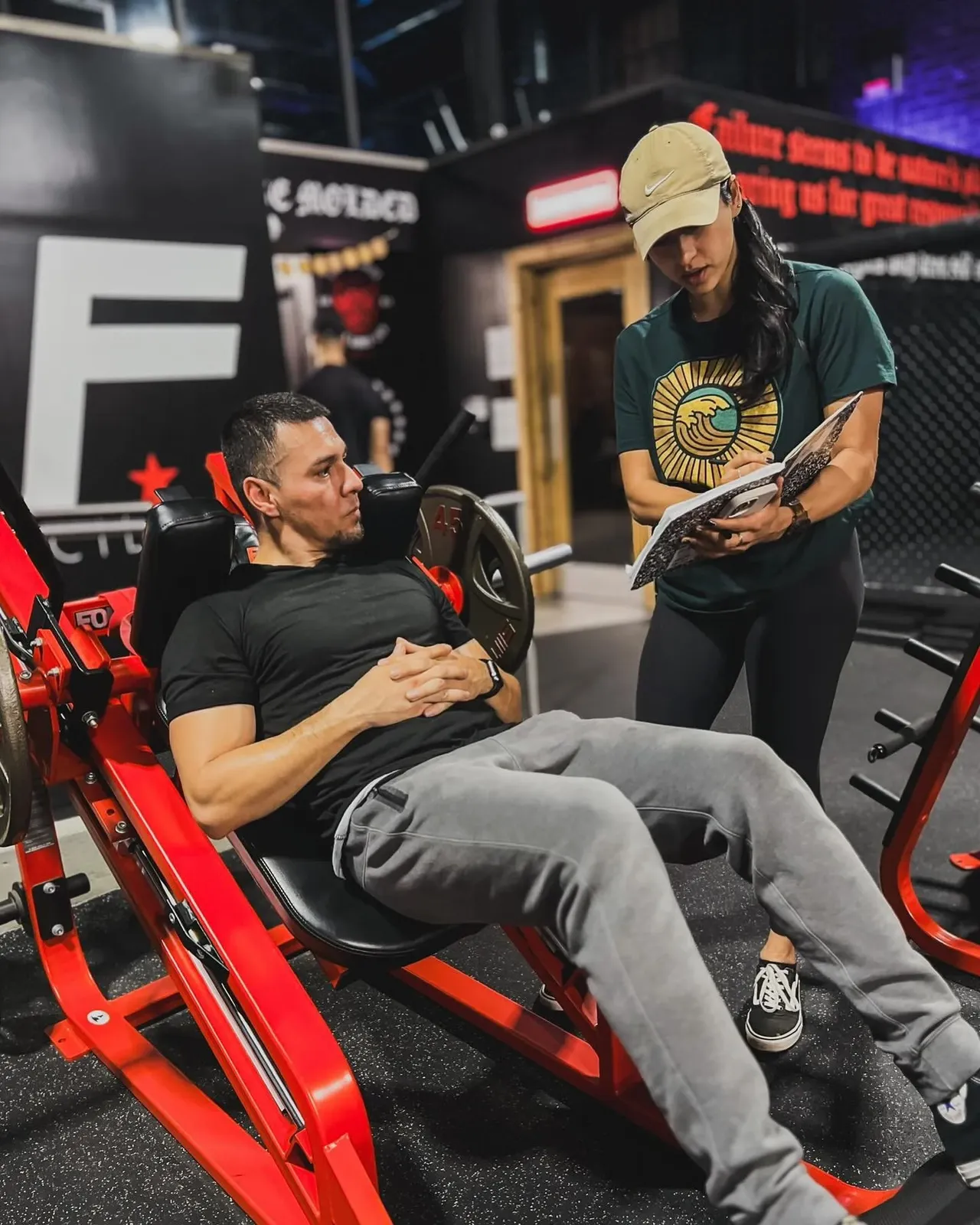
Before any gloves come out, we run a full assessment separate from whatever the surgeon or physical therapist already cleared. Medical clearance tells you the tissue has healed enough for daily life. It doesn't tell you whether the client can decelerate a rotational punch at full speed without their form collapsing.
We test: overhead reach and scapular control for shoulder cases, single-leg balance and step-down control for knee and hip cases, and trunk rotation under load for anyone with a back history. We also ask pointed questions most intake forms skip — does it hurt at rest, does it hurt only under load, does it hurt the next day. Each answer changes the starting point.
From there we build a baseline log: current pain-free range of motion, grip strength if it's a shoulder or wrist case, and a simple 0-10 pain scale check before and after every session for the first four weeks. This isn't paperwork for its own sake. It's the only way to catch a problem trending in the wrong direction before it becomes a setback. Clients who've been through a structured plan like the one in our personalized recovery plan guide already understand this logging habit, and it carries over well into the boxing-specific phase.
Phase 2: Rebuilding the Chain Before a Single Punch
This phase runs 2-4 weeks depending on the injury and is almost entirely punch-free. The goal is rebuilding the kinetic chain a punch actually relies on: hip rotation, rear-leg drive, core transfer, and scapular stability on the lead and rear side.
For a shoulder case, we're doing banded external rotations at 2 sets of 15, prone Y-T-W raises with no weight, and wall slides focused on scapular upward rotation — all before we introduce any arm motion resembling a punch. For a knee or hip case, we're doing lateral band walks, single-leg Romanian deadlifts at bodyweight, and controlled step-downs, because a boxer's stance lives on a bent front knee absorbing force.
We also start footwork here, because footwork carries zero striking load and tells us a lot. Can the client pivot off the lead foot without the knee caving in? Can they shift weight rearward without the shoulder dropping to compensate? Footwork drills for 10-15 minutes, three times a week, expose these issues in a low-risk setting.
By the end of this phase, a client should be able to hold a boxing stance, shift weight through a full slip, and rotate the trunk through a shadow combination with zero reported pain — not reduced pain, zero. That's the bar before phase three opens up.
Phase 3: Shadow Boxing as a Diagnostic Tool
Most gyms treat shadow boxing as a throwaway warm-up. In post-rehab programming, it's the single most useful diagnostic tool you have, because it isolates the movement pattern from external resistance.
We run shadow rounds at three speeds: 50%, 75%, and full speed, each for 2 minutes with a 1-minute rest. We're watching for three specific breakdowns — does the lead shoulder shrug up during the jab, does the hip finish the rotation on the cross or stop short, and does the rear knee track correctly on the pivot. Any one of these at 50% means you're not ready for 75%, let alone a bag.
This is also where we introduce resistance bands anchored behind the client for light punch-resistance work, 3 sets of 10 per side, well before any bag contact. It teaches deceleration control — the part of a punch that actually stresses a healing shoulder more than the strike itself, because the body has to stop 8-10 pounds of accelerating arm mass without the joint buckling.
We keep clients in this phase a minimum of two full weeks, even when they look ready after four days. Clients get frustrated here more than anywhere else in the program, because they feel capable and the work looks easy from the outside. We tell them directly: this phase is where re-injuries get prevented, not where they happen, so impatience here is the expensive mistake.
Phase 4: Mitts Before Bag, Always
Once shadow work is clean at full speed for two consecutive sessions, we move to focus mitts before any bag work. Mitts let a trainer control pace, call combinations, and absorb punch force in a way that gives real-time feedback — a bag doesn't adjust, a trainer's hands do.
We start with single punches only: jab, jab, jab, 10 reps per side, checking form between every rep. No combinations yet. Over the following 1-2 weeks we build to two-punch combos, then three, always at controlled pace before we ever ask for speed. Round length starts at 90 seconds instead of the standard 3 minutes, because grip and shoulder endurance lag behind strength for 6-8 weeks after most upper-body injuries.
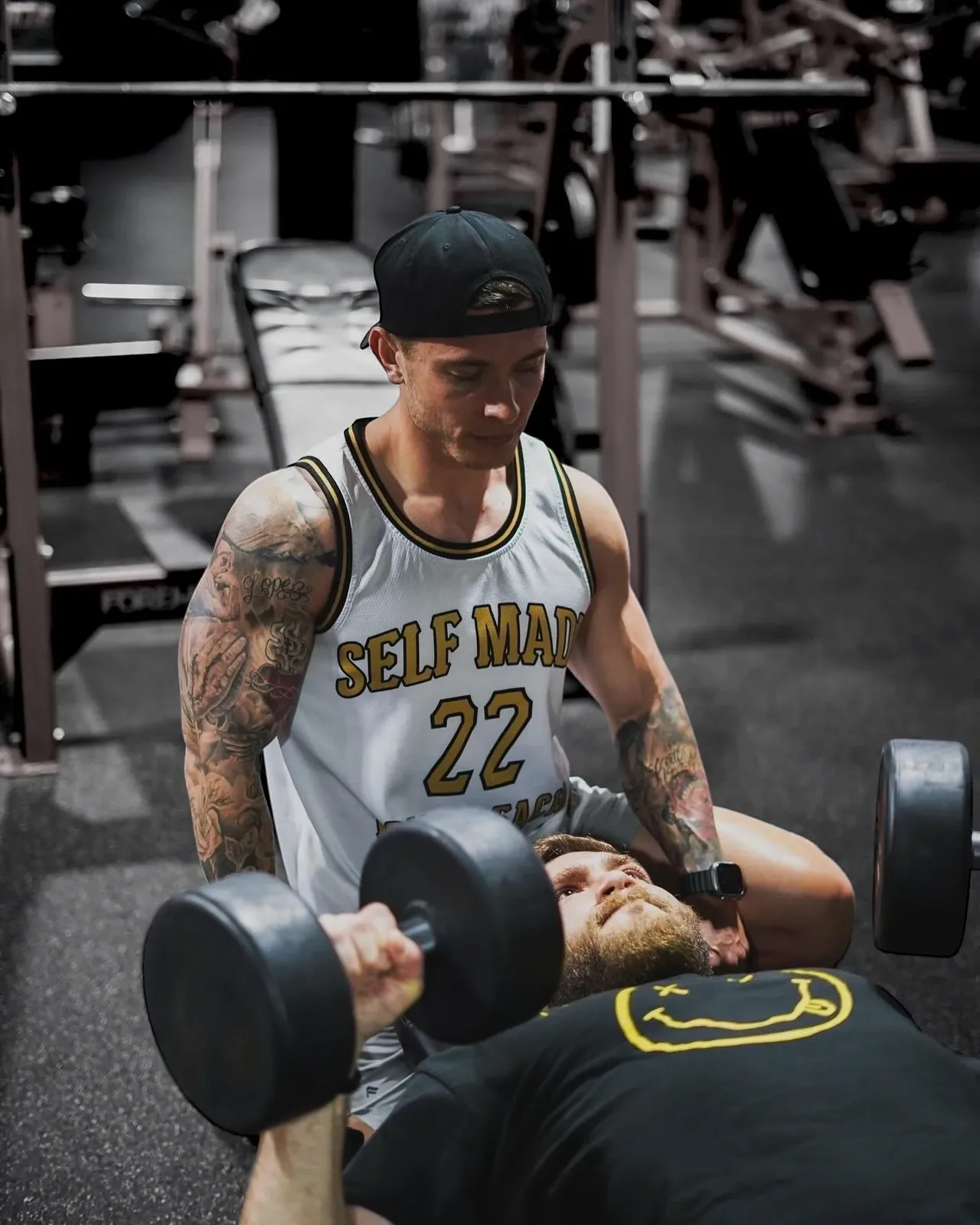
Only after a client holds clean technique across four full rounds of mitts, with combinations up to four punches, do we introduce the heavy bag. The bag gets added gradually too — light bag taps for a full session before any committed power shots. This progression mirrors what we use in our explosive power boxing drills, just run at a fraction of the speed and with far stricter checkpoints before advancing.
Shoulder-Specific Programming Deserves Its Own Rules
Shoulders are the single most common post-rehab case we see walk in wanting to box again, and they get the most conservative timeline of any injury type. A boxer's jab and cross both end in a decelerated, internally rotated position under load — exactly the position most post-surgical shoulders are weakest in.
We don't let a shoulder-rehab client throw a rear-hand cross at more than 50% effort until they can complete 3 sets of 12 strict push-ups with full scapular control and no winging. That's a strength marker that correlates directly with the stability needed to decelerate a punch safely. If a client can't hit that benchmark, we hold them at jabs and footwork regardless of how many weeks have passed since surgery.
We also cap total punch volume hard in the first month of striking work — no more than 150 total punches per session, tracked on paper, not estimated. Clients consistently underestimate how much they've thrown once adrenaline kicks in, and shoulder tissue doesn't care how motivated someone feels. For clients managing a longer recovery timeline, our full breakdown in strength training after a shoulder injury covers the strength work that should be running in parallel with this phase, not after it.
Programming the Week: What an Actual Schedule Looks Like
Here's a realistic week for a client in phase 3 or early phase 4, roughly 10-14 weeks post-injury depending on the case:
This isn't a six-days-a-week grind. Recovery capacity post-injury is lower than baseline, and overtraining the surrounding musculature slows healing just as much as rushing the striking work does. We'd rather a client progress through phases in 10 weeks with zero setbacks than compress it to 6 weeks and restart from week one after a flare-up.
The Mistakes We See Most Often
The number one mistake is trainers without a rehab background programming by feel instead of by markers. "They looked good today" is not a progression criterion. Without benchmarks — push-up count, pain-free range of motion, punch volume caps — it's impossible to know if a client is actually ready or just having a good day.
The second mistake is ignoring the non-injured side. A client recovering from a right shoulder repair will often overload the left side to compensate, and that overcompensation shows up as a new injury six months later if nobody's watching for it. We track both sides in every assessment, not just the surgical one.
The third mistake is treating the return to boxing as the finish line instead of a new baseline. Clients who get back to full mitt rounds often want to immediately return to sparring or competitive-pace bag work. We hold a minimum 4-week period at full, pain-free training before introducing any competitive intensity, because tissue remodeling continues well past the point where daily pain disappears — a detail echoed in the recovery principles from our boxing workout recovery guide.
When to Push and When to Pull Back
Progression decisions come down to three signals checked every session: same-day pain, next-day soreness, and output consistency across rounds. If a client reports pain during the session itself, you stop that movement entirely that day, not just reduce the set. If soreness shows up 24-48 hours later at a level higher than prior sessions, you hold the current phase for at least one more week before advancing.
Output consistency is the one trainers miss most. If a client's punch count or combination quality drops significantly from round 1 to round 4, that's fatigue outpacing current conditioning, and it means the session volume is set too high even if no pain is reported. We'd rather end a session two rounds early on a good note than push through to a round where form falls apart and old compensation patterns reappear under fatigue.
None of this is complicated once you've run enough of these cases, but it does require slowing down in a way that goes against how most boxing classes are taught. A regular class pushes for intensity. A post-rehab program pushes for clean reps first and lets intensity follow once the pattern is earned.
Get a Program Built Around Your Actual Injury
If you're coming back from shoulder surgery, a knee reconstruction, or any injury that's kept you out of real training, a generic boxing class isn't the move, and neither is guessing your way through it alone. You need someone tracking your specific markers — range of motion, punch volume, side-to-side compensation — and adjusting the plan off how your body actually responds, not off a fixed six-week template.
Come in for a free intro at Trinity Training Facility in Long Beach. We'll run the same assessment outlined above, look at your medical clearance and history, and build a phased plan specific to your injury and your goals. Book your tour or free intro here and let's figure out exactly where you're starting from.
Key Takeaways
- Never program boxing by the injury name alone — a shoulder impingement and a labrum repair need completely different timelines even though both say 'shoulder'
- Rebuild rotation and deceleration strength before you ever let a client throw a real punch at resistance
- Shadow boxing and air work are a diagnostic tool, not a throwaway warm-up — use them to catch compensation patterns before loading the bag
- Mitts before heavy bag, light bag before power work, and power work only after two clean weeks at the prior stage
- Track volume (rounds and punches thrown), not just how the client says they feel, because adrenaline hides pain in the moment
- A 6-12 week progression is standard for most post-surgical shoulder and knee cases — compressing it to save time is the single most common cause of setbacks