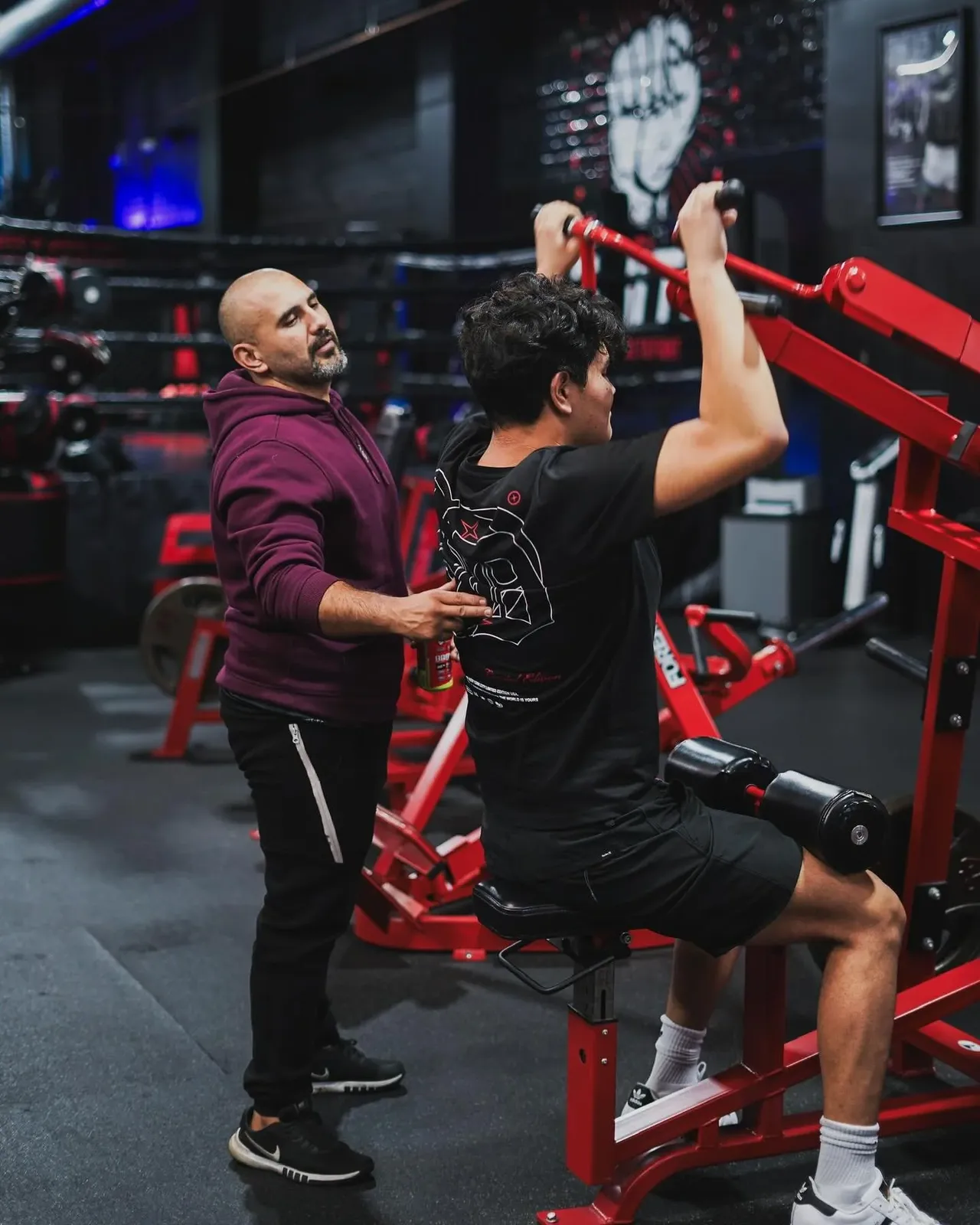
Maximal Strength Gains: A 6-Week Periodization Plan
A 6-week periodization plan for maximal strength gains: accumulation, intensification, and peak phases with real sets, reps, and percentages.
Maximal strength gains from 6-week periodization come from structuring the block in three 2-week phases: accumulation (higher volume, 65-75% 1RM), intensification (lower volume, 80-90% 1RM), and peak/test (85-95%+ 1RM, low volume). Each phase has a specific job. Skipping the volume phase or testing too often is why most lifters plateau instead of hitting new PRs.
When "Just Add Weight" Stops Working
A client named Marcus walked into Trinity in March with a 315-pound squat and a plan he'd been running for four months: five sets of five, add five pounds when he could. It worked great for the first eight weeks. Then it didn't. He was stuck at 315 for six straight sessions, missing his fifth rep more often than hitting it, and starting to grind through warm-up sets that used to feel like nothing.
That's not a strength problem. That's a programming problem. Linear progression — same rep scheme, same intent, every session — has a shelf life. Once your nervous system adapts to a fixed stimulus, more of the same stimulus stops producing more strength. It just produces more fatigue.
The fix isn't more effort. It's structure. A 6-week periodized block gave Marcus a 335-pound squat by week 6 — not by training harder, but by training differently week to week on purpose. This article breaks down exactly how that block is built, phase by phase, with real percentages and set/rep numbers you can run starting Monday.
What Periodization Actually Means (Not Just a Buzzword)
Periodization gets thrown around gyms as a fancy word for "having a plan." It's more specific than that. It means deliberately varying volume (total sets and reps) and intensity (percentage of your one-rep max) across a training block so each phase does a different job instead of every week doing the same job worse.
Run the same 5x5 at the same relative effort for 12 weeks and you get diminishing returns by week 5 or 6 — this isn't opinion, it's been shown directly in research comparing periodized programs against non-periodized ones with equal total volume. Periodized groups came out ahead on strength outcomes because the stimulus kept changing before the body fully adapted to it and stalled.
The 6-week block we run with strength clients at Trinity has three phases:
Each phase sets up the next one. Skip the accumulation phase and you're testing a max your body hasn't built the tissue capacity to support. Skip the peak phase and all that built-up volume never converts into an actual number on the bar. If you've made mistakes with your training structure before, our breakdown of common strength training mistakes to avoid covers a few more of the ways lifters sabotage their own progress before they even get to programming.
The 6-Week Block, Mapped Out
Before the week-by-week detail, here's the shape of the whole cycle so you can see how the pieces connect. This is built around the three main barbell lifts — squat, bench press, deadlift — but the same logic applies to any compound lift you're trying to move a number on.
Notice the trade: as the percentage climbs, the reps and sets drop. That's not a coincidence — it's the entire mechanism. You can't hold 5x8 at 90% of your max without wrecking yourself by Thursday. Volume has to come down as load goes up, or the block collapses under its own fatigue.
This structure works whether you're training for a powerlifting total, a boxing camp strength phase, or just trying to squat 405 before the end of the year. The percentages are the constant. The specific accessory work around them is where we individualize for each client's weak points.
Weeks 1-2: Accumulation — Build the Base
The accumulation phase is where most people underestimate how much volume they need and overestimate how heavy they should be going. At 65-72% of 1RM, the bar should feel manageable — RPE 6 to 7, meaning you could do 2-3 more reps than prescribed on your last set. If your last set of 8 at 65% feels like a grind, you're either not fresh or your 1RM estimate is off.
The point of this phase isn't to feel strong. It's to accumulate total tonnage — total weight moved across all sets — which drives muscle and connective tissue adaptation without frying your central nervous system. This is also where you fix technical breakdowns. A squat that falls apart at 90% almost always has a flaw you can see clearly at 65%: knees caving, hips shooting up first, bar drifting forward. Fix it here, not in week 5 when the weight is heavy and stakes are higher.
Sample week 1 squat session: 4x8 @ 65%, followed by 3x10 walking lunges, 3x12 Romanian deadlifts, and 3x15 weighted planks. The accessory work matters just as much as the main lift here — this is the phase to address the imbalances that will limit you later. If you've never had someone assess this, our guide to muscle imbalances that sabotage strength training is worth reading before you start the block, not after you stall in week 4.
Weeks 3-4: Intensification — Teach the Nervous System to Fire
Weeks 3 and 4 are where the block starts to feel like real training. You're at 78-85% of 1RM, sets drop to 5x5 then 5x3, and RPE climbs to 8-9. This phase isn't about muscle growth anymore — it's about teaching your nervous system to recruit more motor units and fire them faster under heavier load. That's a different adaptation than accumulation, and it requires a different mindset in the gym.
Rest periods need to extend here. In weeks 1-2, 90 seconds between sets is fine. By week 4, you need 2.5 to 3 minutes to actually recover ATP-PC stores between heavy sets. Rushing this phase because you're used to shorter rests from the volume weeks is one of the most common reasons lifters miss reps they should be hitting.
This is also where progressive overload principles matter most — you're not just adding weight for the sake of it, you're adding load in a sequence your body can actually absorb. If you want the deeper mechanics of how that progression should be sequenced across a full training cycle, we cover it in our piece on progressive overload and building real strength in Long Beach. Expect week 4 to feel hard. That's correct — it's supposed to.
Weeks 5-6: Peak and Test — Cash the Check
This is the payoff phase, and it's also where lifters most often sabotage themselves by adding extra volume because the weight "felt light" on set one. Don't. At 90%+ of 1RM, volume drops to 3x2 or even singles, because the entire nervous system is under load and extra sets don't build strength here — they just steal recovery from your test day.
Week 6 is the test. Whether you go for a true 1RM or stay conservative with 1-2 reps at 93-97%, this is the week the first five weeks were built to set up. Marcus tested his squat on day one of week 6, warmed up in 5-rep jumps (135, 225, 275, 300), then hit singles at 315, 325, and pulled 335 clean on his third attempt — a 20-pound PR off a four-month plateau, purely from restructuring the same total effort across six weeks instead of grinding the same rep scheme.
After testing, don't immediately start another max-effort block. Your nervous system needs a deload — 5-7 days at 50-60% intensity with reduced volume — before you start the next cycle. Lifters who skip this and go straight into another peak phase are the ones who show up with nagging shoulder or lower back pain two months later.
Programming the Big Three: Squat, Bench, Deadlift Numbers
Here's how the block looks in practice for someone with a 315 squat, 225 bench, and 405 deadlift 1RM. These are training numbers, not maxes — adjust based on your own tested 1RM and how you're recovering week to week.
Notice deadlift gets fewer total sets throughout. That's intentional — deadlifts tax recovery harder per rep than squats or bench, and cramming in the same volume across all three lifts is a fast way to show up exhausted in week 4. Program deadlift volume conservatively and let squat and bench carry more of the accumulation work.
Recovery and Nutrition During a Strength Block
The training plan is half the equation. What you do outside the gym determines whether week 6 produces a PR or an injury. Protein intake should sit at 0.7-1g per pound of bodyweight daily through the entire block — this isn't a bulk-or-cut question, it's a tissue-repair question. A 180-pound lifter target 126-180g of protein a day, spread across 3-4 meals so amino acids are consistently available for repair.
Sleep matters more in weeks 5-6 than in weeks 1-2. Testosterone and growth hormone release are tied to deep sleep cycles, and those hormones are directly involved in the neural adaptations that let you express more strength under heavy load. Cutting sleep to 5-6 hours during peak week is one of the most common reasons a lifter's projected 1RM doesn't show up on test day — the programming was right, the recovery wasn't.
Creatine monohydrate (5g daily, no need to cycle it) has more research behind it for strength performance than almost any other supplement on the market, and it's cheap. Beyond that, don't overcomplicate it — hit your protein, sleep 7-8 hours, and keep total daily calories at maintenance or a slight surplus during weeks 3-6 when intensity climbs. Trying to cut weight during a peak phase is asking your body to build strength and lose fat at the same time under maximum neural load — pick one.
Mistakes That Wreck a 6-Week Cycle
The single biggest mistake is running max-effort singles every week instead of saving intensity for the phase that's supposed to hold it. Lifters get excited in week 2, hit a heavy single "just to check," and show up to week 3's programmed work already carrying fatigue the plan didn't account for. Stick to the prescribed percentages. The block only works if you trust the sequence.
Second mistake: treating every training max as your true 1RM. If you tested 315 eight months ago and haven't retested, your real max has probably moved — up or down depending on how training's gone. Running percentages off a stale number means either under-training the whole block or grinding reps that should've been easy. Retest or use a recent AMRAP set to estimate current 1RM before you start.
Third: skipping accessory work because the main lift felt like "enough." The imbalances that stall a bench press at 225 — usually weak triceps lockout or an unstable shoulder blade — don't get fixed by more bench. They get fixed by targeted accessory work during the lower-intensity weeks when you have recovery capacity to spare. For lifters specifically working around old injuries, our article on how strength training speeds post-injury recovery covers how to sequence loading around a compromised joint without losing the whole block.
What Happens After Week 6
You don't jump straight into another peak cycle. After testing, take 5-7 days at 50-60% intensity, lower volume, and let the joints and nervous system reset. This isn't optional recovery — it's part of the program. Lifters who chain peak phase into peak phase without a deload plateau faster and get hurt more often than lifters who respect the reset.
After the deload, you have two options depending on the goal: run another 6-week strength block with new percentages based on your new tested max, or shift into a hypertrophy-focused block for 4-6 weeks to build the muscle mass that will support your next strength cycle. Most of our clients alternate — one strength block, one hypertrophy block, repeat through the year. If you want to see what that hypertrophy phase should look like, we break down the programming in our hypertrophy training guide for Long Beach lifters.
Marcus is on his third 6-week block now. His squat sits at 365. The program isn't complicated — it's just structured, and he sticks to the percentages even when a set feels easy. If your training has stalled and you're adding five pounds a week hoping it still works, it's probably time to run an actual block instead of another guess. Come in for a free intro session and we'll test your current numbers, build your 6-week percentages, and get you on a plan that's designed to peak — not just grind. Book your tour and free intro at Trinity Training Facility here.
Key Takeaways
- A 6-week strength block should split into three distinct 2-week phases, not six identical weeks of the same sets and reps.
- Accumulation (weeks 1-2) builds work capacity at 65-75% 1RM; intensification (weeks 3-4) shifts to 80-90%; peak (weeks 5-6) drops volume and tests at 85-95%+.
- Volume and intensity move in opposite directions across the block — as percentages climb, total sets and reps drop.
- Sleep and protein intake matter more in weeks 5-6 than in weeks 1-2, because the nervous system, not the muscle, is what's being taxed.
- Testing a true 1RM more than once every 6-8 weeks burns recovery you need for the next block.
- Most stalled lifters aren't undertrained — they're running the same program for 12+ weeks with no planned variation in volume or intensity.
Sources
- National Strength and Conditioning Association — Periodization Overview
- American College of Sports Medicine — Progression Models in Resistance Training for Healthy Adults
- Rhea & Alderman (2004) — Meta-Analysis Comparing Periodized and Non-Periodized Programs, Research Quarterly for Exercise and Sport