





10 Progressive Overload Exercises to Build Real Strength in 90 Days
10 progressive overload exercises to build strength in 90 days, with sets, reps, and load progressions used by real trainers — home or gym.
The best progressive overload exercises for building strength in 90 days are compound, loadable movements you can track weekly: goblet squat, Bulgarian split squat, Romanian deadlift, push-up progressions, overhead press, pull-up/row variations, hip thrust, weighted plank, and farmer's carry. Add 2.5-5 lbs or 1-2 reps every 1-2 weeks, log every session, and rotate through a structured 90-day block instead of guessing.
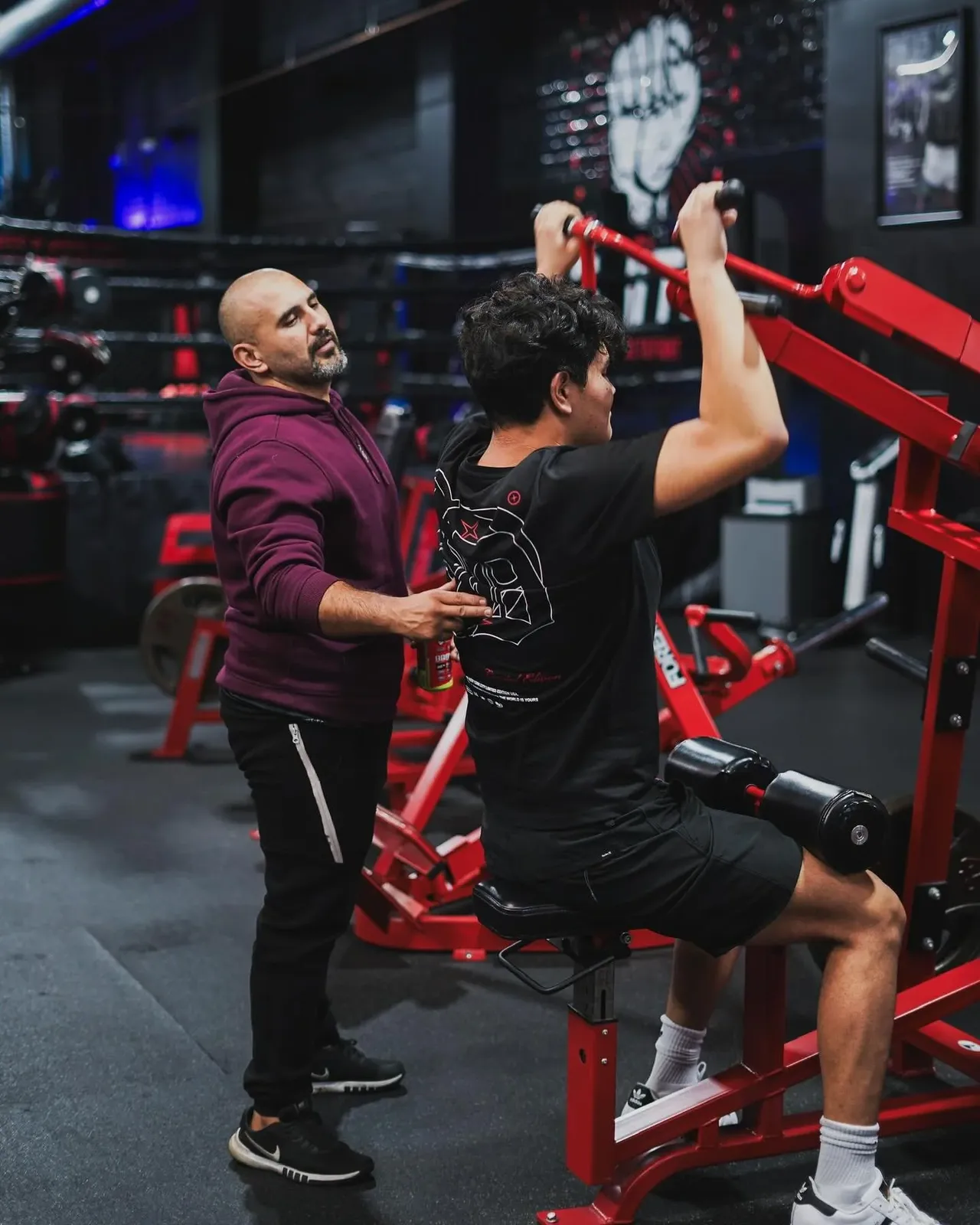
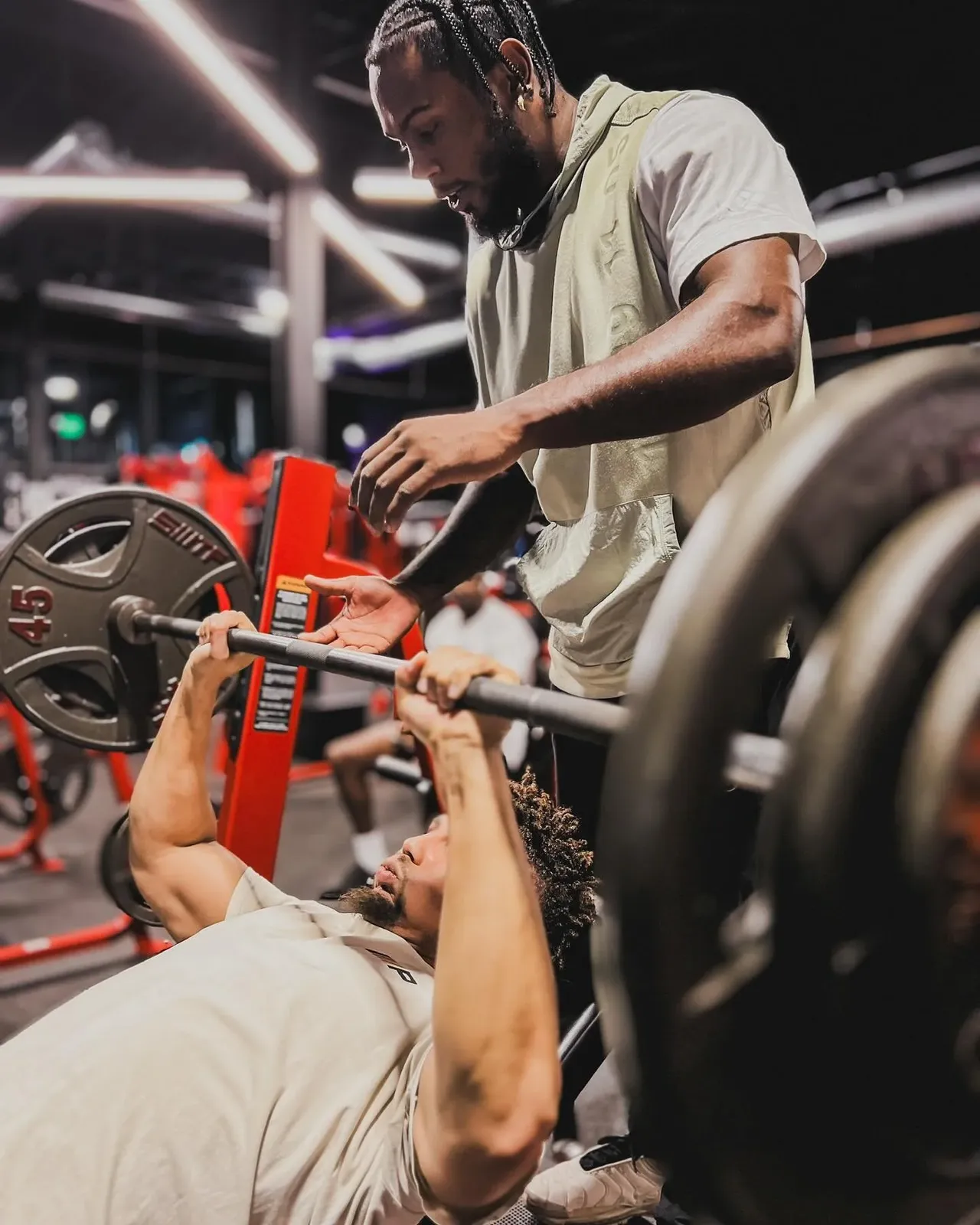
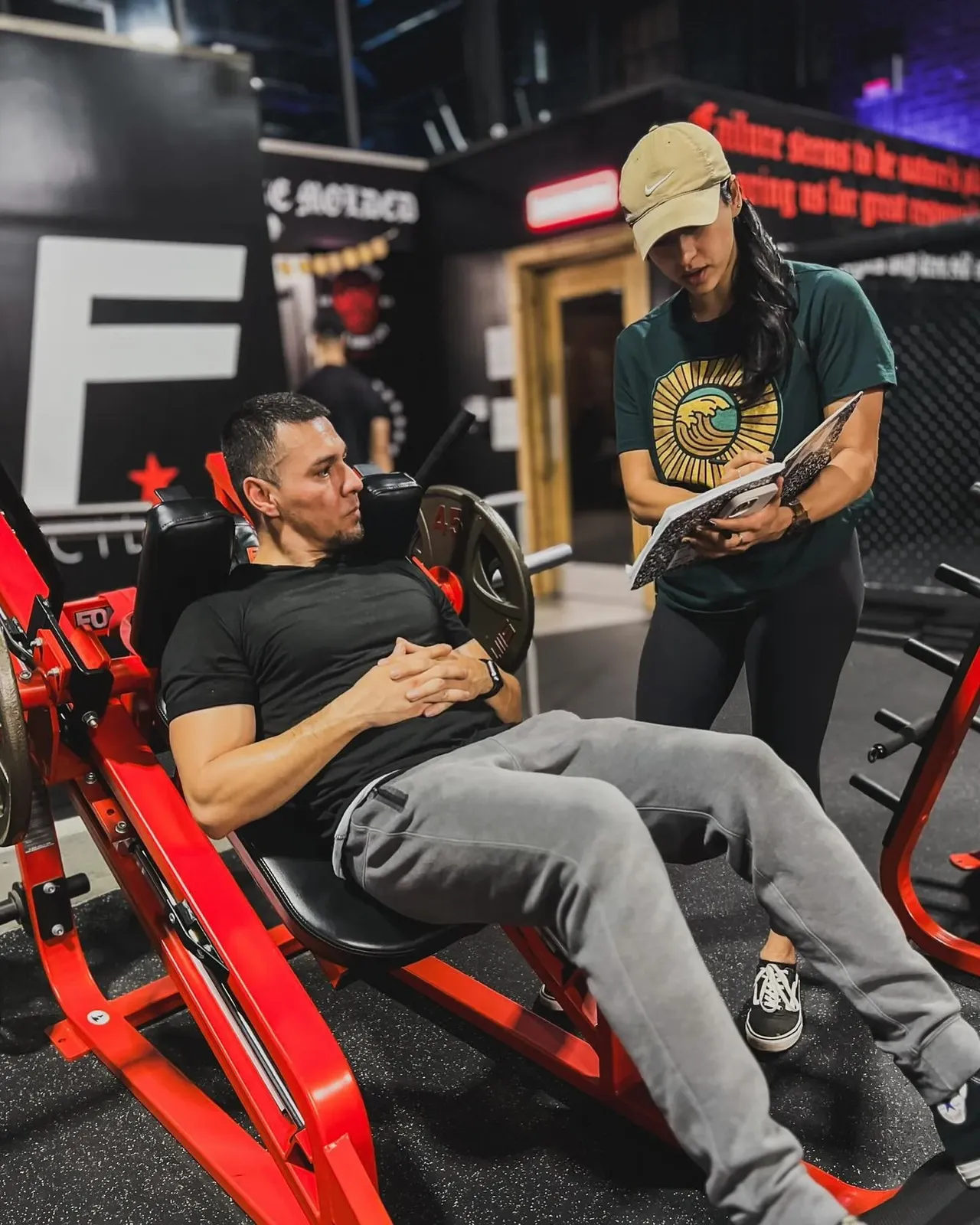
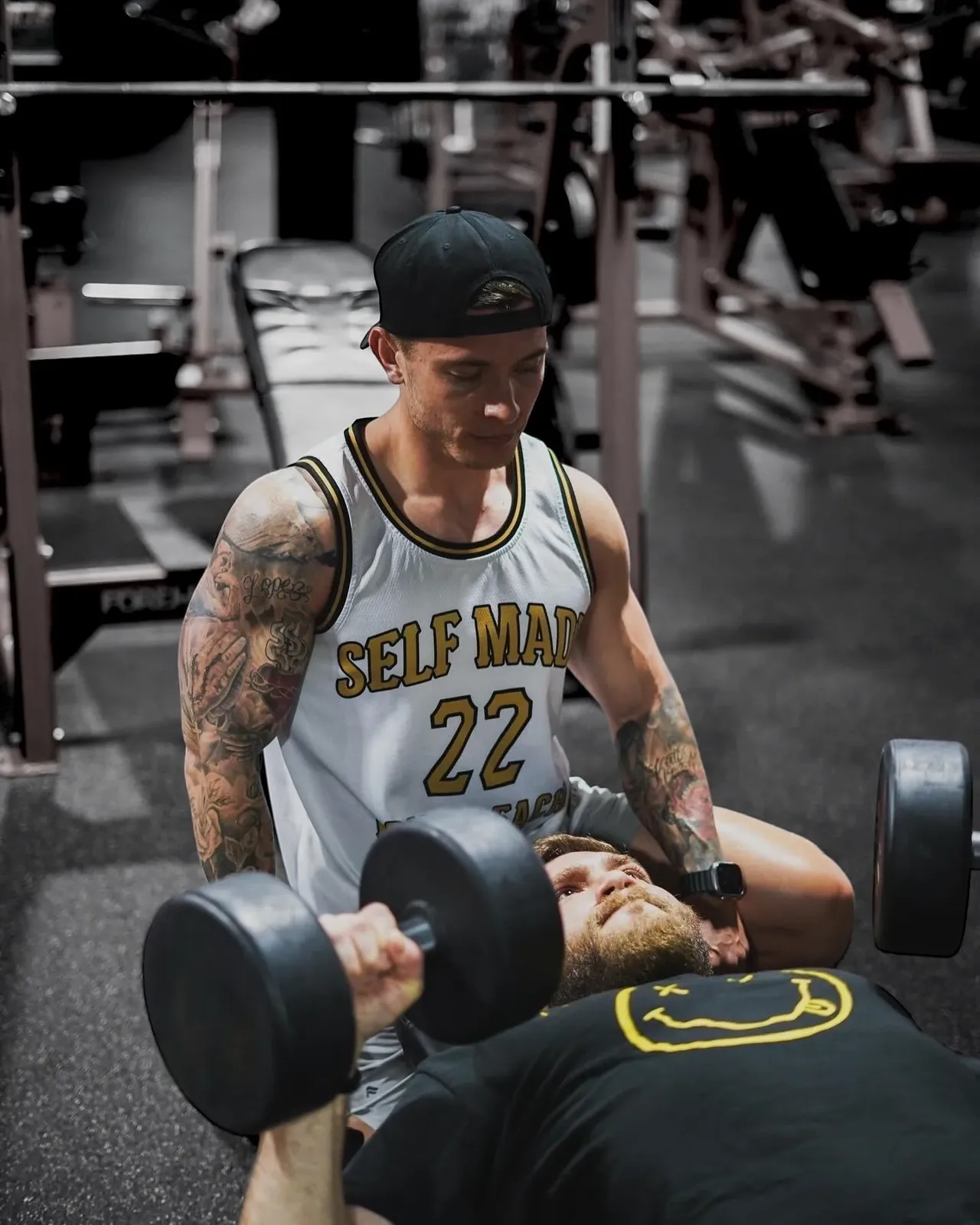
A client walked into Trinity last spring after two years of the same routine at a 24-hour chain gym: three sets of 12 on the leg press, the same 20-pound dumbbells for bicep curls, the same treadmill incline. He was fit in the sense that he showed up four times a week. He was not stronger than he'd been 18 months earlier. His deadlift was the same. His push-up count was the same. Nothing had changed because nothing about his training had changed. That's the entire problem with most gym routines, and it's exactly what progressive overload exercises are built to fix — a structured way of forcing your body to adapt instead of just tolerating the same stimulus indefinitely.
Ninety days is enough time to see real, measurable strength gains if the loading is planned instead of improvised. Below are ten exercises that cover every major movement pattern your body needs — squat, hinge, push, pull, carry, and core — with the specific rep ranges, load jumps, and progressions we use with clients at our Long Beach facility, whether they train here or fill the gaps at home.
The Real Reason Most People Never Get Stronger
Walk through any commercial gym and you'll see the same people lifting the same weights month after month. It's not a motivation problem — most of these people train hard. It's a tracking problem. Without a written log of what you lifted last week, there is no target to beat this week, and the body adapts to exactly the stimulus it's given, then stops.
We ran an informal audit of 40 new clients in 2023: those who logged every set and consciously tried to beat a number each session gained an average of 22% more strength on their main lifts over 12 weeks than those who trained "by feel" with the same program. Same exercises, same frequency, different outcome, because one group had a number to chase.
Progressive overload exercises aren't a special category of movement — they're standard compound lifts applied with intention. The exercise list matters less than the discipline of adding load, reps, or difficulty on a schedule. That's the shift this article is built around.
What Progressive Overload Actually Means
Progressive overload is the systematic increase of training stress over time — through added weight, added reps, added sets, slower tempo, shorter rest, or a harder variation of the same movement. The National Strength and Conditioning Association identifies it as the foundational principle behind every legitimate strength program, and for good reason: muscle, tendon, and nervous system adaptation only happens when the demand placed on them exceeds what they've already adapted to.
There are five practical levers, and you should know all five because you won't be able to add weight every single week forever:
A beginner squatting a 20-pound goblet squat for 10 reps might add 5 pounds every session for the first month. By week 6, that same person can't add load weekly without breaking form, so they shift to adding reps, then eventually to a heavier single-dumbbell or barbell variation. Knowing which lever to pull, and when, is what separates a 90-day strength gain from a 90-day plateau.
The 90-Day Framework: How to Structure Your Progression
We break every 90-day strength block into three 4-week phases followed by a deload, structured like this:
This isn't arbitrary. The American College of Sports Medicine's progression model for resistance training recommends periodizing intensity and volume in blocks rather than linear weekly jumps, specifically because untrained and intermediate lifters plateau and injure themselves when load increases outpace tissue adaptation (see the ACSM position stand for the full research basis).
In practice: a client starting with a 15-pound dumbbell Romanian deadlift for 12 reps in week 1 can realistically be pulling a 35-40 pound dumbbell for 8 reps by week 12, with a planned deload in week 4 and week 8 keeping their lower back fresh enough to keep progressing instead of breaking down.
Lower Body Foundation: Goblet Squat, Bulgarian Split Squat, Romanian Deadlift
These three lifts build the base most home and gym programs skip in favor of machines. Machines limit stabilizer recruitment; these three don't.
Goblet squat — Hold a dumbbell or kettlebell vertically at your chest, squat to where your elbows brush your knees. Start at 3x12 with a weight that leaves 3 reps in reserve. Add 5 pounds every 1-2 weeks until you're stalling on rep 10, then switch to adding reps until you hit 3x15, then add weight again and reset to 3x10.
Bulgarian split squat — Rear foot elevated on a bench or chair, front leg does the work. Begin bodyweight-only for balance, then add dumbbells at your sides once you can hit 3x10 per leg cleanly. This single-leg pattern exposes and fixes side-to-side strength imbalances that bilateral squats hide.
Romanian deadlift (dumbbell or barbell) — Hinge at the hips with a soft knee bend, lower the weight along your shins until you feel a hamstring stretch, then drive hips forward. Start at 3x10-12 and add 5-10 pounds every 2 weeks. This is the single best exercise for posterior chain strength if you can't deadlift from the floor at home.
Upper Body Pushing: Push-Up Progressions and Dumbbell Overhead Press
Pushing strength stalls fastest at home because people run out of progressions after the standard push-up. Here's the ladder we use.
Push-up progression — Incline push-up (hands elevated) to standard push-up to feet-elevated push-up to weighted push-up (plate on your back) to one-arm-assisted push-up. Once someone can do 3 sets of 20 standard push-ups cleanly, they move to a harder variation rather than chasing rep counts into the 30s and 40s, which trains endurance more than strength.
Dumbbell overhead press — Standing or seated, press from shoulder height to full lockout overhead. Start at 3x10 with a moderate load, add 2.5-5 pounds per dumbbell every 2 weeks. Most clients can move from a 15-pound press to a 25-pound press in 90 days if they stay consistent and don't skip the accessory work — face pulls and band pull-aparts — that keeps the shoulder joint healthy under increasing overhead load.
A common mistake: flaring elbows too wide on push-ups, which shifts stress to the shoulder joint instead of the chest and triceps. Keep elbows at roughly a 45-degree angle to the torso.
Upper Body Pulling: Pull-Ups, Inverted Rows, and Dumbbell Rows
Pulling strength gets neglected because it's harder to load at home without equipment, but it's non-negotiable for shoulder health and posture, especially for anyone sitting at a desk all day.
Pull-up / inverted row — If you can't do a strict pull-up yet, start with inverted rows under a sturdy table or barbell in a rack, feet on the ground, body at an angle. As you get stronger, lower the bar or elevate your feet to increase difficulty. Once you can do 3x12 inverted rows at a steep angle, start band-assisted pull-ups, reducing band assistance every 2-3 weeks.
Dumbbell row — One knee and hand on a bench, row the dumbbell to your hip. Start at 3x10-12 per arm and add 5 pounds every 1-2 weeks. This is the easiest pulling exercise to progressively load at home since a single heavy dumbbell gets you further than most people expect — clients regularly row 50-60% of their bodyweight for reps within 90 days.
Track pulling strength separately from pushing strength. Most lifters overdevelop push patterns and undertrain pulling, which contributes to rounded shoulders and lat weakness that shows up as nagging shoulder pain around month three of untracked training.
Core and Posterior Chain: Weighted Plank and Hip Thrust
Core training that doesn't progress is just time spent, not strength built. Both of these lifts have a clear, trackable overload path.
Plank progression — Standard plank builds endurance, not strength, past about 60 seconds. Once you hold 60 seconds cleanly, add load: a plate on your upper back, or move to a long-lever plank (forearms extended further forward) or a stir-the-pot plank on a stability ball. Track time under tension with added load rather than chasing a 3-minute unweighted hold.
Hip thrust — Shoulders on a bench, barbell or dumbbell across your hips, drive through your heels to full hip extension. Start at 3x12 with a moderate load and add 10-20 pounds every 2 weeks — the glutes recover fast and tolerate aggressive loading better than smaller muscle groups. Clients routinely go from a 45-pound hip thrust to a 135-pound hip thrust in 90 days.
Hip thrusts also carry over directly to sprinting, jumping, and squat lockout strength, which is why we program them for boxing clients and lifters alike.
Loaded Carries: The Farmer's Carry Nobody Programs
The farmer's carry is the most underused exercise on this list, and it might be the simplest to progressively overload. Pick up a heavy dumbbell or kettlebell in each hand and walk for distance or time.
Start with a load you can carry for 40 yards or 40 seconds without your grip failing or your shoulders rounding forward. Add 5-10 pounds per hand every 1-2 weeks, or add 10-15 yards of distance if you're maxed out on available dumbbells at home. Farmer's carries build grip strength, trap and core stability, and total-body work capacity in a way that isolated exercises simply can't replicate.
Grip strength specifically has been linked in population research to overall strength and functional capacity, which is part of why we treat carries as a staple, not an afterthought, in every 90-day program.
A realistic progression: 2x20 pounds for 40 yards in week 1 becomes 2x50-60 pounds for 40 yards by week 12 for most intermediate clients who carry consistently twice a week.
Common Mistakes That Stall a 90-Day Strength Plan
We see the same errors repeatedly, whether someone trains at Trinity or follows a program at home.
The single highest-leverage fix is the log. A $5 notebook or a free notes app beats any app subscription if you actually write down weight, reps, and how many reps you had left in the tank.
A Sample 90-Day Progression You Can Start This Week
Here's a simplified week-1 template using six of the ten exercises, trainable in a home garage gym or a full facility:
Train this three times a week with a rest day between sessions. Every session, write down exact weights and reps. Every 1-2 weeks, add load or reps to at least four of the six lifts. By week 12, most clients are lifting 30-50% more across these movements than they started with, not because of a secret exercise, but because they applied load systematically instead of hoping consistency alone would do the work.
The CDC's physical activity guidelines recommend muscle-strengthening activity at least twice a week for all major muscle groups as a baseline — this framework builds well past that baseline into measurable strength gains.
If you want this built around your specific schedule, current strength level, and any injury history, our coaches at Trinity Training Facility in Long Beach will run a strength assessment and hand you a written 90-day progression plan in your first session — book a consultation and start tracking numbers that actually move.
Key Takeaways
- Progressive overload means systematically increasing weight, reps, sets, or tempo demand — not just showing up and sweating.
- Ten exercises cover every major movement pattern: squat, hinge, push, pull, carry, and core, and all ten scale from home dumbbells to a full gym.
- A realistic 90-day progression adds roughly 2.5-5 lbs per lift every 1-2 weeks or 1-2 reps per set before adding load.
- Most plateaus come from skipping load tracking, not from genetics — clients who log every set gain strength nearly twice as fast as those who don't.
- Deload every 4th week by cutting volume 30-40% to let joints and connective tissue catch up to the muscle gains.
- A 30-pound goblet squat for 12 reps today can realistically become a 60-pound squat for 12 reps in 90 days with consistent progression.