





8 Muscle Imbalances Sabotaging Your Strength Training
8 muscle imbalances quietly wrecking your lifts and joints. Long Beach coaching cues, screens, and fixes to train pain-free and get stronger.
The 8 most common strength-limiting muscle imbalances are anterior pelvic tilt, upper crossed syndrome, quad dominance, weak glute medius, overactive lats with a weak rotator cuff, left-right strength asymmetry, poor anti-rotation core strength, and restricted ankle mobility with a weak tibialis anterior. Each one caps performance and raises injury risk until it's screened, isolated, and retrained with targeted accessory work alongside your main lifts.
Marcus came in benching 225 for reps and squatting 315, but he couldn't lift his right arm overhead without a pinch in the front of his shoulder, and his deadlift had been stuck at the same number for eight months. On paper he looked strong. On the screening table, his right lat and pec were doing the work his rotator cuff and lower traps should have been doing, and his hips sat in enough anterior tilt that his lumbar spine was absorbing load that belonged in his glutes. Nothing about his training program was wrong on the surface. The imbalance underneath it was the actual ceiling.
This is the pattern we see constantly at Trinity Training Facility: clients who train hard, eat reasonably well, and still plateau or get hurt because a specific muscle group has gone quiet while a neighboring one compensates. Research on hamstring-to-quadriceps strength ratios shows athletes sitting below a 0.6 ratio face substantially higher rates of hamstring strain and ACL injury, and that's just one of eight imbalances we screen for on every new client. Below are the ones that show up most often in Long Beach lifters, why they develop, and exactly how we correct each one.
Why Muscle Imbalances Quietly Sabotage Your Training
A muscle imbalance is a measurable difference in strength, activation, or flexibility between opposing muscle groups or between the left and right side of the body. It rarely announces itself. Instead it shows up as a stalled lift, a joint that aches on one side, or a movement pattern that looks slightly off in the mirror but doesn't hurt yet.
The mechanism is straightforward: your body is efficient, and if a target muscle is weak or inhibited, a synergist muscle takes over the load. Do that for six months and the synergist gets stronger while the intended prime mover gets weaker and more inhibited by comparison. The gap widens every training cycle instead of closing.
We track this with objective numbers, not guesswork. Single-limb strength tests should land within 10% of each other left to right. Hamstring strength should sit at 55-70% of quad strength. Overhead squat and single-leg step-down assessments reveal compensations before they cause pain. Clients are usually surprised how large the gaps are, because strength in the gym masks the imbalance until a specific movement, angle, or fatigue point exposes it.
The eight imbalances below cover the vast majority of what limits strength, physique, and joint health in adult lifters. Each one gets a plain description, why it develops, how we test for it, and the exact corrective approach we program.
Imbalance #1: Anterior Pelvic Tilt (Tight Hip Flexors vs. Weak Glutes and Abs)
This is the single most common imbalance we see in clients who sit for work. Eight-plus hours in a chair shortens the hip flexors and the erector spinae group while the glutes and abdominals go underused, tilting the pelvis forward. The visual tell is an exaggerated arch in the lower back and a belly that pushes forward even in lean clients.
Under load, anterior pelvic tilt shifts stress onto the lumbar spine during squats, deadlifts, and overhead pressing. We measure it with a simple standing lateral check and a Thomas test for hip flexor length, and it's confirmed almost every time a client reports low back tightness after squatting rather than glute or quad fatigue.
The fix has two parts, and skipping either one keeps the pattern alive. First, lengthen the hip flexors with couch stretches and half-kneeling hip flexor stretches held 45-60 seconds, three rounds daily. Second, and more important, strengthen the posterior chain and deep core with glute bridges, dead bugs, and Pallof presses before reintroducing heavy compound lifts. Clients typically report noticeably less low back tension within three weeks of consistent work. For a deeper breakdown of building strength the right way through structured loading, our step-by-step progressive overload guide walks through how we sequence corrective work with strength gains rather than treating them as separate goals.
Imbalance #2: Upper Crossed Syndrome (Tight Chest/Traps vs. Weak Lower Traps and Deep Neck Flexors)
Upper crossed syndrome is the shoulder-and-neck version of the same desk-posture problem. The pecs and upper trapezius get tight and overactive from rounded-shoulder sitting and phone use, while the lower trapezius, rhomboids, and deep neck flexors weaken from disuse. The result is a forward head, rounded shoulders, and a shoulder blade that doesn't sit flush against the rib cage.
This imbalance is the leading cause of shoulder pinching we see on bench press and overhead press in general population clients — not a rotator cuff tear, just a scapula that can't stabilize because the muscles that control it are asleep. A simple test: have the client raise both arms overhead against a wall. If the low back arches or the arms can't reach the wall without compensating, upper crossed syndrome is almost certainly present.
Correction starts with unloading the overactive muscles through pec doorway stretches and foam rolling the upper traps, then rebuilding the underactive ones with face pulls (3 sets of 15-20), band pull-aparts, and prone Y-raises. We also cue scapular retraction on every pressing set instead of letting the shoulders round forward under load. Most clients notice reduced shoulder discomfort on bench press within four weeks when face pulls and Y-raises are programmed twice weekly rather than as an afterthought.
Imbalance #3: Quad Dominance and an Underused Posterior Chain
Quad dominance happens when the quadriceps take over movements that should be shared with the hamstrings and glutes, usually because leg extensions, leg press, and knee-dominant squat variations dominate a program while hip hinges get skipped. It's extremely common in clients who came from commercial gyms built around machines that isolate the quads by design.
The strength ratio we track is hamstring-to-quad, and research consistently shows athletes below a 0.6 ratio face meaningfully higher injury rates, particularly for hamstring strains and non-contact ACL injuries. We test this with a simple manual resistance comparison or, when available, isokinetic testing, and it's one of the more eye-opening numbers for clients who assumed strong quads meant a strong lower body overall.
Programming shifts toward hip-dominant movement: Romanian deadlifts, hip thrusts, single-leg RDLs, and Nordic curl progressions, aiming for at least a 1:1 volume ratio between knee-dominant and hip-dominant work each week. We also cue hip hinge mechanics on every squat rep so the glutes and hamstrings initiate the movement rather than the knees driving forward first. Clients on a structured hip-dominant block typically close a 30% strength ratio gap within 8-10 weeks. Our guide on building functional strength for real-world movement covers this hip-hinge emphasis in more depth.
Imbalance #4: Weak Glute Medius and Knee Valgus
Watch a client descend into a single-leg squat or step-down and you'll often see the knee cave inward — that's knee valgus, and it's almost always driven by a weak glute medius unable to control hip stability while an overactive tensor fasciae latae (TFL) and IT band take over. This shows up constantly in runners and clients returning from a knee injury.
We test it with a single-leg step-down off an 8-inch box, filmed from the front. Any inward knee travel beyond a couple degrees flags the imbalance. Left uncorrected, it's a major contributor to IT band syndrome, patellofemoral pain, and elevated ACL injury risk, particularly in female athletes, who face ACL tear rates four to six times higher than male athletes largely due to this exact pattern combined with quad dominance.
The fix is lateral hip strengthening: side-lying hip abductions, banded lateral walks, and single-leg glute bridges, done as an activation superset before lower body training. We also cue "knees out" on every squat and lunge rep until it becomes automatic rather than something the client has to consciously think about. Most clients eliminate visible knee valgus within 4-6 weeks of consistent lateral hip work paired with cueing.
Imbalance #5: Overactive Lats and an Underactive Rotator Cuff
Lifters who pull a lot — rows, pulldowns, deadlifts — often build dominant, powerful lats while the smaller rotator cuff muscles that stabilize the shoulder joint stay comparatively weak. The lats are big, visible, and easy to feel working, so they get recruited into movements that should be driven by the rotator cuff and scapular stabilizers, including overhead pressing.
This was Marcus's exact issue. His right lat had become so dominant that it was internally rotating his shoulder during overhead work, pinching the subacromial space and producing the exact pain he described. We confirmed it with an empty can test and a lat length assessment, both of which showed clear side-to-side differences.
Correction means direct rotator cuff work — external rotations with a band or light dumbbell, 3 sets of 15 per side, done at the start of upper body sessions before the lats get involved in anything — plus lat stretching between sets of pressing work. We also temporarily reduce overhead pressing load by 15-20% while the cuff catches up, rather than pushing through the pinch and risking a labral issue. Marcus was pain-free overhead within five weeks and his deadlift moved past its eight-month plateau the same month, because a stable shoulder let him brace and pull without compensation elsewhere.
Imbalance #6: Left-Right Strength Asymmetry
Bilateral movements like barbell squats and bench press can mask a significant strength difference between limbs, because the stronger side simply does more work without either the lifter or a casual observer noticing. We catch this constantly when we switch clients to unilateral variations for the first time and one side visibly struggles.
The number that matters here is 10-15%. Below that threshold, side-to-side differences are considered normal variation. Above it, research on athletic injury risk associates larger asymmetries with higher odds of soft tissue injury on the weaker side, because that limb is chronically underloaded relative to what the stronger side can absorb.
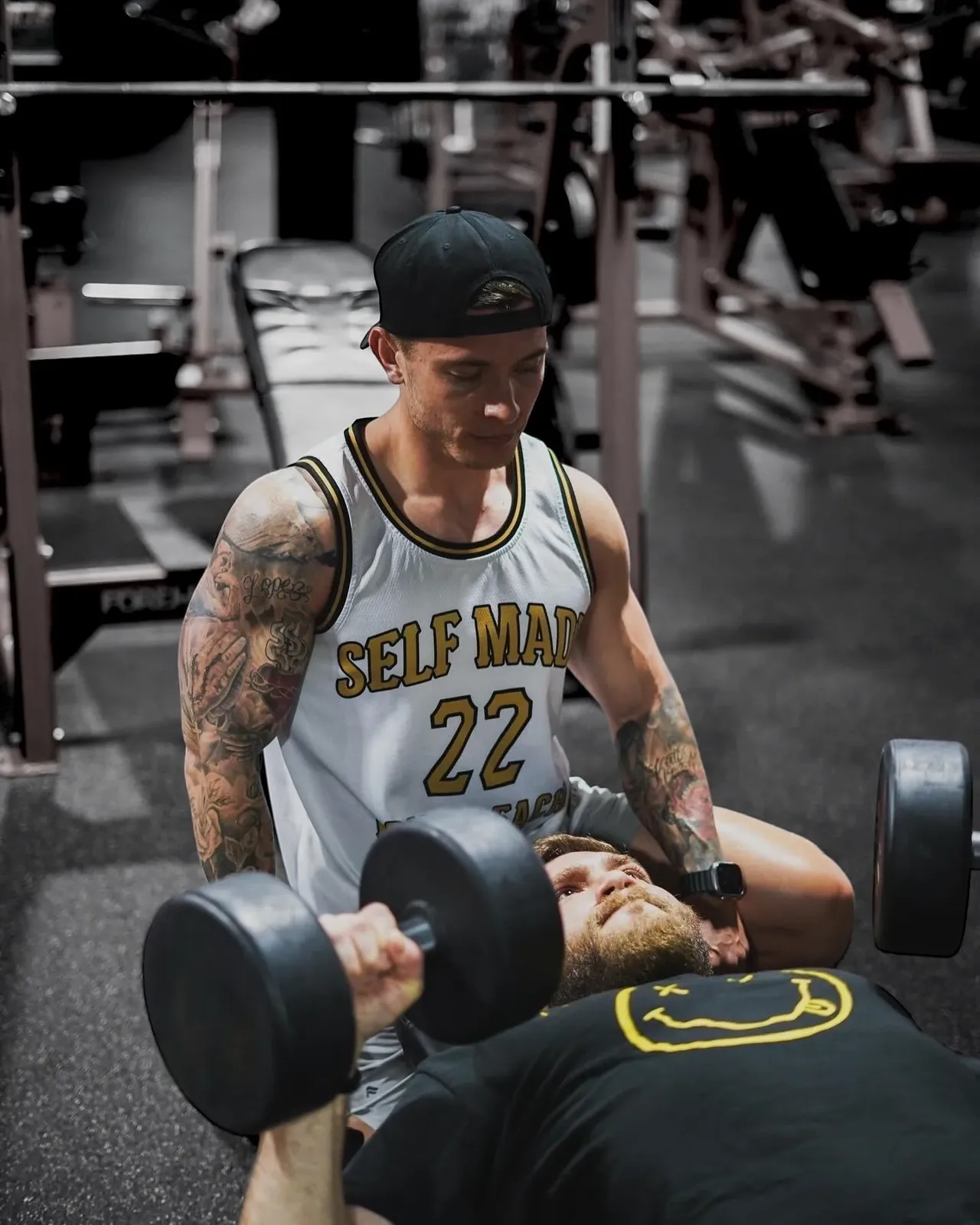
We test this with single-arm dumbbell presses, single-leg presses, and single-leg broad jumps, comparing left and right output directly. Correction is programmatic: unilateral work gets programmed first in the session while fresh, and the weaker side always leads and gets an extra set or two relative to the stronger side until the gap closes. This isn't complicated, but it requires actually tracking numbers per side rather than just total volume, which most commercial gym programs never do. For a broader framework on structuring strength cycles that account for these details, see our piece on proven strength training cycles for long-term progress.
Imbalance #7: Weak Anti-Rotation Core vs. Dominant Prime Movers
Most lifters train the core with crunches and planks, which build flexion and static endurance but do little for anti-rotation and anti-extension strength — the actual job the core does during heavy squats, deadlifts, and single-arm carries. Meanwhile the prime movers (quads, lats, pecs) keep getting stronger, increasing the load the core has to resist without a matching increase in its own capacity.
This imbalance shows up as a spine that shifts or rotates under heavy load, particularly on single-arm rows, offset carries, or the last rep of a heavy deadlift set. It's a major contributor to lower back strain in lifters who otherwise have strong hips and a strong posterior chain, because the link between the two isn't holding.
We correct it with true anti-rotation and anti-extension training: Pallof presses (3 sets of 12 per side), suitcase carries at 25-30% bodyweight per hand, and ab wheel rollouts progressed slowly from the knees. These get programmed as their own block, not tacked on at the end of a session, because clients need enough fresh capacity to actually load them meaningfully. Within 6-8 weeks, most clients report the spine feels noticeably more "locked in" during heavy pulls, and their deadlift technique cleans up without any cueing change.
Imbalance #8: Restricted Ankle Mobility and a Weak Tibialis Anterior
This one gets missed constantly because it's below the knee, and most lifters assume ankle issues are only a runner's problem. Tight calves combined with a weak tibialis anterior (the muscle running down the front of the shin) limit dorsiflexion — the ankle's ability to bend forward — which forces compensation up the chain during squats: heels rising, knees caving, or the torso pitching forward excessively.
We test dorsiflexion with a simple wall test: knee to wall, toes a set distance back, and measure how far the knee can travel forward while the heel stays down. Less than 4-5 inches usually indicates a meaningful restriction that's affecting squat depth and knee tracking.
Correction combines calf and soleus stretching (weighted, since a bent-knee stretch better targets the soleus) with direct tibialis anterior strengthening through banded dorsiflexion raises and toe-elevated walks, 2-3 sets of 15-20 reps, three times weekly. We also address footwear — flat, stable training shoes rather than cushioned running shoes for squat sessions — since a compressible sole makes ankle position harder to control. Clients typically gain an inch or more of knee travel within four weeks, which directly translates to better squat depth and less compensation up the chain.
How We Screen and Correct Imbalances at Trinity
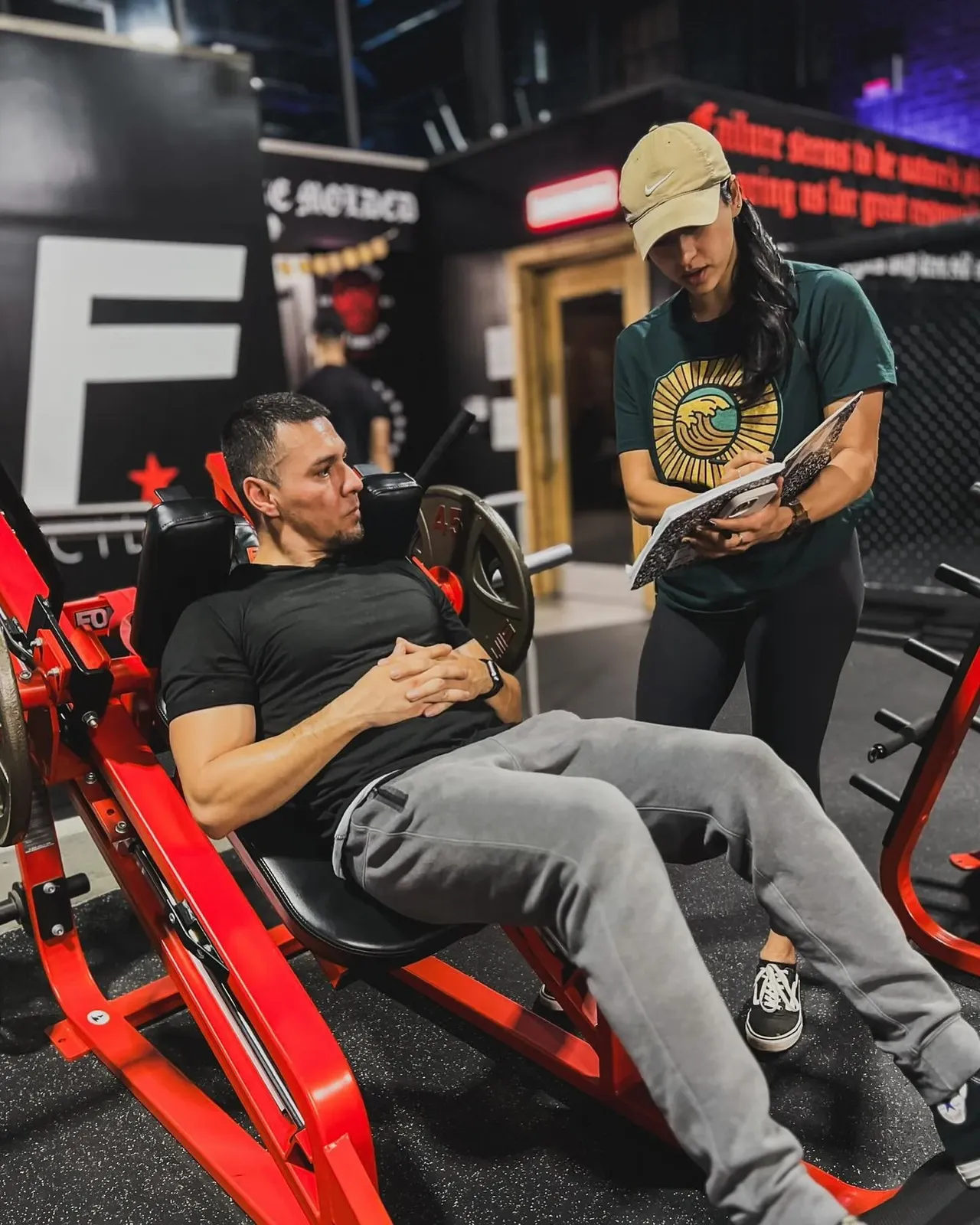
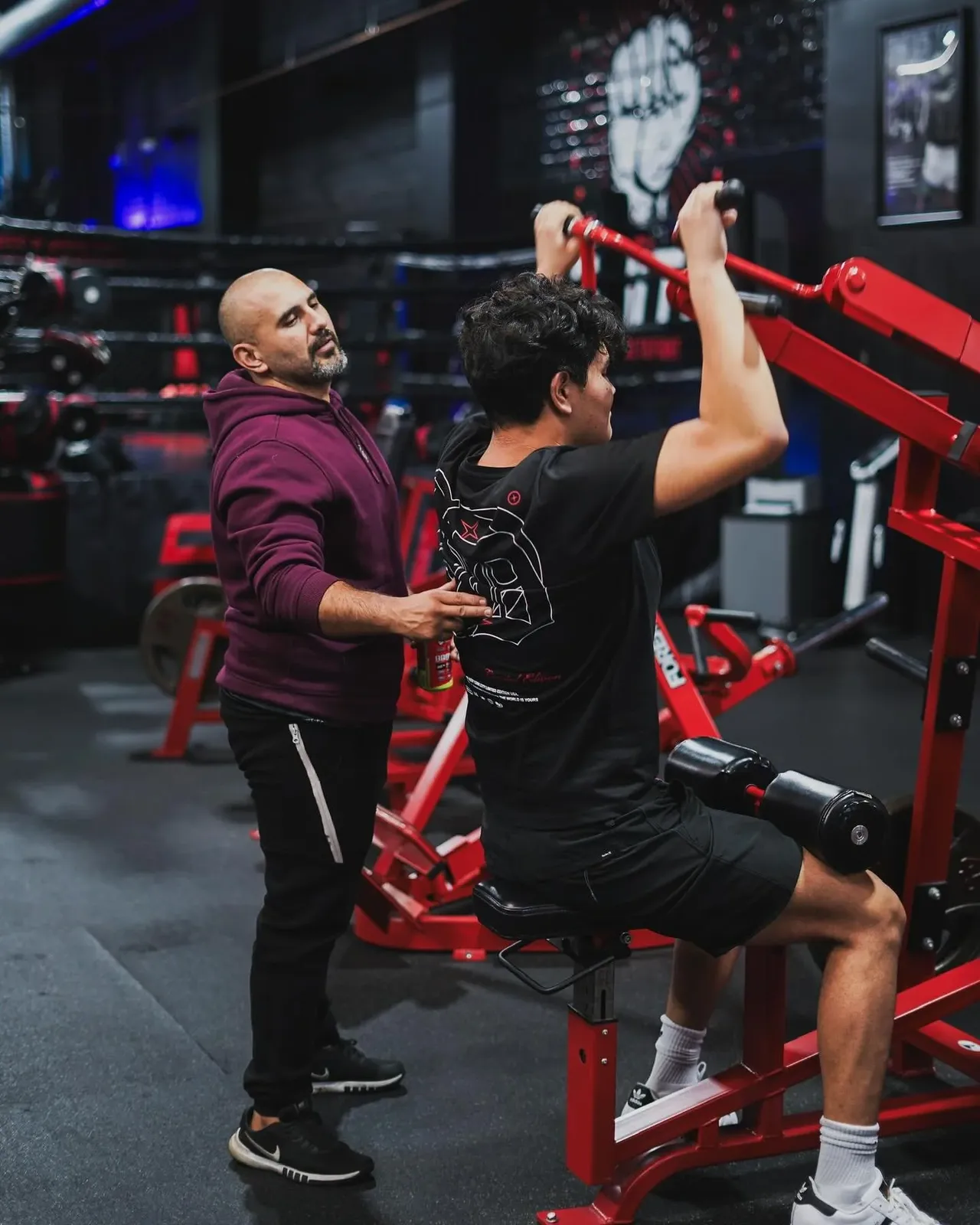
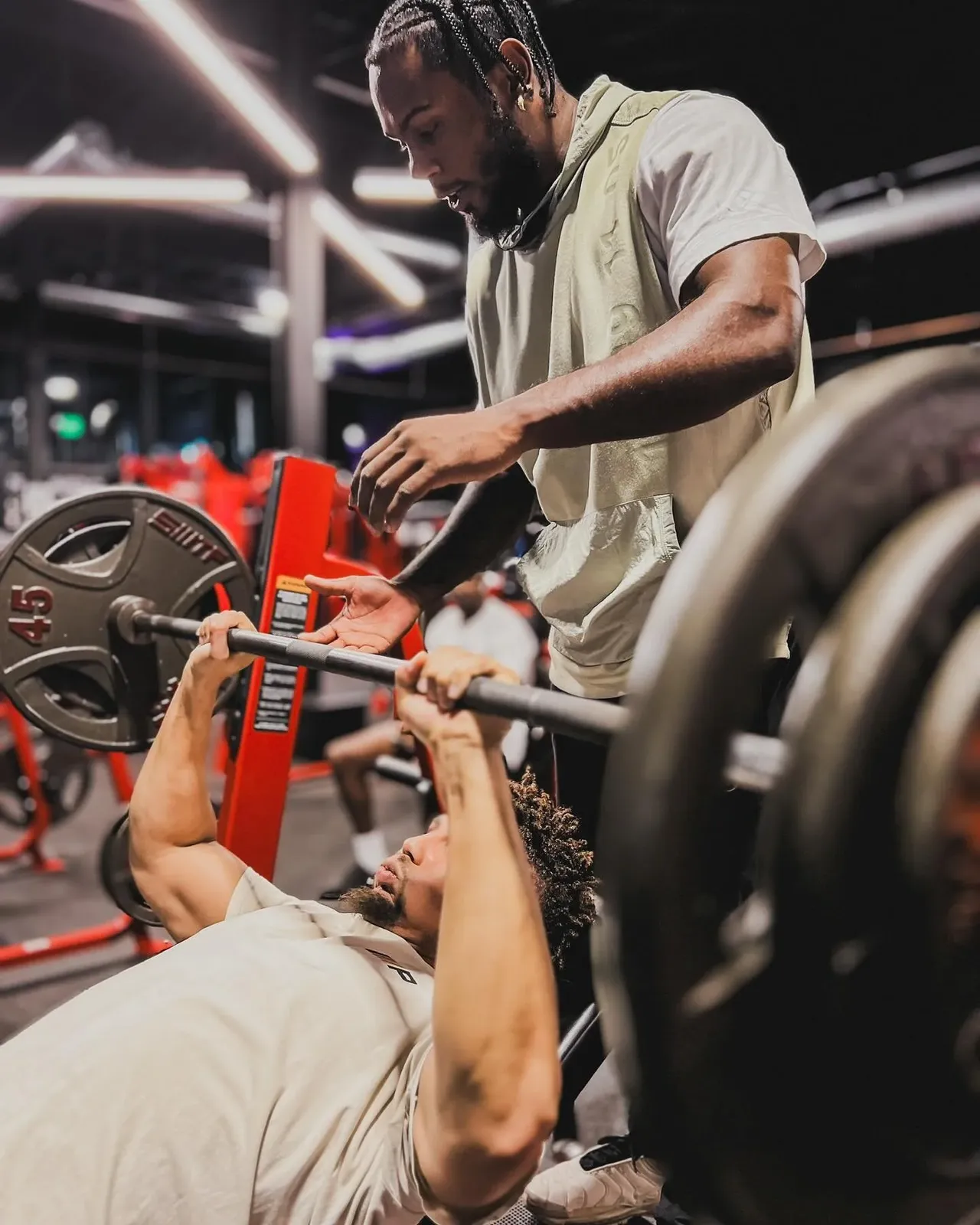
Every new client at our Long Beach facility gets a movement screen before their first heavy training session — not a generic form, but hands-on testing across all eight imbalances above: single-limb strength comparisons, hip flexor and calf length tests, an overhead squat assessment, and a single-leg step-down filmed and reviewed. That screen becomes the baseline for programming, and we re-test every 8-12 weeks because imbalances shift as training volume and life stress change.
The programming principle is consistent across all eight: isolate the underactive muscle first with direct, unloaded work, then reintegrate it into compound lifts once it can actually fire on cue. Trying to fix an imbalance by just squatting and deadlifting heavier rarely works, because heavy compound lifts reinforce whatever compensation pattern already exists. Corrective work has to happen deliberately, and it has to happen consistently — most of the timelines above assume two to three dedicated sessions per week, not an occasional accessory exercise tacked onto the end of a workout.
If you've hit a plateau that doesn't make sense given your training consistency, or you've got a joint that complains on one side but not the other, that's usually an imbalance talking, not a program problem. Book a movement screen at Trinity Training Facility and we'll show you exactly which of these eight patterns is capping your strength, with a corrective plan built into your next training block rather than bolted on as an afterthought.
Key Takeaways
- A hamstring-to-quad strength ratio under 0.6 is linked to significantly higher ACL and hamstring strain risk, especially in athletes who only squat and leg press.
- Side-to-side strength differences greater than 10-15% on single-limb tests predict future injury better than total strength numbers do.
- Anterior pelvic tilt from tight hip flexors and a weak posterior chain is one of the most common causes of chronic low back pain in lifters who sit 8+ hours a day.
- Upper crossed syndrome — tight pecs and upper traps paired with weak lower traps and deep neck flexors — shows up in almost every desk-bound client who complains about shoulder pinching on bench press.
- Fixing an imbalance requires isolating the underactive muscle first, then re-integrating it into compound lifts — skipping straight back to heavy squats or presses just reinforces the same compensation pattern.
- Screening should happen every 8-12 weeks, not once at intake, because imbalances shift as training volume, sport demands, and desk habits change.
Sources
- National Academy of Sports Medicine — Muscle Imbalances and Corrective Exercise
- National Center for Biotechnology Information — Hamstring-to-Quadriceps Strength Ratio and Injury Risk
- American Council on Exercise — Upper Crossed Syndrome
- American Physical Therapy Association — ACL Injury Prevention and Neuromuscular Training