








Progressive Overload: Building Real Strength in Long Beach
Progressive overload is the difference between a 6-month plateau and real strength gains. Here's how Long Beach lifters apply it correctly.
Progressive overload means systematically increasing the demand on your muscles over time — through load, volume, density, range of motion, or frequency — so your body has a reason to keep adapting. Without it, you plateau no matter how hard you work. The fix is tracking every session and adding a measurable variable every 1-2 weeks, not just "training harder."
A client walked into Trinity last year after eighteen months at a chain gym in Long Beach. Same bench press weight the entire time. Same five-mile-an-hour treadmill pace. Same dumbbells for curls she'd been using since she signed up. She wasn't lazy — she showed up four days a week like clockwork. She just had no plan to make anything harder than it was the week before. That's not a training program. That's repetition without a purpose, and it's the single most common reason people stall out in this city's gyms.
Progressive overload is the fix, and it's not complicated. It means you deliberately increase the demand on your body over time — more weight, more reps, less rest, a longer range of motion, or more frequent training — so your muscles, joints, and nervous system have an actual reason to adapt. Skip this, and you can train five days a week for a year and look exactly the same at the end of it. This article breaks down what progressive overload really means, the five ways to apply it, a real 4-week example with numbers, the mistakes that kill it, and how to track it so you're not guessing every session.
Why Most Long Beach Lifters Plateau
Plateaus almost never come from bad genetics. They come from a training log that doesn't exist. When we start a new client at Trinity, the first thing we ask isn't "what's your goal" — it's "what did you lift last time you did this workout." Nine times out of ten, they don't know. If you don't know your numbers from two weeks ago, you can't beat them today, and if you're not beating them, you're not progressing.
The second reason is comfort. Long Beach has no shortage of gyms where you can show up, do the same circuit, sweat, and leave feeling like you accomplished something. Sweat is not a proxy for progress. You can be drenched after a workout that used the exact same weights you used a month ago. Feeling tired tells you effort happened; it tells you nothing about whether you got stronger.
The third reason is fear of failure. People get nervous adding five pounds to a lift because they don't want to miss a rep in front of other people. That instinct protects your ego and kills your results. Missing a rep occasionally while pushing your limits is how you find out where your limits actually are — it's data, not embarrassment.
If any of this sounds familiar, the good news is it's the easiest problem in strength training to fix. You don't need a new body or a new gym. You need a system for measuring and increasing demand, which is exactly what the rest of this article covers.
What Progressive Overload Actually Means
Progressive overload is the principle that your muscles, tendons, and nervous system only adapt when you ask more of them than they're used to. Lift the same weight for the same reps every week, and your body reaches a point where it can handle that stimulus without changing. It has no biological reason to build more muscle or get stronger — the current version of you already handles the job fine.
The word "progressive" matters as much as "overload." You're not trying to max out every session. You're trying to increase the stimulus in small, sustainable steps over weeks and months. Add too much too fast and you'll get hurt or burn out. Add nothing and you plateau. The sweet spot is a controlled, tracked increase you can sustain for months at a time.
This isn't a bodybuilder-only concept. A 45-year-old client rebuilding shoulder strength after a rotator cuff strain uses progressive overload just as much as a 25-year-old chasing a 300-pound squat — the load, the pace, and the exercise selection look completely different, but the underlying mechanism is identical: give the tissue a slightly bigger job than it just handled, let it recover, repeat.
For a deeper look at how this principle applies specifically to rebuilding strength after an injury, see our guide on how strength training speeds injury recovery. The short version: controlled overload is what turns rehab exercises into real strength again, instead of leaving you stuck doing the same band exercises forever.
The 5 Ways to Apply Progressive Overload
Most people think progressive overload only means "add more weight." That's one of five legitimate ways to increase demand, and leaning on it exclusively is how people get hurt or stuck. Here's the full toolkit:
At Trinity, we rotate which variable we push depending on where a client is in their training age and their week. A beginner in month one is usually adding load almost every session because their nervous system is still learning the movement. A lifter three years in gets more mileage out of density and volume changes because their joints can't absorb constant load jumps without wear and tear. Picking the right lever for the right person is most of what separates a real program from a random one.
A Real 4-Week Progression Example
Numbers make this concrete. Here's an actual progression we ran with a client on barbell back squat, starting at a working weight of 135 pounds for 3 sets of 8 reps with 90 seconds rest:
By the end of four weeks, that client moved from roughly 3,240 pounds of total volume (135 x 3 x 8) to about 4,640-4,930 pounds (145 x 4 x 6-8) — a jump of 40-50% in total work, achieved in small, recoverable steps rather than one reckless leap. That's the entire game. No single week feels dramatic. The four-week total does.
We built a longer version of this exact framework in our 4-week progressive overload plan for Long Beach lifters, including how to apply it across a full-body split instead of a single lift.
Common Mistakes That Stall Progress
The most common mistake is adding weight before reps or form are solid. If you're grinding out reps 7 and 8 with your lower back rounding, adding weight next week doesn't build strength — it builds a bigger version of a technical flaw. Fix the movement first. Add load second.
The second mistake is progressing every lift every week. Your central nervous system can only recover from so much novel stress at once. We typically have clients push hard on one or two main lifts per session and hold accessory work steady, rather than trying to PR everything simultaneously. Trying to progress a squat, a bench press, and a deadlift all in the same week, every week, is a fast track to a stalled program and a cranky lower back.
The third mistake is ignoring muscle imbalances that cap how much you can safely overload a lift. If one glute is doing 70% of the work on your squat because the other side is inhibited, adding weight just reinforces the imbalance and increases injury risk. We cover this in detail in our piece on muscle imbalances that sabotage strength training — worth a read if a lift feels lopsided no matter how much you progress it.
Last mistake: no deload. Ever. People who love their progress chart the most are usually the ones who refuse to back off, and it catches up with them in the form of nagging joint pain or a plateau that looks like a wall. We'll cover deloading properly below, but the short version is: plan the down week before you need it.
Progressive Overload for Fat Loss and Recovery Clients
People assume progressive overload is only for people trying to get bigger or lift more. It's just as critical — arguably more critical — for someone in a calorie deficit trying to lose fat. When you're eating less, your body is looking for any excuse to burn muscle tissue for energy instead of fat. Progressive overload is the signal that tells your body "keep this muscle, you're still using it hard." Cut the intensity while cutting calories, and you'll lose weight, but a meaningful chunk of it will be muscle — which tanks your metabolism and leaves you soft instead of lean.
For a client on a fat loss program, we still push load or volume on the big lifts week to week, just at a slower rate than someone in a muscle-building phase, because recovery capacity is lower when calories are lower. A realistic fat-loss client might add weight every 2-3 weeks instead of weekly, and lean more on rep and density progressions that don't demand as much systemic recovery.
For post-rehab clients, the variable being progressed is usually range of motion or load on a specific joint pattern, done in small, closely monitored steps — think 5-10% increases, not 20%. A shoulder six weeks out from a strain doesn't get the same jump in load that a healthy shoulder does. This is where working with someone who actually tracks your session-to-session numbers matters most, because the margin for error is smaller and the cost of rushing it is a setback, not just a stalled number on a bar.
Tracking Your Numbers: What to Log Every Session
You cannot progressively overload what you don't measure. At minimum, log four things for every working set: exercise, weight, reps, and how many reps you had left in the tank (your RIR — reps in reserve). A phone note or a $3 notebook works fine. What matters is that it exists and you look at it before your next session.
Here's a simple weekly review we have clients run every Sunday, in under five minutes:
Clients who do this consistently make visible progress within 4-6 weeks. Clients who "just show up and lift hard" without a log plateau at almost the exact same rate as people who don't train at all after the initial newbie gains wear off. The tracking isn't busywork — it's the entire mechanism that turns effort into results. Our guide on building a periodized strength training plan goes deeper into structuring these weekly reviews across a full training cycle.
When to Deload and Why It Matters
A deload is a planned week of reduced volume or intensity — typically 40-50% less total work — built into your program every 4-6 weeks, before your body forces the issue. This is not a rest week where you skip the gym. You still train, just lighter, so your joints and nervous system catch up while your strength adaptations from the previous weeks solidify.
Signs you need one now, even if it's not scheduled: your main lifts stall or drop for two consecutive sessions, your joints ache walking into the gym instead of just during heavy sets, your resting heart rate is elevated in the morning, or you've lost motivation to train despite normally looking forward to it. Any two of these together is a strong signal to back off for a week rather than push through.
What a deload actually looks like for a lifter squatting 145 pounds for 4 sets of 8: drop to roughly 100-110 pounds for 2 sets of 8, cut accessory volume by half, and keep intensity low enough that nothing feels like a grind. The following week, you typically come back and hit a number higher than your pre-deload best — this is well documented in strength and conditioning literature as supercompensation, and it's the reason planned deloads outperform training through fatigue every time we've tracked it with clients.
Building Resilience: Progressive Overload as Injury-Proofing
The word "resilience" gets thrown around loosely in fitness marketing, but there's a literal, physical version of it that progressive overload builds: tissue capacity. Tendons, ligaments, and joints adapt to load slower than muscle does — muscle can get stronger in weeks, while connective tissue often takes months to fully remodel. A program that respects this timeline builds a body that can absorb a slip on a wet sidewalk, an awkward lift moving furniture, or a bad step off a curb without getting hurt.
This is the actual argument for why progressive overload matters beyond aesthetics or a number on a lift. A 50-year-old client who's been progressively loading her deadlift for a year isn't just stronger in the gym — her lower back and hips can handle picking up a grandkid or a suitcase without warning. That's resilience you can use outside of Trinity's doors, which is the whole point of training in the first place.
We've built several of our programs specifically around this idea — see our breakdown of functional strength as a real-world power system for how we translate barbell numbers into capacity you actually use. The gap between "can lift it in the gym" and "can handle it in real life" closes when overload is applied consistently and patiently, not chased aggressively for a few weeks and abandoned.
Your Next Step
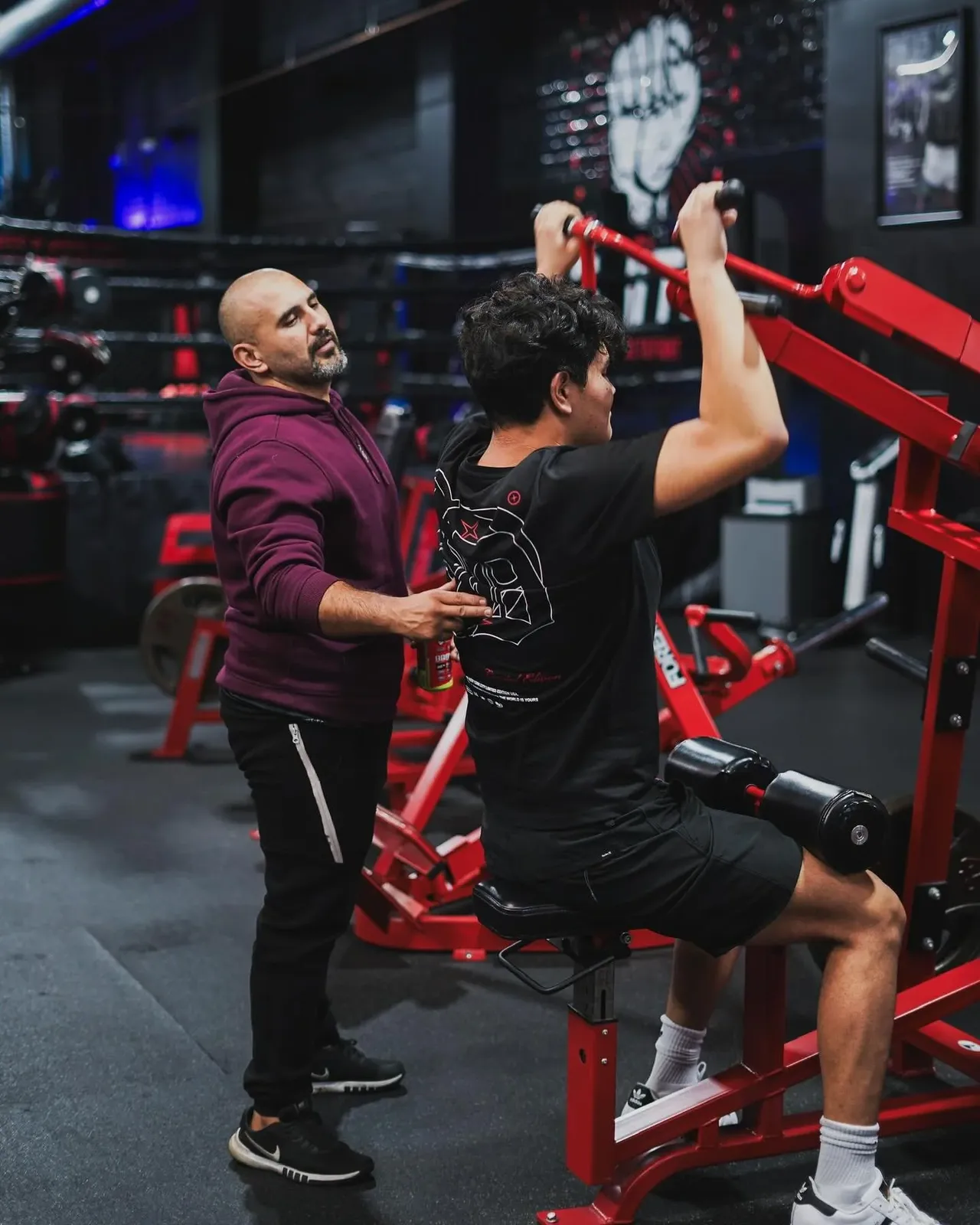
If you've read this far and realized you don't actually know what you lifted last week, that's the problem to fix first — not your program, not your gym, not your motivation. You need a system that tracks your numbers and tells you exactly what to increase and when, run by someone who's watching your form closely enough to know when you're ready to add load and when you're not.
That's what a coached program at Trinity does from session one. We start every new client with a baseline assessment, build a progression plan around their actual numbers, and adjust weekly based on what the log says — not on how the workout felt. If you're in Long Beach and tired of training the same weights month after month, book a tour or a free intro session and we'll show you exactly where you're plateaued and what it takes to fix it. Get in touch here to set it up.
Key Takeaways
- Progressive overload is the single mechanism that drives strength and muscle gain — everything else in a program supports it
- You can overload five different ways: more weight, more reps, less rest, more range of motion, or more frequency
- Most plateaus come from not tracking numbers, not from bad genetics or a bad program
- A 4-week block with a planned deload prevents the burnout that kills consistency
- Progressive overload applies to fat loss and rehab clients too — it's not just for people chasing a bigger squat
- Logging your last session's numbers before you lift is the highest-leverage habit in the gym