









Strength Plate Loading: A Guide to Real Strength Gains
Learn how to load plates correctly for consistent strength gains — warm-up ramps, microloading, and plate jumps that actually match your rep ranges.
Strength plate loading is the practice of selecting and sequencing barbell plates — including small microplates — so each session adds a true, repeatable increase in load instead of random jumps. Most lifters stall because they jump straight from the bar to 45s and skip the 2.5-5 lb increments that drive long-term progressive overload. A structured loading plan, built around your actual rep range and tracked weekly, fixes this.
Watch the free weight area at any commercial gym on a Monday night and you'll see the same thing happen over and over: a guy finishes his working set of bench at 185, decides he's feeling strong, and throws on a 45 per side. Now he's at 275 with no warm-up jump in between. He misses the lift, re-racks it loudly, and tells his training partner the bar "felt heavy today." It didn't feel heavy because he's weak. It felt heavy because he skipped every increment that would have told his nervous system this weight was coming.
That's plate loading done badly, and it's the quiet reason a lot of lifters plateau years before they should. Strength plate loading isn't about inventory, it's about sequencing — choosing the right jumps, in the right order, so each set builds toward the next instead of ambushing it. Get this right and your working sets stop being guesswork. Get it wrong and you'll blame your genetics for a problem that's actually sitting on the plate tree.
What Plate Loading Actually Means in a Strength Program
Plate loading is the mechanical side of progressive overload — the actual plates you put on the bar, in the actual order you put them on, across a warm-up and into your working sets. It sounds basic, but it's where most programs break down. You can write a perfect 12-week periodization plan on paper, and it means nothing if the lifter can't execute the loading jumps that plan requires.
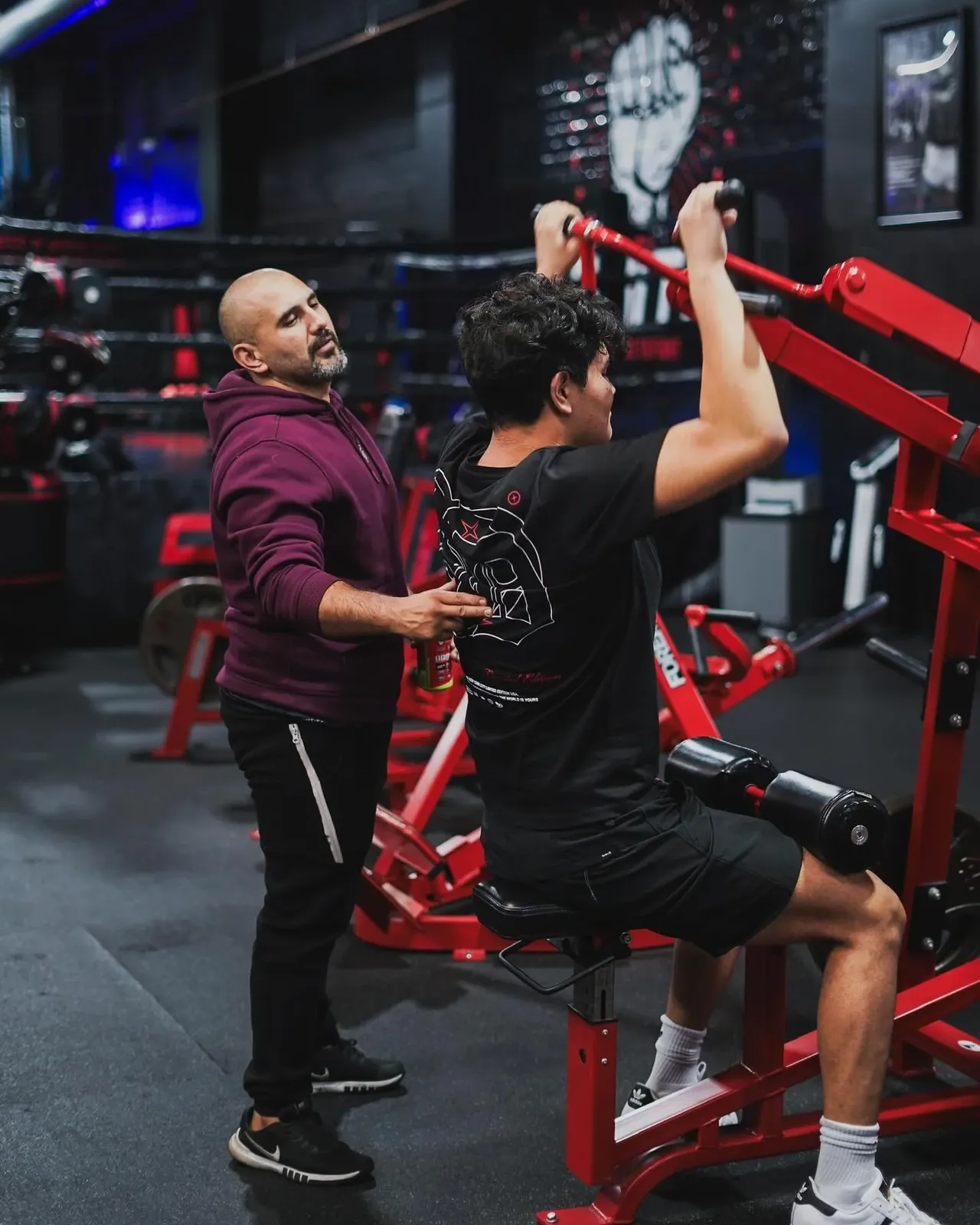
At Trinity we see this constantly with new clients who come from big-box gyms. They've been handed a workout sheet with sets and reps, but nobody ever taught them how to ramp into a working weight or how to size a jump relative to their current strength. They either load too conservatively and never get a true stimulus, or they load too aggressively and grind through ugly reps that teach their body the wrong movement pattern under load.
Good plate loading does three things: it prepares your joints and nervous system through a structured ramp, it delivers a working weight that's actually harder than last week's by a measurable amount, and it does this without wasting reps you need for your main work. This connects directly to the idea of progressive overload — plate loading is simply how you execute overload set by set instead of just talking about it in theory.
The Warm-Up Ramp: How to Build to Your Working Weight
A proper ramp is 4-6 sets, not two. If your working set is 225 on bench, don't go bar, then 135, then 225. Your nervous system needs intermediate signals. A realistic ramp looks like this: bar x10, 95 x8, 135 x5, 165 x3, 185 x2, 205 x1, then 225 for your working sets.
Each jump should get smaller as you approach your working weight. Early jumps can be 40-50 lb because you're far from your ceiling and just greasing the pattern. The last two jumps before your top set should be 15-20 lb max — that's where lifters get greedy and skip a step, then wonder why their first working rep feels like a grind instead of a controlled lift.
Here's a simple ramp framework we hand new clients:
Skip this and you're asking your body to produce max tension cold. That's how shoulders and lower backs get tweaked on a lift that had nothing to do with the actual weight on the bar.
Microloading: The Tool Most Gyms Don't Have
Most commercial gyms stock 45, 25, 10, 5, and 2.5 lb plates. That means your smallest possible jump is 5 lb total (2.5 per side). For a beginner bench pressing 135, that's a 3.7% increase — manageable. For an intermediate lifter at 275, that same 5 lb jump is only 1.8%, which should still be workable most weeks. The real problem shows up for anyone benching over 300 or squatting over 400, where even a 5 lb jump can be the difference between a clean double and a grinding single.
This is where microplates matter. A set of 1.25 lb and 0.5 lb plates per side lets you add 1-2 lb total instead of 5 or 10. We keep a full microplate set on the floor at Trinity specifically for clients working through a plateau, because the data backs this up — the research on progression models consistently shows that smaller, more frequent load increases produce more consistent long-term strength gains than larger, infrequent jumps, particularly as a lifter gets closer to their current max.
If your gym doesn't have microplates, you can approximate the effect by holding the weight steady and adding a rep instead of a pound. Five reps at 275 one week, six reps at 275 the next, is a real strength gain — it's just expressed in volume instead of load. Don't let the absence of small plates become an excuse to stall for months at a time.
Matching Plate Jumps to Rep Ranges
The size of your plate jump should be tied directly to the rep range you're training, not a flat number you apply to every lift. This is one of the most common mistakes we correct, and it's covered in more depth in our piece on why lifts stall when loading doesn't match adaptation.
Here's the practical breakdown we use with clients:
A client squatting 315 for a triple doesn't need a 20 lb jump to feel progress — a 5 lb jump that turns a shaky triple into a controlled triple is a bigger win than most people realize. Meanwhile, a client doing leg press for 12 reps can absorb a 20-30 lb jump without issue because the rep range gives more margin for error. Treating both the same way is how programs stop working even though the lifter is technically "following the plan."
Common Plate-Loading Mistakes We See at Trinity
After years of coaching in Long Beach, the same five mistakes show up again and again, across every population from first-time lifters to former college athletes.
Jumping straight to round numbers. Loading 45s because they're easy to grab, instead of the 35 or 25 lb jump the program actually calls for. Round numbers are convenient, not correct.
Skipping ramp sets when short on time. Cutting the warm-up to save five minutes, then missing the first working rep because the body wasn't primed. You lose more time re-setting after a missed lift than you save skipping a ramp set.
Loading by feel instead of by log. Not writing down the actual plate combination used, so next week becomes a guessing game. Write "bar + 2x45 + 1x10" not just "190."
Adding weight on a bad sleep/stress week. Following the plate progression on paper even when recovery capacity cratered that week. The plan assumes baseline recovery — when that's not there, the plates need to adjust too.
Never deloading. Treating every single week as a week to add weight, with no planned reset, until a joint or a lift finally forces one.
Each of these is fixable in a single conversation with a coach, but left unchecked they compound over months into a frustrated lifter who thinks they've hit a genetic wall when they've actually just been loading the bar carelessly.
Building a Loading Progression Over 8-12 Weeks
Random jumps don't build strength — planned ones do. A structured loading block looks like this across 8-12 weeks, and it mirrors the logic in our guide to periodization strategies for strength gains.
Weeks 1-3 (accumulation): hold the load steady, add reps or a set. Let the movement pattern groove before chasing more weight.
Weeks 4-6 (intensification): start adding small plate jumps weekly — 5 lb total on upper body, 10 lb total on lower body — while reps hold steady.
Weeks 7-9 (peak): load gets heavier, reps drop, jumps get smaller (2.5-5 lb total), and you're chasing quality singles, doubles, or triples.
Week 10 (deload): cut load by 10-20% across all main lifts. Same exercises, same bar speed focus, just lighter plates. This is not a week off — it's a week to let joints and the nervous system catch up.
Weeks 11-12 (retest): rebuild to a new top set or a rep max test, now starting from a body that's actually recovered instead of one that's been grinding for three straight months.
Clients who follow a structure like this consistently add 15-30 lb to their main lifts per 12-week block in year one, and 5-15 lb per block once they're past the beginner phase. Those numbers only hold up when the plate jumps inside the block are planned, not improvised on the spot.
Plate Loading for Different Lifts
Loading strategy isn't identical across squat, bench, deadlift, and overhead press, even though the math looks similar. The lifts recruit different amounts of muscle mass and different leverage, which changes how big a jump your body can actually absorb.
Squat and deadlift: bigger muscle groups, more total leverage, so 10-20 lb total jumps are reasonable in moderate rep ranges. These lifts also tend to need longer ramps — 5-6 sets — because more joints are loading up at once.
Bench press: smaller muscle mass involved relative to squat/deadlift, so jumps should be more conservative — 5-10 lb total in most rep ranges, tightening to 2.5-5 lb near a max attempt.
Overhead press: the most sensitive of the main lifts to jump size. Shoulders fatigue fast and sloppy loading here is a common source of nagging shoulder irritation. Keep jumps at 5 lb total or less once you're past a beginner load.
If you're building your main lift rotation around these movements, our rundown of five compound lifts that build real strength is a good reference for how these fit together in a weekly split. The point isn't to memorize exact numbers — it's to recognize that a squat and an overhead press should never be loaded with the same size jump just because the program sheet lists them on the same day.
When to Deload and Reset Your Plates
A deload isn't a reward for finishing a hard block — it's a tool you use before performance drops on its own. The signal is usually obvious if you're paying attention: bar speed slows on weights that used to move fast, your warm-up sets start feeling as hard as last month's working sets, or you miss two working sets in the same week on lifts you'd been hitting clean.
When you see that, cut load 10-20% across your main lifts for one week. Keep the same exercises and rep ranges — this isn't the week to switch to machines or skip training. You're reducing mechanical load while keeping the movement pattern sharp, which is a different thing than detraining.
Recovery capacity is the real bottleneck behind most deload timing, and it ties directly into how you load the next block. Our breakdown of optimizing recovery intervals for strength gains covers how rest between sessions and between blocks changes how aggressively you can load plates without digging a hole you can't climb out of.
A practical rule we use with clients: plan one deload week every 5-7 training weeks regardless of how you feel. Waiting until you're forced into one by a missed lift or a nagging joint means you've already lost training quality for two or three weeks before the deload even starts.
How We Program Plate Loading at Trinity Training Facility
Every new client at Trinity gets a baseline session where we test current working weights on their main lifts, then build their first 4-week block around specific, written plate jumps — not vague instructions to "add weight when it feels easy." You'll see your plate combination written next to every working set, not just a total number, because that's what actually gets executed correctly under fatigue in a busy gym.
We also run clients through a structured 4-week strength plate challenge periodically, specifically designed to teach proper loading mechanics — ramp sets, jump sizing, and logging — to lifters who've been training on their own without ever learning this part of the process. It's one of the fastest ways we've found to break a plateau that has nothing to do with effort and everything to do with how the bar got loaded.
If you've been stuck at the same working weight for more than six weeks, the fix is rarely "train harder." It's almost always a loading problem — jumps too big, too small, too random, or a missing deload. Come in for a free intro session and we'll look at exactly how you're loading your main lifts and build a plate progression that actually matches where you are right now. Book your free intro at Trinity Training Facility and we'll get you off the plateau and back to adding real weight to the bar.
Key Takeaways
- Jumping straight to 45 lb plates skips the 5-10% load increases your nervous system can actually adapt to week over week.
- Microplates (0.5-2.5 lb) are the single most underused tool in home and commercial gyms for breaking plateaus.
- Your plate jump size should shrink as your rep range gets lower — heavier singles need smaller increments, not bigger ones.
- A warm-up ramp of 4-5 sets gets your joints and nervous system ready without burning reps you need for your working sets.
- Writing down exact plate combinations (not just total weight) removes the guesswork that causes missed lifts.
- Deload weeks should cut load by 10-20%, not skip plates entirely — you're resetting fatigue, not detraining.