







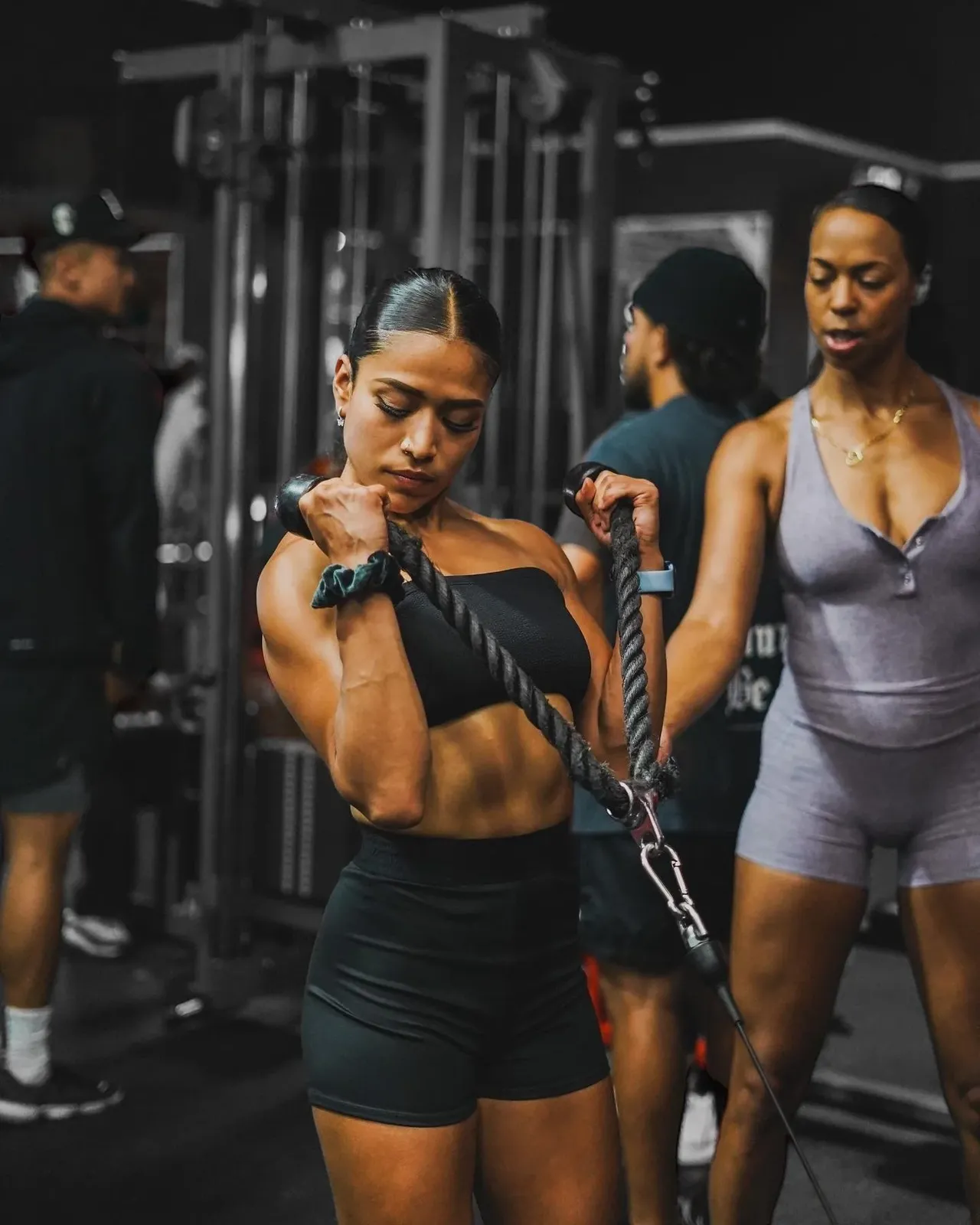

6-Week Strength Training Program for Boxers
A 6-week strength program built for boxers: three phases, real sets and reps, and the exercises that turn gym strength into punching power.
A 6-week explosive power program for boxers works in three 2-week phases: build a strength base (heavy compound lifts), convert that strength to speed (moderate load, max intent), then peak with plyometrics and med ball throws. Train strength 3x/week, keep boxing volume separate, and track bar speed and jump height weekly to confirm power is actually increasing, not just strength.
A fighter walks into Trinity after six months at a chain gym doing bicep curls and treadmill cardio between boxing sessions. His hands are fast. His conditioning is fine. But when he hits the heavy bag, the sound is flat. No pop. That's the gap between being in shape for boxing and actually training for power — and it's the most common thing we fix with fighters who train at commercial gyms with no strength programming behind their boxing work.
Punching power isn't an arm quality. It's a full-body force-transfer problem, and it responds to strength training the same way a squat or a sprint does — with structure, progression, and a plan that changes week to week. Below is the exact 6-week framework we run with boxers at our Long Beach facility, phase by phase, with the numbers.
What Explosive Power Actually Means in the Ring
Power is force multiplied by velocity. A boxer who is strong but slow generates force without speed — that's a shove, not a punch. A boxer who is fast but weak generates speed without force — that's a slap. Real punching power sits in the middle: you need enough raw strength to produce force, and enough rate of force development (RFD) to apply that force in the 150-250 milliseconds a punch actually takes.
That force starts at the feet. The rear foot drives into the floor, the hip and torso rotate, and the energy travels up through the core into the shoulder and fist. If any link in that chain is weak — glutes, hips, obliques, upper back — the punch leaks power before it ever reaches the target. This is why a strength training program for boxers built around leg press and bicep curls does almost nothing for punch output, while one built around hip hinges, rotational power, and ground-based movement changes it fast.
We test this with new fighters using a simple broad jump measurement before and after a program cycle. It's not a lab-grade tool, but it correlates well with lower-body power output and gives a number people can see improve week to week. A boxer who adds 4-6 inches to a broad jump over six weeks is almost always hitting harder on the bag, even before we measure punch force directly.
How This 6-Week Program Is Structured
The program runs in three two-week blocks, following a strength-speed progression that's standard in track and field and combat sports conditioning: build the tank, then teach the body to empty it fast.
Each phase builds on the last. Skipping the foundation phase and going straight to jump training is the fastest way to get an ankle or knee injury three weeks into camp — we've seen it happen with fighters who came in wanting to skip straight to "explosive" work. If you want the deeper mechanics of how progressive load builds toward better output, our guide on building a periodized strength training plan covers the same phase logic in more depth outside of boxing-specific context.
Weeks 1-2: Build the Strength Base
This phase is about raw force capacity. Three strength sessions per week, built around four movement patterns: hip hinge, squat, horizontal push/pull, and core anti-rotation.
Sample lift progression for Week 1:
Week 2 adds 5-10 lbs to the main lifts if reps were completed with good bar speed on the last rep of each set — that's the marker we use instead of just chasing failure. If the last rep of a set slows down noticeably compared to the first rep, the weight is too heavy for this phase's purpose.
We don't program isolation work here beyond light rear-delt and rotator cuff maintenance work for shoulder health, since boxers already get plenty of volume from padwork and bag work. The goal of these two weeks is a measurable jump in the trap bar deadlift and box squat numbers — usually 5-10% for someone new to structured strength work, less for an experienced lifter. For a broader look at how load progression drives that strength gain, see our piece on progressive overload and building real strength.
Weeks 3-4: Convert Strength to Speed
Now the load drops and the intent changes. Every rep in this phase is performed as fast as the weight allows — this is where rate of force development actually gets trained.
Sample Week 3 session:
We coach rest periods carefully here — 90 seconds to 2 minutes between sets, because the point is quality of movement, not conditioning. If a fighter is gassed going into a set, the bar speed drops and the set stops training power and starts training fatigue tolerance instead, which isn't the goal of this block.
This is also where we start layering in single-leg work — split squats and step-ups — since a boxer's power is rarely generated from a symmetrical stance. If you've got a leg or hip that's noticeably weaker in this phase, address it directly rather than programming around it; our article on fixing muscle imbalances in strength training covers how to spot and correct these before they show up as a flat cross or a weak lead leg.
Weeks 5-6: Peak for Explosive Power
This is the block that gets fighters excited, because it's where the work starts to look and feel like power. Strength sessions drop to two per week to allow for full recovery, and the lifts themselves get lighter and faster.
Sample Week 5 session:
Rest between plyometric sets should be 2-3 minutes — full recovery, not a superset. The nervous system, not the muscle, is the limiting factor here, and rushing it defeats the purpose of the phase.
We also use this window to add specific techniques used by track and field sprinters and Olympic lifters for late-stage peaking — contrast sets pairing a heavy lift with an explosive movement, for example. If you want the fuller technical breakdown of those methods, we cover them in 5 advanced strength training techniques to boost power and speed. By the end of week 6, most fighters see their broad jump improve by 4-8 inches and their bag power visibly change — coaches holding pads notice it before the fighter does.
Sample Weekly Training Split
Here's how a Week 3-4 week actually looks when boxing training is layered in, using a fighter training 5 days of boxing plus strength work:
Notice sparring day has zero lifting attached to it. That's deliberate — sparring already taxes the nervous system heavily, and stacking a strength session on top of it either blunts the lift or blunts the sparring, usually both. If your schedule forces a combined day, lift in the morning and keep the boxing work technical rather than max-effort.
The Core Lifts and Why They Work
Five exercises carry most of the load in this program, and each one maps directly to a phase of the punch:
Trap bar deadlift — trains hip extension, the primary driver of force in a rear hand punch. Load: work up to a true 3-5RM by week 2, then use lighter loads for speed work later.
Box squat — builds starting strength out of a dead stop, which mirrors the pause-and-fire nature of a boxer's stance before a punch. Sit fully onto the box between reps; don't bounce.
Rotational medicine ball throw — the single best transfer exercise for punching power because it trains hip-to-shoulder rotation under speed, exactly like a hook or cross. Use a 6-10 lb ball, thrown as hard as possible against a wall or to a partner.
Broad jump / depth jump — trains lower-body rate of force development, which shows up as faster foot drive into every punch.
Landmine press — builds pressing strength through a rotational, angled path closer to a real punch trajectory than a flat bench press.
Notice bench press isn't on this list as a primary lift. It has a place for general upper-body strength and shoulder health, but it trains a straight-line push, and a punch is a rotational, hip-driven movement — the carryover is smaller than most gym-goers assume.
Mistakes That Kill Power Gains in the Weight Room
We see the same errors repeatedly with boxers who come to us after training elsewhere:
Going straight to plyometrics with no strength base. Jump training without underlying strength increases injury risk and caps how much power you can actually generate — there's no foundation to express speed from.
Training to failure on every set. Grinding out a 10th rep on a squat when reps 7-10 are slow builds muscular endurance, not power. Power training requires stopping sets before bar speed drops.
Programming bodybuilding splits for a combat athlete. Isolated arm and shoulder days add fatigue and volume with almost no transfer to punch output, and they eat into recovery a boxer needs for sparring.
Ignoring the off-hand and off-leg. Boxers overload their dominant side through years of orthodox or southpaw stance work. Unaddressed, this shows up as a noticeably weaker jab or lead-leg push off. Single-leg and single-arm work should be a permanent fixture, not an afterthought.
No deload. Running six straight weeks of increasing intensity without a lighter week afterward is how fighters walk into fight week already beat up. Build a deload week into camp after this cycle if the fight is more than a week out.
Recovery and Nutrition While You Run This Program
Strength and power training add real systemic fatigue on top of boxing volume, and most fighters underfeed for that combined load. A boxer running this program alongside 4-5 boxing sessions per week needs roughly 1.6-2.0 grams of protein per kilogram of bodyweight daily to support recovery — for a 150 lb (68 kg) fighter, that's roughly 110-135 grams of protein spread across the day.
Sleep matters more here than most fighters want to admit. Rate of force development and reaction speed both drop measurably after a night of under 6 hours of sleep — this shows up directly as slower bar speed and flatter jumps in the gym the next day. If you're cutting weight during this six-week block, keep the deficit moderate (300-500 calories under maintenance) rather than aggressive; a hard cut on top of max-effort strength work is how power output tanks in week 5 right when it should be peaking.
Between sessions, prioritize actual recovery tools over gimmicks — a 10-minute mobility routine focused on hips and thoracic spine, easy walking on off days, and consistent hydration do more for weekly output than any recovery gadget. If you're coming back from a previous injury and building strength back up alongside boxing work, our article on how strength training speeds injury recovery covers how to sequence that safely without losing the training window.
How to Know It's Actually Working
Don't just wait to feel stronger on the bag — measure it. Test three numbers at the start of week 1 and again at the end of week 6: estimated box squat 1RM, standing broad jump distance, and rotational medicine ball throw distance. A well-run six-week cycle should produce a 5-10% improvement in strength numbers and a 4-8 inch improvement in the broad jump for most intermediate lifters. Less experienced lifters often see more; highly trained athletes will see less but still measurable gains.
If those numbers aren't moving by week 4, something in the program needs adjusting — usually load selection or recovery, not the plan itself. This is where working with someone who can watch bar speed and adjust week to week beats running a program off a spreadsheet alone.
If you're training in Long Beach and want this program built around your actual schedule, fight date, and current strength numbers instead of a generic template, come in for a free intro session. We'll test your current numbers, walk you through the facility, and build the six weeks around what you actually need. Book your free intro at Trinity Training Facility and start the program this week.
Key Takeaways
- Punching power comes from ground force transferred through the hips and core, not arm strength — training has to reflect that force-transfer chain.
- The 6-week program runs three phases: Weeks 1-2 build maximal strength, Weeks 3-4 convert strength to speed, Weeks 5-6 peak explosive output.
- Bar speed matters more than bar weight in the last four weeks — moving 60-80% of your max as fast as possible builds rate of force development.
- Plyometrics and medicine ball throws belong in the program, but only after a strength base exists — skipping the base is the most common mistake boxers make.
- Strength sessions should sit 6+ hours away from boxing/sparring sessions, or on separate days entirely, to avoid blunting adaptation.
- Track weekly: box squat 1RM estimate, broad jump distance, and med ball rotational throw distance to know if the program is working.