







Progressive Overload: A 4-Week Plan for Long Beach Lifters
A 4-week progressive overload plan for Long Beach lifters, with exact sets, reps, and load increases to break through a strength plateau.
Progressive overload means systematically increasing training demand — load, reps, sets, or density — so muscle and the nervous system are forced to adapt. This 4-week plan starts with a true baseline test, adds load in week two, pushes density and intensity techniques in week three, and ends week four with a retest or planned deload before the next block.
Why Your Squat Has Been Stuck at 185 for Four Months
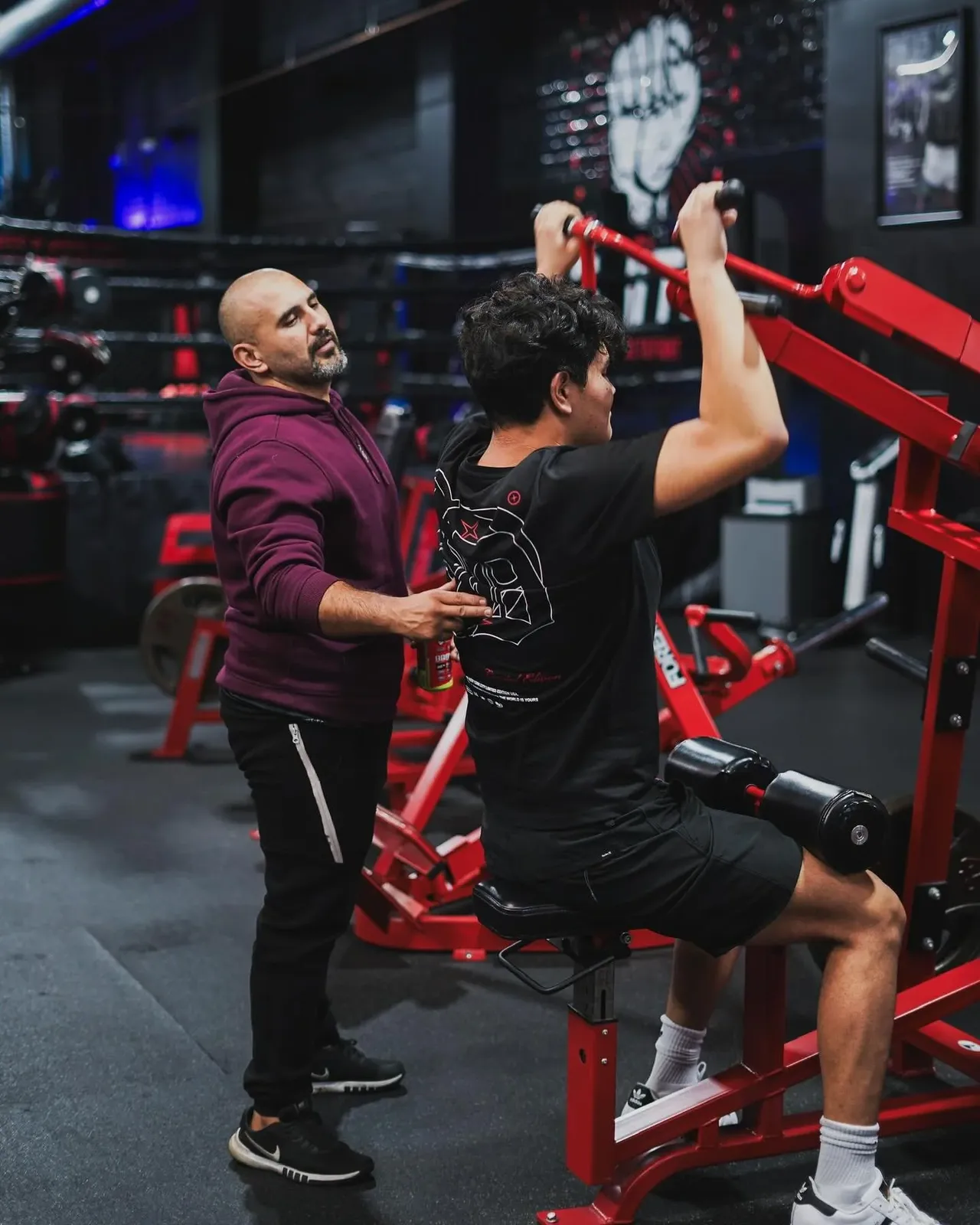
Derek walked into Trinity Training Facility benching 185 pounds — the exact number he'd been stuck at since February. He trained four days a week at a chain gym near Bixby Knolls, followed a bodybuilding split he found on YouTube, and never wrote down a single number. Every session looked roughly like the last one: same bar weight, same reps, same rest periods, different day of the week. That's not training. That's rehearsing.
We see this constantly with clients from Belmont Shore, Los Altos, and downtown Long Beach who've been consistent in the gym for a year or more with nothing to show for it. The missing ingredient is almost never effort — it's a structured plan to increase the demand on the body over time. Without a deliberate increase in weight, reps, sets, or difficulty, muscle has no reason to adapt. The body is efficient. It builds exactly the strength it needs to survive the stress it currently faces, no more.
This article lays out the exact 4-week block we use with clients like Derek to restart stalled progress: how to set a real baseline in week one, how much weight to add and when, how to use intensity techniques in week three without wrecking your joints, and how to test or deload in week four so the next block starts from a higher floor. These are the same numbers we write on client cards at our Long Beach facility — not generic percentages pulled from a textbook.
What Progressive Overload Actually Means
Progressive overload is the systematic increase of stress placed on the muscular and nervous system over time so the body is forced to adapt. That's accurate, but it undersells how many ways you can apply it. Adding 5 pounds to the bar is only one lever. You can also add a rep at the same weight, add a set, shorten rest periods, slow the eccentric portion of a lift, or improve range of motion so the same weight becomes harder.
What it doesn't mean is adding weight every single session regardless of how the lift looks. We've had clients try to add 10 pounds to their deadlift every week for two months straight, and by week five their lower back rounds on every rep. That's not overload — that's accumulating risk. A rep done with worse form at a heavier weight isn't progress; it's a data point that you skipped a step.
For lifters chasing muscle size specifically rather than a strength number, the loading math shifts slightly toward more volume in the 8-15 rep range with shorter rest. We break that down in our hypertrophy training guide for Long Beach lifters, which pairs well with the plan below if size, not a 1-rep max, is the goal.
This plan is built around five lifts — back squat, bench press, deadlift, weighted pull-up, and overhead press — because they let us track load objectively. Apply the same weekly logic to machines or dumbbells; only the increments change.
Before Week One: Set Your Real Baseline
Before touching this plan, spend one full session establishing real numbers. Guessing is the biggest reason lifters plateau — they train off a number they hit once, two years and fifteen pounds ago. At Trinity, every new strength client finds a true 3-rep max on squat, bench, and deadlift, and a true 5-rep max on overhead press and weighted pull-up.
Warm up with the empty bar for 10 reps, then 40% for 5, 60% for 3, 75% for 2, then climb in small jumps — 10 pounds upper body, 20 pounds lower body — until a set of 3 slows down noticeably but form stays clean. Stop there. That's your working baseline, not a grinding, ugly single.
Record five numbers per lift: weight, reps, rest time, a 1-10 RPE rating, and a one-line form note like "knees caving on rep 3." This is your control data. Without it, you can't tell in week three whether 205 for 5 is real progress or just a better day.
Coming back from injury or six months off? Cut every baseline number by 20% and build up over the first week instead of testing to a true max. There's no prize for an aggressive number on day one if you can't train on day four.
Week 1: Groove the Pattern, Bank the Data
Week one isn't about pushing weight — it's about proving the pattern holds up across multiple sets, not just one. Program three working sets of 5 reps at roughly 75-80% of your tested baseline, with 2-3 minutes rest, on squat, bench, and deadlift, and three sets of 6-8 on overhead press and pull-up.
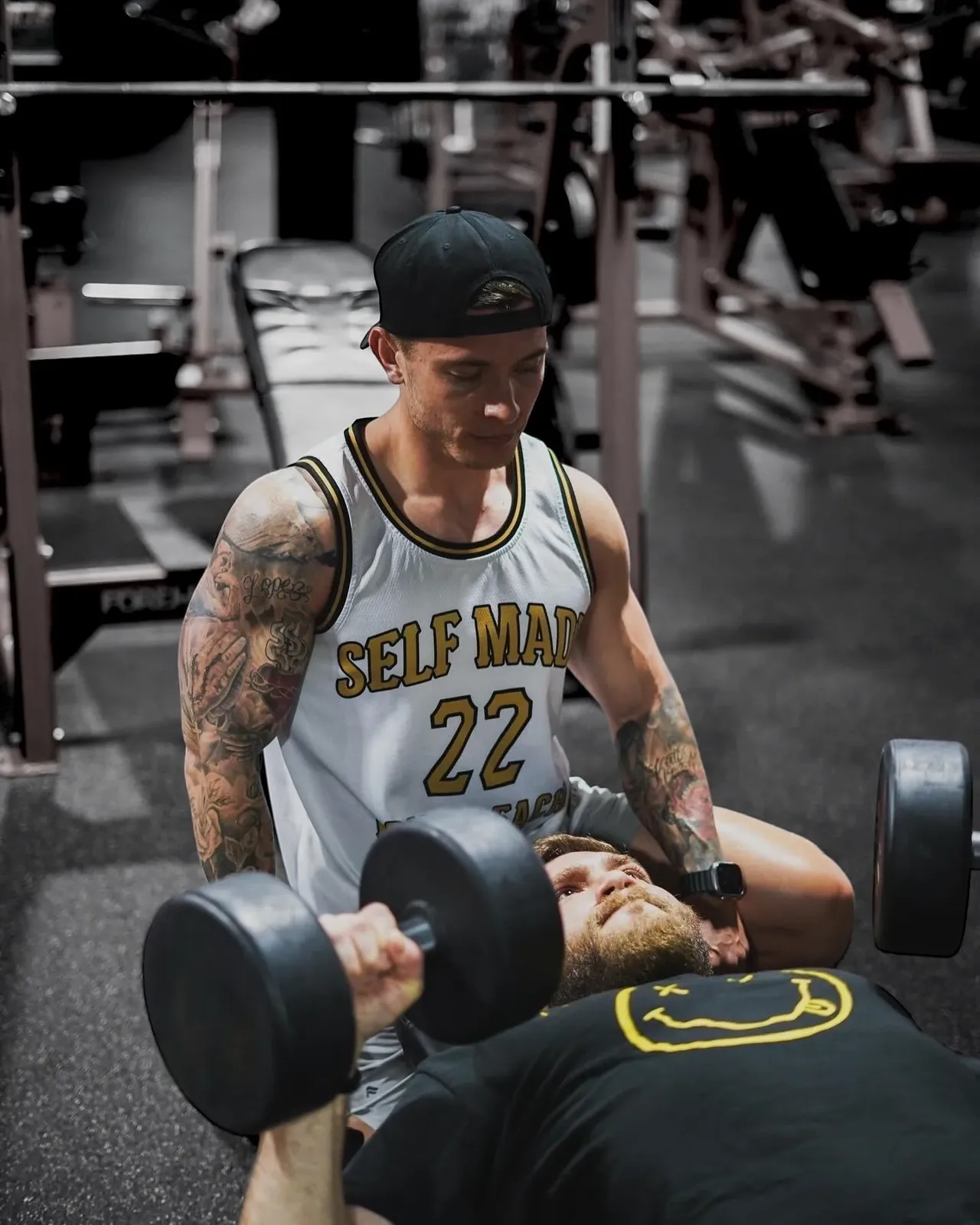
A client at 185 on bench, for example, trains at 145-150 for three sets of 5 this week. That should feel like a 6 or 7 out of 10 — controlled, with 2-3 reps left in reserve on the last set. If set three falls apart or bar speed crashes, the baseline was set too aggressively; drop 10% and rebuild.
This is also the week to fix form issues noted during baseline testing. If knees caved on the squat, add tempo squats — a 3-second lowering phase — at a lighter load before returning to working weight. If deadlift lockout was weak, finish with 3 sets of 8 Romanian deadlifts.
We cover the mechanics of this first week — sets, reps, and rest intervals — in more depth in our step-by-step progressive overload guide. Log every set. By Sunday you should have 15 data points across five lifts, and that log is what week two is built on, not memory.
Week 2: Add Load, Not Chaos
Week two is the first real overload step. If every set in week one hit its target reps at RPE 7 or lower, add weight: 5 pounds on bench and overhead press, 10 pounds on squat and deadlift, one additional rep per set on weighted pull-ups. Keep the set and rep scheme identical so load is the only variable that changed.
If week one felt closer to an 8 or 9, don't add weight — add a rep instead, moving from 3x5 to 3x6 at the same weight. This is the fork most home-programmed lifters get wrong: they add weight on a schedule regardless of how the previous week went, which is how a bench session turns into failed reps and a strained shoulder.
This week is also when muscle imbalances hiding at lighter loads start showing up — a shoulder rounding forward on bench, a hip shifting on the squat descent. We wrote about the eight imbalances we see most often at our Long Beach facility, and how to correct them before they become an overuse injury, in 8 muscle imbalances sabotaging your strength training.
Add one accessory movement this week too — 3 sets of 10-12 on a row variation and a single-leg exercise like a Bulgarian split squat — to build the supporting musculature the big lifts depend on.
Week 3: Push Density and Intensity Techniques
Week three is where 4-week blocks separate people who actually get stronger from people who just feel tired. Instead of only adding weight again, manipulate density: cut rest from three minutes to two on the main lifts, or add a fourth working set at week two's weight. Both raise total training stress without needing a new max.
This is also the week to introduce one intensity technique per lift, not five. A back-off set — one extra set at 85% of your top working weight for as many clean reps as possible — works well on squat and deadlift. On bench and overhead press, a 2-second pause at the bottom of each rep adds difficulty without adding load, useful if joints need a break from constantly climbing numbers.
Expect this week to feel like an 8 or 9 out of 10 on most main sets. That's appropriate — it's intentionally the hardest week. What it shouldn't feel like is grinding, shaky reps with breakdown in bar path. If two lifts in a row show technical breakdown, hold weight steady rather than add more.
For lifters ready for more advanced methods once this base block is done — cluster sets, band resistance, contrast training for speed — we detail five of them for athletes training in Long Beach in this guide to advanced strength techniques. Save those for block two, not this one.
Week 4: Test, Deload, or Both
Week four has two legitimate paths, and which one you take depends on how your joints and sleep have held up. Path one: retest. Warm up thoroughly and attempt a new 3-rep max on squat, bench, and deadlift, and a new 5-rep max on overhead press and pull-up. Most clients who followed the plan add 10-20 pounds to squat and deadlift and 5-10 pounds to bench and overhead press versus their week-one baseline.
Path two: deload. If you're beat up — elbows achy, sleep worse than usual, motivation flat — drop volume by 40% this week. Two sets instead of three, weight reduced about 20%, and skip accessory work entirely. This isn't losing progress; the adaptation that makes you stronger happens during recovery, not during the workout itself.
A lot of Long Beach lifters skip deloads because it feels like giving something up. Skipping that recovery window is exactly how a manageable case of tendinitis turns into six weeks off completely.
Whichever path you take, this is the natural point to plan your next block. We walk through stringing multiple 4-week blocks into a full periodized plan — when to test, when to deload, how to structure eight to twelve weeks at a time — in our guide to building a periodized strength training plan.
Tracking Metrics That Actually Predict Progress
Weight on the bar is the easiest number to track, but chasing it exclusively is how people end up injured. Four numbers give a far more complete picture of whether progressive overload is working: load, total volume (sets times reps times weight), RPE, and rest time between sets.
Take Maria, a client training with us three days a week: her squat weight only moved from 135 to 155 across a 4-week block — a modest 15% jump. But her total weekly squat volume moved from roughly 4,050 pounds to 6,975 pounds because she also added a set and two reps per set along the way. The scale number undersold her progress; the volume number told the real story.
RPE matters just as much because it shows whether the numbers are sustainable. A lifter hitting RPE 9 or 10 on every set for three straight weeks isn't building a base — they're borrowing recovery from the following week. Most working sets should sit at RPE 6-8, with RPE 9 reserved for the last set of a block, like week three or a retest day.
Log this somewhere consistent — notebook, spreadsheet, or app. Athletes chasing raw power on top of strength should also track bar speed or jump height alongside load; we cover that relationship in this piece on power-to-strength ratio.
Five Mistakes That Stall Progressive Overload
After years of running strength programs out of our Long Beach facility, the same five mistakes show up again and again in lifters who stop making progress:
The common thread is that progressive overload requires patience and data, not maximum effort every day. Lifters who add 30-40 pounds to their squat in three months are rarely training hardest every session — they're following a structured plan closely enough to know exactly when to push and when to hold steady.
Nutrition and Recovery Non-Negotiables
None of the programming above works without the recovery to support it. Lifters running this plan need roughly 0.7-1 gram of protein per pound of bodyweight daily — a 160-pound client should eat 112-160 grams spread across three to four meals, not crammed into one shake after training. Under-eating protein while deliberately increasing training stress is one of the fastest ways to stall in week three instead of climbing.
Sleep matters just as much. Aim for seven to nine hours a night, and treat the two nights after your hardest sessions — typically week three — as non-negotiable, since that's when the nervous system consolidates the adaptations you just triggered. A client cutting sleep to five hours during a demanding work week will feel every lift in this plan get harder, regardless of how well the sets and reps were programmed.
Hydration and carbohydrate timing around training matter more than most lifters expect. A meal with 40-60 grams of carbohydrate two to three hours before a heavy squat or deadlift session noticeably improves bar speed and rep quality compared to training fasted, based on what we consistently see with clients at our facility.
If you're still training off a program you found online eight months ago with no numbers written down anywhere, that's the actual problem — not effort, not genetics, not age. Come train with us at Trinity Training Facility in Long Beach for a strength assessment, and we'll build the exact 4-week block above around your real baseline numbers instead of a guess.
Key Takeaways
- Progressive overload has five levers beyond just adding weight: reps, sets, rest time, tempo, and range of motion.
- Establish a true baseline (3-rep max on squat, bench, deadlift) before starting any 4-week block — guessing is the top cause of plateaus.
- Only add load when the prior week's RPE was 7 or lower across all sets; otherwise add a rep instead.
- Total volume (sets x reps x weight) often predicts progress better than the top weight on the bar alone.
- Week four should end in either a retest (new 3-5 rep max) or a planned 40% volume deload — never neither.
- Protein intake of 0.7-1g per pound of bodyweight and 7-9 hours of sleep are required for this plan to work, not optional extras.