








Unlocking Progressive Overload: A Step-by-Step Guide to Building Strength at Trinity Training Facility
Learn progressive overload the way we coach it at Trinity Training Facility in Long Beach — real numbers, real progressions, real results.
Progressive overload means systematically increasing training demand — through load, volume, reps, tempo, or frequency — so your muscles and nervous system are forced to adapt over time. At Trinity Training Facility, we program it in 4-week blocks with specific weight, rep, and rest targets, tracked on paper or an app every single session, so clients in Long Beach see measurable strength gains instead of guessing at effort.
The Client Who Lifted the Same Weight for Four Months
A guy walked into Trinity Training Facility last year benching 185 for sets of 8, exactly what he'd been benching for four months straight at his old 24-hour gym membership. Same weight, same reps, same machine circuit, three days a week, without fail. He was consistent. He just wasn't progressing, and consistency without progressive overload is just maintenance dressed up as effort.
Within his first six weeks with us, that same bench went from 185×8 to 205×6 to 215×5, tracked on paper every single session, with load increases planned in advance rather than guessed at on the fly. That's the entire difference between training and just showing up: one has a system for making the work harder over time, and one doesn't.
Progressive overload is the principle behind every real strength gain you will ever make, and it's simpler than the internet makes it sound. This guide walks through exactly how we program it at our Long Beach facility — the variables we manipulate, the numbers we target, and the mistakes that stall people out long before their bodies actually hit a real ceiling.
What Progressive Overload Actually Means
Progressive overload is the systematic, planned increase of stress placed on the body during training, forcing continued adaptation in strength, muscle size, or work capacity. The word "systematic" is doing the heavy lifting in that definition. Randomly adding weight when you feel strong isn't progressive overload — it's a coin flip.
Your body is efficient. Lift 135 pounds for 10 reps every week for two months, and by week three, your muscles and nervous system have already adapted to handle that exact demand with no further growth required. There's no biological incentive to get stronger if the workload never changes. This is why so many gym-goers train hard for years and look, and lift, almost identically to how they did 18 months earlier.
The fix requires a target and a record. Every session at Trinity gets logged — load, sets, reps, and how the last rep of the last set felt — because overload only works when you can see exactly what you did last time and beat it, even slightly. A 2.5-pound plate added to each side of a barbell is a real, measurable increase. "Felt strong today" is not.
For clients building general capacity for daily life rather than pure strength numbers, this same principle drives real-world function — something we detail in our piece on how progressive overload builds real-world strength for everyday life.
The Six Variables You Can Actually Manipulate
Most people think progressive overload only means adding weight to the bar. That's one lever out of six, and relying on it exclusively is why so many lifters stall out or get hurt. Here's the full list we cycle through with clients:
A lifter stuck at the same bench press number for six weeks doesn't necessarily need more weight — they might need an extra set, a slower tempo, or a second weekly bench session. We rotate which variable we push based on where a client's numbers have actually stalled, not by default habit.
This is exactly the structure we build into a full training cycle, which we break down in more detail in our guide to five proven strength training cycles for long-term progress.
How We Program It at Trinity: Step by Step
Every new client gets a baseline week — no maxing out, just working through their main lifts at a moderate weight to establish real starting numbers, not gym-lore numbers people remember from three years ago. From there, we build in 4-week blocks with a clear target for each week.
Week 1 establishes the working weight at a specific rep range, typically 3 sets of 8 at a weight that leaves 2 reps in reserve. Week 2 adds either a rep per set or 5 pounds to the bar, whichever fits the lift and the client's recovery. Week 3 pushes intensity further — often dropping to 3 sets of 6 at a heavier load, since fewer reps at higher weight is its own form of overload. Week 4 is a lighter deload or a test week, depending on the client's goal and how the prior three weeks went.
We don't guess at this in the moment. Every block is written out in advance with specific numbers, and every session gets logged against that plan so we know within one workout if someone is ahead of schedule or needs a modification. A client missing a rep target two sessions in a row is a signal to adjust the block, not push through blindly.
For clients who want to see this entire structure laid out with exact percentages and week-by-week loading, our guide to building a periodized strength training plan covers the full framework we use across 8 to 16-week cycles.
A Real 4-Week Progression Example
Numbers make this concrete faster than theory does. Here's an actual squat progression we ran with a client last spring, starting at a tested working weight of 155 pounds for 3 sets of 8 with 2 reps in reserve.
By week 6, back at full intensity, that same client tested a genuine 5-rep max at 190 pounds, up from an estimated 165-pound 5-rep max at the start. That's a 15% strength increase in six weeks, achieved through planned progression rather than random effort — and it's a realistic number for an early-intermediate lifter training with intent.
The deload week isn't optional filler. Dropping load by 35 to 40% for one week allows joints and connective tissue to catch up to the muscular and neurological gains made in the preceding three weeks, which is exactly why the client hit a new max immediately after, not during, the lighter week.
Mistakes That Stall Progress Before You Hit a Real Ceiling
Most people who claim they've "plateaued" haven't come close to their actual genetic ceiling — they've hit a program design ceiling. Here's what we see constantly with new clients coming from other gyms:
Our breakdown of ten progressive overload exercises to build real strength in 90 days covers specific movement selections that avoid these traps, particularly for clients training at home between facility sessions.
Adjusting Progressive Overload for Different Goals
How you apply progressive overload changes depending on what you're training for, and this is where a lot of generic programs fail people. A client chasing raw strength, a client cutting body fat, and a boxer training for fight conditioning all need the same principle applied through different levers.
For strength-focused clients, load and intensity take priority — lower reps (3 to 6), longer rest (2 to 3 minutes), and a slower rate of weekly load increase to protect joints under heavier weights. For fat loss clients, we lean more on volume and reduced rest intervals, since higher total work with shorter recovery windows supports the calorie deficit goal while still preserving muscle through consistent load progression on key lifts.
Boxers and combat athletes need overload applied to power output as much as raw strength — this means tracking bar speed and explosive rep quality, not just the number on the plate. Our guide on periodized strength training for boxing performance covers how we sequence strength blocks against sparring and conditioning demands so the two don't compete for recovery.
Women training for upper body strength specifically often need a longer initial adaptation phase before aggressive load jumps, which is exactly the approach in our 4-week upper body blast plan for Long Beach women.
Tracking Numbers That Actually Predict Progress
You cannot manage what you don't measure, and vague effort tracking ("that felt hard") produces vague results. At Trinity, every client tracks three numbers minimum for each main lift: weight used, reps completed per set, and Rate of Perceived Exertion on a 1-10 scale for the final set.
An RPE of 7 means 3 reps left in the tank; an RPE of 9 means 1 rep left. If someone hits their prescribed 3×8 at an RPE of 6 two sessions in a row, that's a clear, data-backed signal to add weight — not a guess, a pattern in the log. Conversely, an RPE of 9-10 on a prescribed moderate-intensity day tells us fatigue is accumulating faster than expected and the next session needs adjusting.
We also track a simple metric most people ignore: total weekly volume per major lift, calculated as sets × reps × weight. A client whose bench volume goes from 4,440 pounds one week (185×3×8) to 4,920 pounds the next (205×3×8) has objective proof of progress, independent of how the session felt emotionally. Feelings lie. The math doesn't.
For lifters serious about tracking their trajectory over a full training year, our guide to periodized strength training over a 12-week progression plan shows exactly how these weekly numbers roll up into longer-term strength targets.
Your Next Step
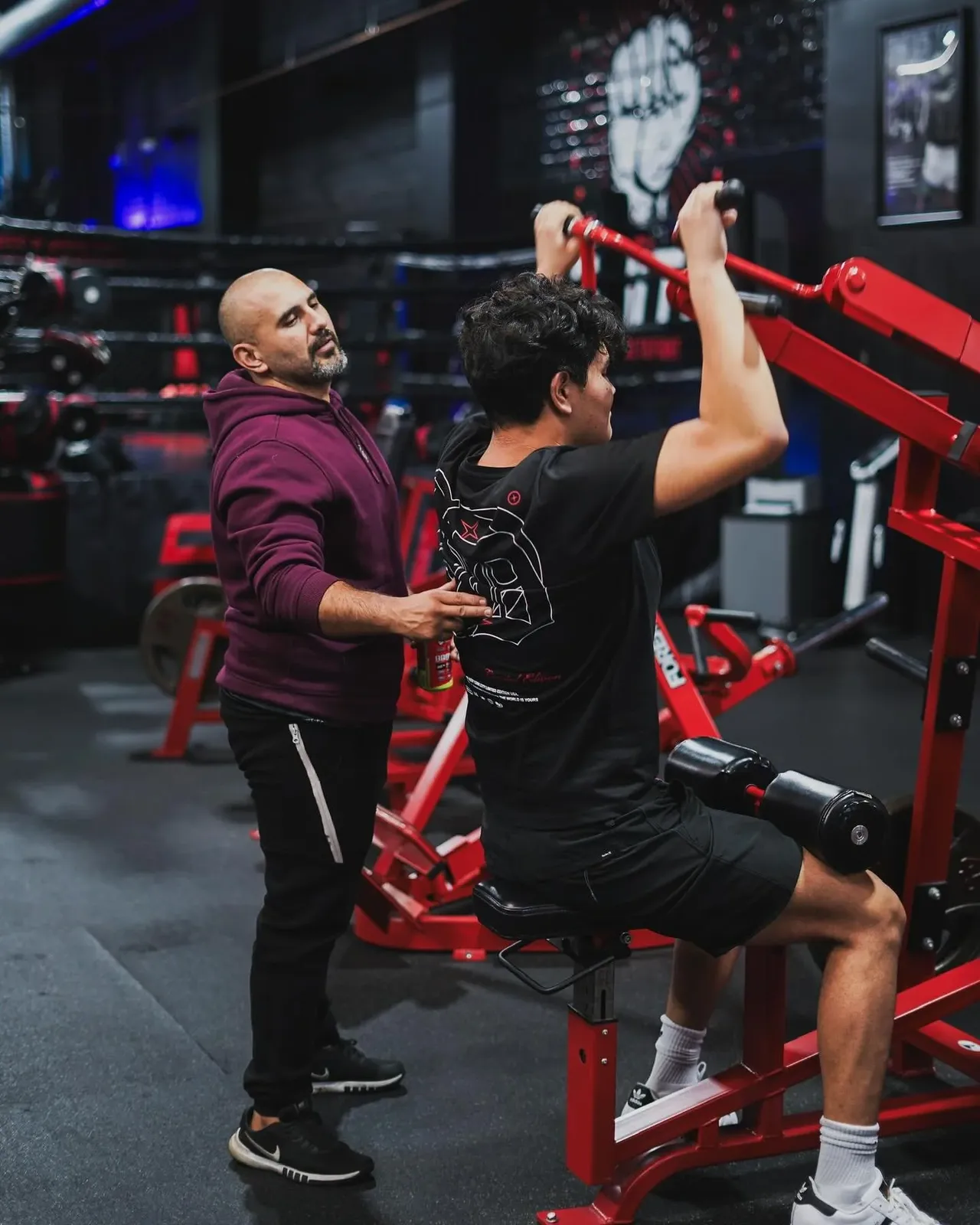
Progressive overload only works when someone is planning your numbers before you walk in the door and holding you accountable to them once you're under the bar. That's the gap between a generic gym membership and coached training — nobody at a 24-hour chain is tracking your RPE or planning your deload week six sessions in advance.
Key Takeaways
- Progressive overload requires tracking every session — load, reps, and rest — because you cannot progress what you don't measure.
- Six variables drive overload: load, volume, reps, tempo, rest intervals, and training frequency, and you should manipulate only one or two at a time.
- A realistic strength gain for an intermediate lifter is 2.5 to 5 pounds added to a compound lift every one to two weeks, not every session.
- Deload weeks every 4 to 6 weeks prevent the plateau and injury risk that come from overloading without planned recovery.
- Beginners can safely add load almost weekly for the first 8 to 12 weeks due to neurological adaptation, a phase often called 'newbie gains.'
- Programming progressive overload around a specific goal — fat loss, boxing power, or raw strength — changes which variable you prioritize first.