








Unlocking Strength Potential: Progressive Overload Techniques for Faster Muscle Growth in Long Beach Training
Learn the progressive overload techniques Trinity Training Facility uses in Long Beach to build real strength — with sample numbers, logs, and a 4-week block.
Progressive overload techniques mean systematically increasing training demand — through load, volume, density, tempo, range of motion, or frequency — so muscles are forced to adapt. Without tracked, incremental increases week to week, most Long Beach lifters plateau within 8-12 weeks. A structured 4-week block with logged numbers, adequate protein (0.7-1g per pound of bodyweight), and planned deloads every 4-6 weeks produces measurable strength and muscle gains that random gym sessions never will.
Marcus walked into Trinity Training Facility in January doing dumbbell bench presses with the same 40-pound dumbbells he had used the previous January. Same reps, same sets, same body. He had shown up three times a week for twelve months and had almost nothing to show for it beyond calloused hands and a gym habit he was proud of but could not defend with results. When we sat down and looked at his training log — or rather, the log he had never kept, because he assumed showing up was the plan — the problem was obvious. Nothing about his training had gotten harder in a year. That is the entire story behind most stalled physiques we see walk through our doors in Long Beach. Progressive overload techniques are not a bonus feature of a good program; they are the mechanism that makes muscle growth happen at all. Without a structured way to make training harder over time, you are not building anything — you are maintaining whatever you built in your first eight weeks of lifting.
What Progressive Overload Actually Means (And Why Most People Get It Wrong)
Progressive overload is the deliberate, tracked increase of stress placed on a muscle over time. That stress can come from more weight on the bar, more total reps, more sets, less rest between sets, a slower lowering phase, or a deeper range of motion. The body only builds new muscle tissue and neural efficiency when it has a reason to — when the current level of stimulus is no longer enough to complete the task without adapting.
Most people get this wrong in one of two ways. Either they chase soreness and sweat as a proxy for progress, assuming a hard workout automatically equals a productive one, or they add weight indiscriminately without tracking what they did last week, which means half their sessions are accidentally regressions. Neither approach produces the consistent overload curve that muscle growth requires.
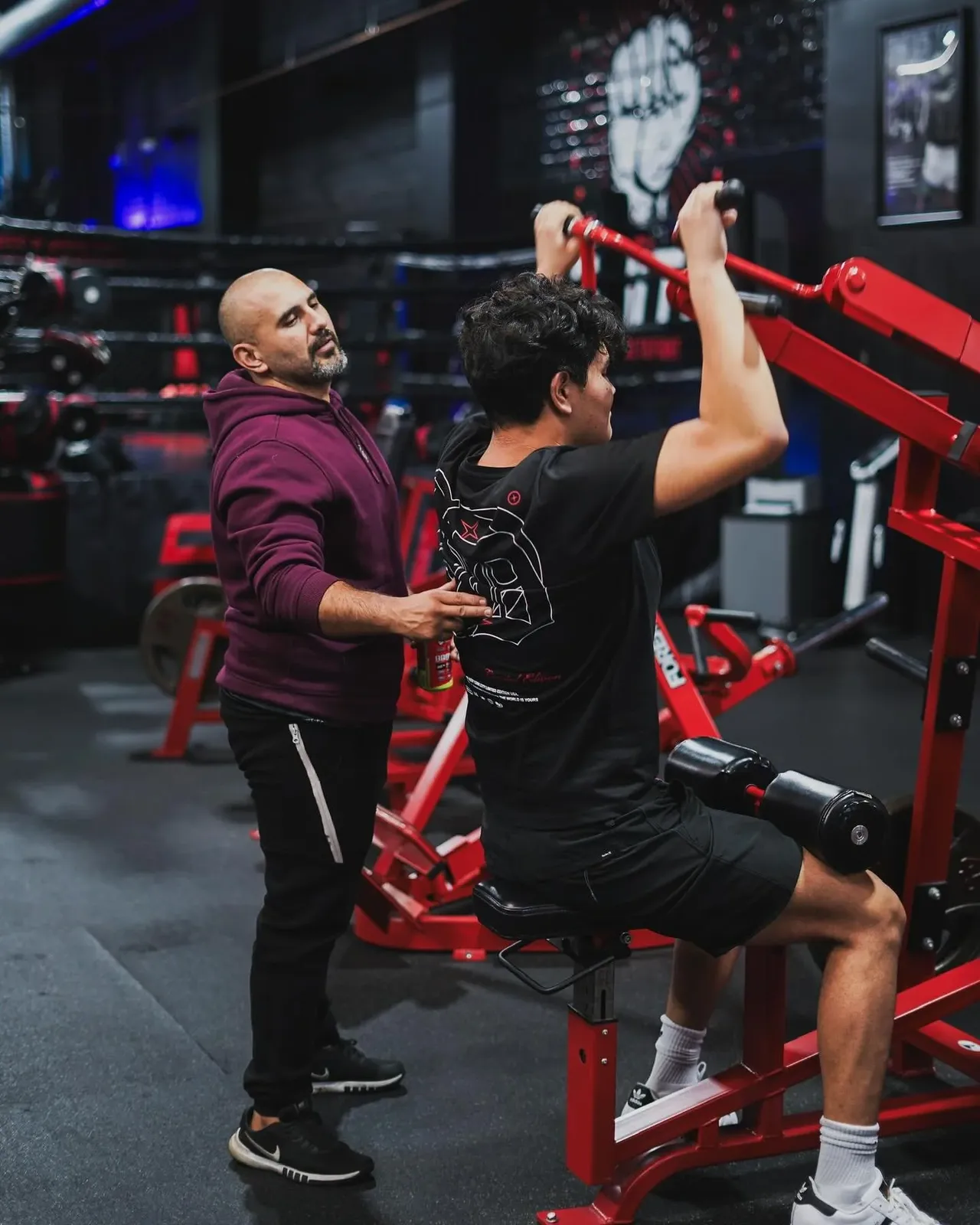
At Trinity, every client's program is built around a specific, numbers-driven progression scheme. If you squatted 135 pounds for 3 sets of 8 last Tuesday, we know exactly what you are doing this Tuesday — whether that is 140 pounds for 3 sets of 8, or 135 pounds for 3 sets of 9. Progressive overload techniques only work when they are measurable, and measurable means written down.
The Six Variables You Can Manipulate to Force Adaptation
Weight on the bar is the most obvious lever, but it is only one of six. Understanding all six is what lets us keep clients progressing for years instead of months.
When load stalls — and it will, usually every 6-10 weeks for intermediate lifters — we rotate to one of the other five variables instead of grinding against a weight that is not moving. This is exactly the approach we break down in our step-by-step guide to building strength through progressive overload.
A Sample 4-Week Progressive Overload Block We Use at Trinity
Numbers make this concrete. Take a client squatting 185 pounds for 3 sets of 5 reps at a comfortable 7 out of 10 effort. A typical four-week block looks like this: Week 1, 185 x 3x5. Week 2, 195 x 3x5 (a 5.4 percent jump). Week 3, 205 x 3x5, with the last set pushed to 6 reps if form holds. Week 4 is a planned deload — 155 pounds, 2 sets of 5, at low effort to let the joints and nervous system recover before the next block starts at 210-215 pounds.
That is roughly a 15-16 percent increase in working load across three progressive weeks, which is aggressive but sustainable when a client is intermediate-level and recovering well. Beginners can often progress faster session to session; advanced lifters need smaller jumps, sometimes just 1-2 pounds a week on a lift like the overhead press.
We map out full 4-week progressions like this for every major lift in our clients' programs, and you can see the complete template in our 4-week plan for maximizing muscle growth through progressive overload. The point is not the specific numbers — it is that every single week has a defined, written target that is objectively harder than the week before.
The Three Mistakes That Stall Long Beach Lifters
After years of running this facility, the same three mistakes show up in nearly every stalled client's history.
The first is chasing soreness instead of progression. A brutal workout that leaves you sore for three days feels productive, but soreness is not a measure of muscle stimulus — it is often a sign of unfamiliar movement, not effective overload. We have had clients doing an entirely different, exhausting workout every session for a year with zero strength gains to show for it.
The second is ego-driven load jumps. Adding 20 pounds to a bench press because you feel strong that day, before your form and connective tissue have adapted to your current weight, is how shoulder impingement and lower back strain happen. Progressive overload has to respect the slowest-adapting tissue in the chain, which is almost always tendon and ligament, not muscle.
The third, and most common, is simply not tracking anything. If you cannot tell me what you lifted three weeks ago, you cannot possibly know whether you are progressing. We require every Trinity client to log sets, reps, and weight for this exact reason — the data is what turns training from a guess into a plan.
Matching Progressive Overload to Your Goal: Fat Loss, Physique, and Boxing
Progressive overload does not look identical for every goal, even though the underlying principle is the same.
For fat loss clients training in a calorie deficit, we lean harder on volume and density progression — adding sets or cutting rest — because pushing maximal loads while under-fed increases injury risk without much added benefit. For physique-focused clients chasing visible muscle, we prioritize load and time-under-tension changes on the specific muscle groups they want to grow, often training each muscle group twice weekly.
For boxers and combat athletes, progressive overload has to be balanced against power and speed development, not just raw strength. Adding 30 pounds to a trap bar deadlift means nothing if it slows your hand speed. We periodize strength blocks around fight camps so that heavy loading phases happen 6-8 weeks out from a bout, tapering into power and speed work as the fight approaches — a system we detail in our guide to periodized strength training for boxing performance. Athletes chasing explosiveness specifically should also look at our four proven ways to improve power-to-strength ratio, since raw strength and usable power are not the same adaptation.
Tracking Data: The Spreadsheet That Separates Progress From Guessing
Every Trinity client gets a simple log: date, exercise, weight, sets, reps, and a 1-10 effort rating (RPE). That last column matters as much as the weight itself. A 225-pound squat for 3x5 at an RPE of 6 is a completely different data point than the same weight at an RPE of 9 — one tells you there is room to add load next week, the other tells you to hold or deload.
We review this data every two weeks with clients. If three consecutive sessions on a lift show flat or declining performance despite consistent effort, that is the trigger to change a variable — swap load progression for volume progression, add a rest day, or check sleep and nutrition. Without the log, this decision is a guess. With it, it is a five-minute review.
This is also how we structure longer-term programming across multiple training blocks rather than winging each week individually, a topic we cover in more depth in our breakdown of five proven strength training cycles for long-term progress. A single good month of training is easy. Stringing together twelve consecutive months of progress requires the data to know when to push and when to back off.
Recovery Is Part of the Program, Not an Afterthought
Progressive overload only works if the body actually recovers from the stress applied. Skip this step and you get the opposite of muscle growth — joint pain, flat performance, and eventually injury.
Sleep is the single biggest recovery lever we control for. Clients getting under 6 hours a night consistently show 15-20 percent worse week-to-week load progression in our internal tracking compared to clients averaging 7-8 hours. We ask every new client to track sleep for two weeks before we aggressively push load, because pushing overload on top of poor recovery just accumulates fatigue instead of strength.
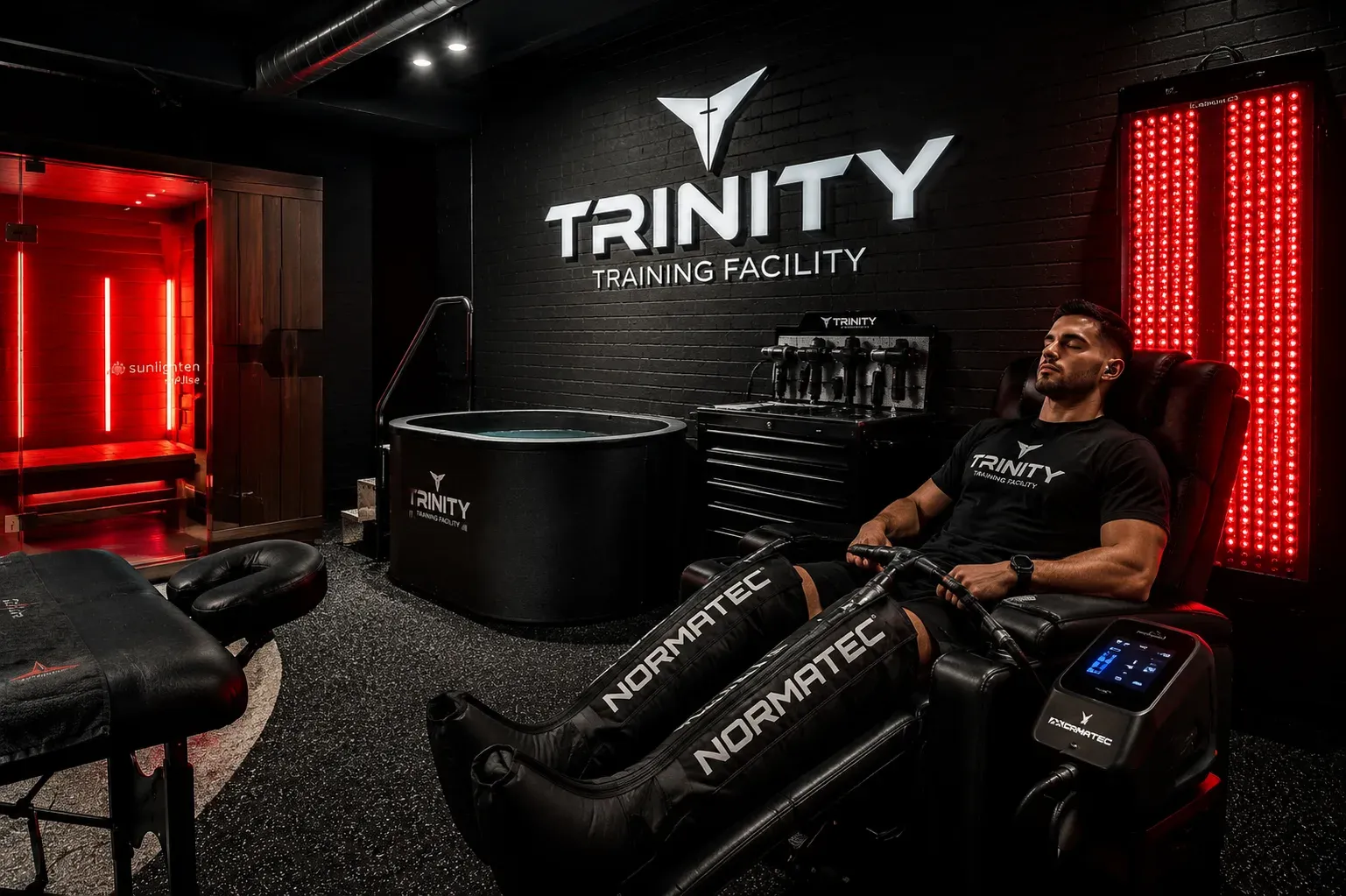
Between-session recovery tools matter too, but they are secondary to the basics: at least one full rest day between training the same muscle group hard, 10-15 minutes of mobility work on lower-intensity days, and deliberate deload weeks every 4-6 training blocks. A deload is not wasted training time — it is where the adaptation from the previous three weeks of overload actually consolidates. Most clients hit their next personal record in the week immediately following a deload, not during the hardest week of loading.
Nutrition Numbers That Support Progressive Overload
You cannot out-program a nutrition deficit. Progressive overload creates the signal for muscle growth; food provides the raw material to actually build it.
The baseline number we give every strength-focused client is 0.7 to 1 gram of protein per pound of bodyweight daily. For a 180-pound client, that is 125-180 grams spread across 3-4 meals, since muscle protein synthesis responds better to distributed intake than one large evening meal. Clients building muscle in a surplus typically add 200-300 calories above maintenance; clients cutting fat while preserving strength hold a more modest 300-500 calorie deficit so they are not sabotaging the recovery that overload depends on.
Carbohydrates matter more than most lifters give them credit for — they refill the muscle glycogen that fuels the exact heavy sets driving your overload progression. A client squatting three times a week on a low-carb diet is fighting their own program. We typically set carbs at 1.5-2.5 grams per pound of bodyweight for clients in a heavy strength phase, adjusted down for fat loss phases. Hydration and sodium also affect performance more than people expect — a client showing up dehydrated will grind through fewer reps at the same load, which shows up in the log as a false plateau.
Periodization: When to Push, When to Deload
Progressive overload cannot be a straight line forever — nobody adds weight every single week indefinitely without a nervous system crash or an injury. That is why we build training in blocks: typically 4-6 weeks of progressive overload followed by a deload week at 50-60 percent of peak intensity.
Across a full year, this looks like alternating phases — a hypertrophy-focused block emphasizing volume and moderate loads, followed by a strength-focused block emphasizing heavier loads and lower reps, followed by a deload, then repeat with slightly higher starting numbers than the previous cycle. This structure is what separates a client who is stronger every quarter from a client who is stronger every workout for six weeks and then hurt for six weeks. We map this out in detail in our guide to building a periodized strength training plan, and for clients specifically training for real-world capability rather than just numbers on a bar, our 5-point functional strength system shows how to keep overload relevant to daily life, not just the gym floor.
According to the American College of Sports Medicine's position stand on resistance training progression, periodized programs consistently outperform non-periodized programs for long-term strength gains in both novice and experienced lifters, which matches exactly what we see in twelve years of client data at this facility.
Putting It Together: Your Next 90 Days at Trinity
Marcus started logging his lifts in February. By May, his dumbbell bench press had gone from a stuck 40 pounds to a controlled 60 pounds for the same 3 sets of 8, and he had dropped two inches off his waist because his overall training density had gone up alongside his loads. Nothing about his effort level changed — he had always trained hard. What changed was that every session now had a specific, written target that was measurably harder than the one before it.
That is the entire difference between a year of gym attendance and a year of real progress. If your training has looked the same for the last two months — same weights, same sets, same reps — the fix is not more effort, it is a structured overload plan with numbers you can actually track. Book a strength assessment at Trinity Training Facility and we will build your next 4-week progressive overload block around your current numbers, your goal, and your recovery capacity, so your next 90 days in Long Beach produce a body and a strength total you can actually measure.
Key Takeaways
- Progressive overload requires increasing at least one training variable — load, volume, density, tempo, range of motion, or frequency — every 1-2 weeks, not just showing up.
- Lifters who don't log their workouts typically repeat the same weights for months without realizing it, which is the single biggest cause of plateaus.
- A well-built 4-week block increases working weight by roughly 2.5-5% per week on major lifts before a planned deload.
- Protein intake of 0.7 to 1 gram per pound of bodyweight is the nutritional floor needed to support the muscle repair that overload demands.
- Deloading every 4-6 weeks (cutting volume or intensity by 40-50% for one week) prevents the joint pain and fatigue that stalls long-term progress.
- Progressive overload has to be goal-specific — a boxer periodizes power and speed differently than someone training purely for hypertrophy or fat loss.
Sources
- American College of Sports Medicine — Progression Models in Resistance Training for Healthy Adults (Position Stand)
- Schoenfeld et al. — Dose-Response Relationship Between Weekly Resistance Training Volume and Increases in Muscle Mass
- National Strength and Conditioning Association — Resistance Training Guidelines